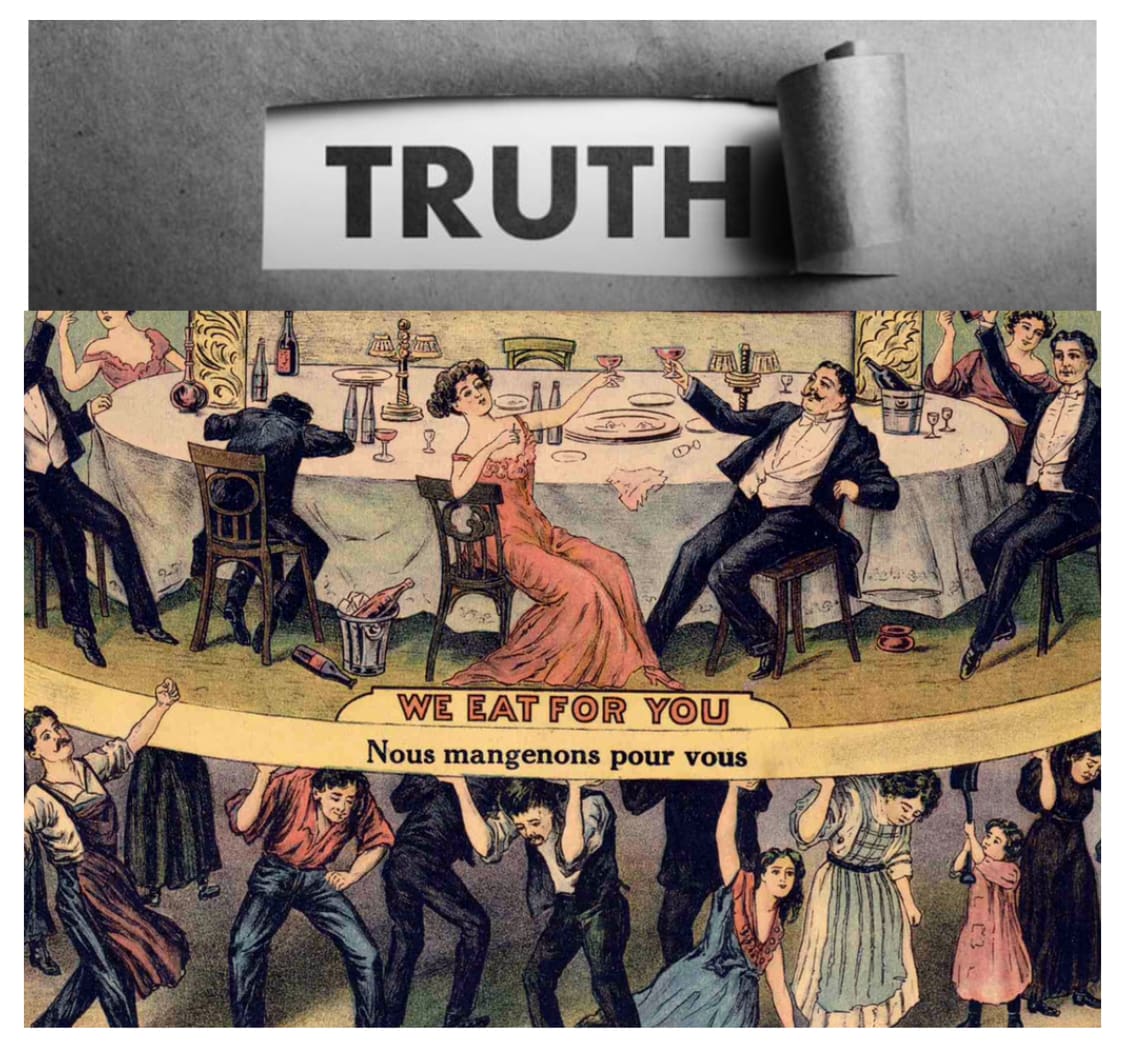
Britain is often presented as a stable, fair and meritocratic society; a nation of opportunity where hard work is rewarded and institutions can be trusted. Yet beneath this carefully maintained image lies a far less comfortable reality. These are not conspiracy theories or fringe claims. They are documented facts, supported by official data, academic research, and mainstream reporting and they fundamentally undermine the story the ruling classes like to tell.
Wealth and Inequality
- The richest 1% in the UK own more wealth than the poorest 50% combined.
- Wealth inequality in Britain is now at levels not seen since the late 19th century.
- Most wealth in the UK is inherited, not earned.
- Social mobility in Britain has been falling for decades, despite constant political claims to the contrary.
- The womb you come out of is still one of the strongest predictors of your lifetime income.
- The UK has one of the highest levels of wealth inequality in Europe.
- Property wealth, not wages, is the primary driver of inequality.
- Younger generations are significantly poorer than their parents were at the same age.
- Home ownership among under-35s has collapsed while landlord wealth has soared.
- Asset price inflation has benefited the wealthy far more than wage growth has benefited workers.
Income and Work
- Real wages for many workers have stagnated since the 2008 financial crisis.
- Executive pay has risen dramatically while average pay has barely kept up with inflation.
- Zero-hours contracts were deliberately expanded by government policy, not market accident.
- In-work poverty is now one of the leading causes of poverty in the UK.
- Many essential workers were labelled “key” during crises but remain poorly paid and insecure.
- Productivity gains over decades have not been fairly shared with workers.
- Trade union power has been systematically weakened through legislation.
- Low pay in Britain is a political choice, not an economic necessity.
- The UK tax system places a heavier burden on earned income than on wealth.
- Capital gains are often taxed at lower rates than wages.
Tax, Avoidance and Corruption
- Tax avoidance costs the UK hundreds of billions of pounds each year.
- Large corporations routinely pay far less tax proportionally than small businesses.
- Many UK Overseas Territories function as tax havens under British jurisdiction.
- Successive governments have intentionally failed to properly regulate financial secrecy.
- Lobbying by corporations has a direct influence on government policy.
- Political donations buy access, if not outright influence.
- Revolving doors between government and the private sector are normalised.
- Corruption in the UK is often legal, rather than illegal.
- Public contracts are frequently awarded to politically connected firms.
- Austerity was imposed on the public while corporate welfare quietly expanded.
History and Empire
- Britain deliberately destroyed local industries in colonised countries to eliminate competition with British manufacturers.
- Enslavement and colonial plunder funded the Industrial Revolution.
- Britain’s national story celebrates monarchy and empire while marginalising the working class movements that won democratic rights.
- Compensation for the abolition of slavery went to slave owners, not the enslaved.
- Colonial famines were often exacerbated by British policy decisions.
- The UK repeatedly intervened abroad to overthrow democratically elected governments that threatened British economic interests.
- The legacy of empire still shapes global inequality today.
- School curricula routinely downplay imperial violence.
- The City of London grew rich servicing empire and global finance.
- Concentration camps were used by Britain during the Boer War, decades before they became associated with Nazi Germany.
Power, Media and Democracy
- Most national newspapers are owned by a handful of billionaires.
- Media narratives consistently favour wealth and power over labour.
- The House of Lords remains unelected and dominated by elites.
- Major political parties are heavily influenced by donors and corporate interests.
- The first-past-the-post voting system entrenches establishment power.
- Policy consensus often exists regardless of who wins elections.
- The police and justice system treat different classes very differently.
- Financial crimes are punished far less harshly than minor offences.
- Crises are routinely used to transfer wealth upwards.
- The system works exactly as designed – just not for most people.
Conclusion
None of these facts are radical. None are secret. Yet they are rarely discussed together, because taken as a whole they expose an uncomfortable truth: Britain is not failing by accident. It is succeeding at doing what it was designed to do – protect wealth, power and privilege at the top, while offering comforting myths to everyone else.
The most dangerous thing for any ruling class is not anger, but understanding.