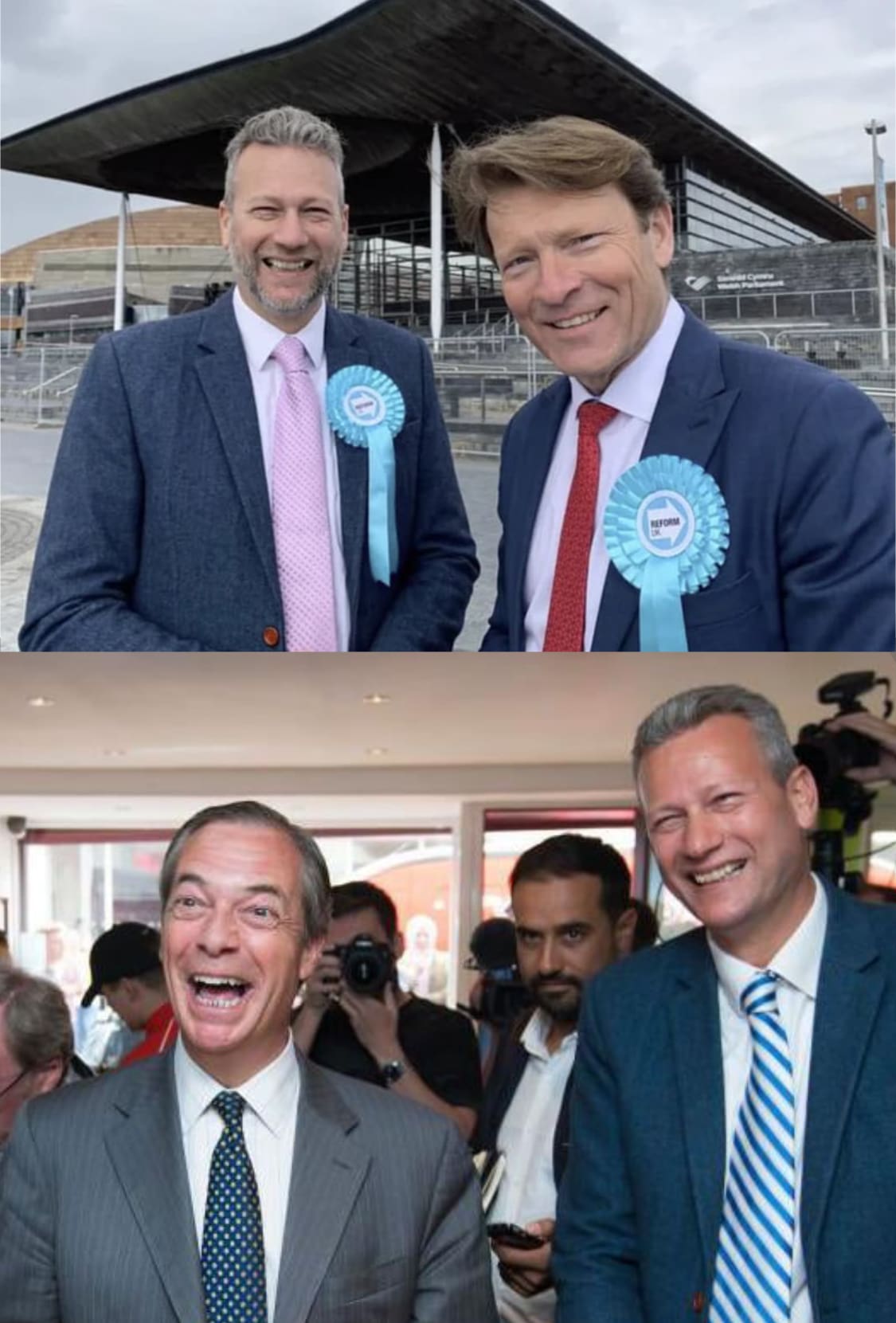
The sentencing of Nathan Gill, the former leader of Reform UK in Wales, to ten and a half years in prison for bribery has sent a seismic shock through British politics. But this is not merely the story of one rogue politician’s greed; it is a stark revelation of a pattern of alleged immoral and illegal activities that have dogged the party and its predecessors, raising urgent questions about its fitness for public office.
The Gill Case: A “Stain on Parliament”
As detailed at the Old Bailey, Gill’s crimes were not a momentary lapse in judgement but a sustained and deliberate betrayal of public trust. Between 2018 and 2019, he accepted at least £40,000 in cash—with bundles of foreign currency found in his home—in “exchange for the improper execution of your public duties,” as Mrs Justice Cheema-Grubb starkly put it.
His accomplice was Oleg Voloshyn, a former Ukrainian official turned pro-Russian agitator, who was later sanctioned by the UK. WhatsApp messages revealed a sordid deal: Voloshyn would provide cash, and Gill would deliver pro-Russian statements to the European Parliament and media outlets like 112 Ukraine, sometimes reading scripts word-for-word. The court heard he was even offering to introduce other British MEPs to be similarly bribed.
Most alarmingly, Commander Dominic Murphy, head of the Met’s Counter Terrorism Command, stated, “I do believe that some of the individuals in this case do have direct connections to Vladimir Putin. And I have no doubt that if we were able to, we could follow this trail and it would lead straight to Moscow.” Gill’s arrest at Manchester Airport in 2021, as he attempted to travel to Russia to act as an election observer, only deepens the picture of a politician deeply enmeshed with a hostile state.
A Recurring Pattern, Not an Isolated Incident
While Reform UK Wales was quick to distance itself, stating Gill was no longer a member, this case fits a troubling pattern of behaviour associated with the party and its forerunners, UKIP and the Brexit Party.
1. The “Bad Boys of Brexit” and Electoral Fraud:
The shadow of the 2015 election spending scandal still looms large. The official Leave.EU campaign, bankrolled by Arron Banks and fronted by Nigel Farage, was found by the Electoral Commission to have breached election law. The campaign was fined £70,000 for multiple offences, including overspending and incorrectly reporting a series of loans. While no individuals were successfully prosecuted for knowing wrongdoing, the investigation exposed a culture of cutting corners and a cavalier attitude towards electoral integrity.
2. A Platform for Extremism and Hate:
Reform UK has repeatedly faced accusations of tolerating and even attracting candidates and supporters with extremist views. Multiple council candidates have been suspended or dropped after investigations by groups like Hope Not Hate uncovered a history of racist, homophobic, and Islamophobic social media posts. This creates a perception of a party whose vetting processes are either dangerously lax or deliberately permissive, allowing a toxic undercurrent to flourish within its ranks.
3. The “Putin’s Puppets” Allegation:
Beyond the Gill case, senior figures have long been criticised for their pro-Kremlin sympathies. Nigel Farage has drawn ire for his defence of Vladimir Putin’s actions and his description of the Russian president as a skilled operator. He has also called for an end to arms support for Ukraine, a stance that aligns neatly with Kremlin objectives. While a political opinion in itself, when combined with Gill’s proven financial entanglements with pro-Russian agents, it paints a picture of a political movement disturbingly soft on an adversary engaged in acts of aggression against British interests.
4. Financial Opacity and Donor Scandals:
The party’s funding has often been a subject of intense scrutiny. The National Crime Agency (NCA) even investigated the source of Arron Banks’ multi-million pound donations to the Leave.EU campaign, examining whether the funds were of Russian origin. Although the NCA concluded there was no evidence of criminality, it noted that Banks was unable to prove the exact source of the £8m loan, leaving a persistent cloud of suspicion.
A Party Failing Its Own Integrity Test
The conviction of Nathan Gill is a landmark moment. It moves suspicion and allegation into the realm of proven, high-level criminality directly linked to a hostile foreign power. Commander Murphy’s belief that Gill was offering to corrupt other MEPs suggests this was not a one-man operation but potentially a wider network of influence.
Reform UK’s attempts to paint Gill as a distant, former member ring hollow. His journey from UKIP MEP to Brexit Party MEP to leader of Reform UK in Wales demonstrates that he was a senior and trusted figure within this political movement for years. The culture that allowed him to operate—a culture of financial opacity, ambivalence towards electoral law, and apologism for the Kremlin—was not of his creation alone.
The sentencing judge described his actions as a “betrayal of the democratic process.” The British public must now ask whether this betrayal is an isolated case or the most visible symptom of a deeper sickness at the heart of a party that seeks their vote.