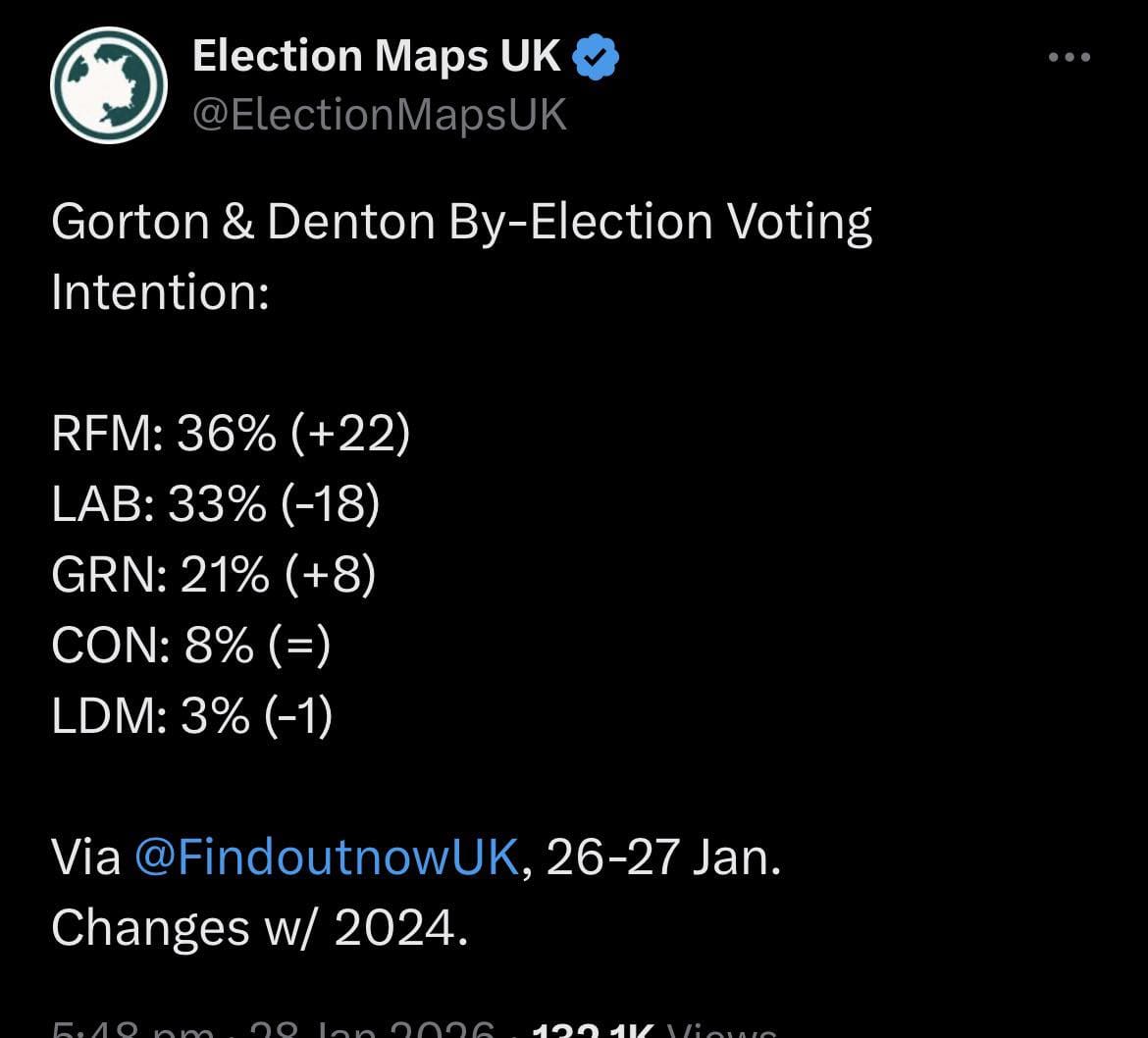
There comes a point where performative purity collapses under the weight of reality. This is one of those moments.
I have no love for the current Labour Party. I disagree with its caution, its conservatism and its timidity in the face of genuine crises. But if the choice is between Labour and a hard-right GB News pundit with a track record of flirting with authoritarian ideas, then the decision is not difficult. I vote Labour without enthusiasm, but without hesitation.
Because voting is not therapy. It is not a declaration of personal virtue. It is a collective act with real consequences, especially for the poorest, the most marginalised, and those who will always bear the brunt when politics turns cruel.
Too often we hear the mantra: “I can’t vote Labour ever again.” Fine. Feel that. Say it. Argue it. But understand what you are enabling when you sit on your hands or drift into protest voting while the hard right organises, funds itself, and marches straight through the gap.
Let’s also deal with an uncomfortable truth. Around 36% of the vote in this area has gone to parties or candidates trading in grievance, nostalgia, and outright reaction. That represents a substantial chunk of the white working-class electorate and it is not something that can be waved away by blaming the “liberal left”.
Talking about race, culture, or inequality does not create racism. It does not magically turn people into bigots. People choose to believe what they believe. And choosing to back wealthy, media-backed figures like Nigel Farage, despite their right-wing economics, billionaire donors, and open admiration for Trumpism, is a political decision, not an accident.
The country is more diverse than some would like, and it always will be. No amount of culture-war shouting on GB News will change that.
All of this underlines a deeper failure: the fragmentation of the wider left at precisely the moment unity matters most. A divided opposition is a gift to the authoritarian right. History is unambiguous on this point.
You don’t have to love Labour. You don’t have to trust it. But you do have to recognise the stakes. The question facing voters in Gorton and Denton isn’t about ideological purity; it’s about whether we sleepwalk into normalising figures who thrive on division, resentment, and fear.
This isn’t about conscience. It’s about consequences.