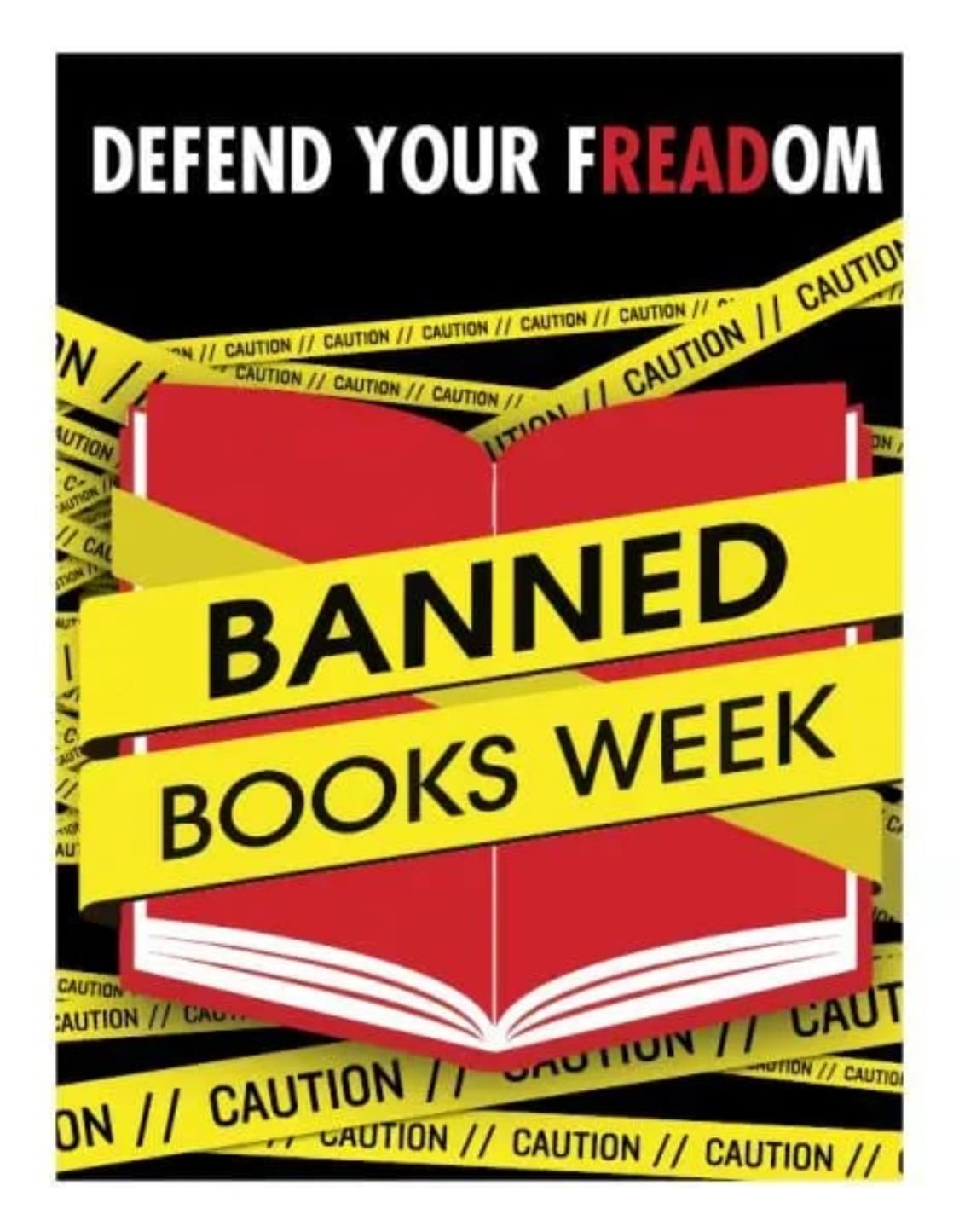
As the autumn term settles in, a familiar, disquieting ritual often plays out in school meeting rooms and local council chambers across the United Kingdom. A concerned parent, a campaigning group, or a vocal individual raises an objection, not to a school policy, but to a book on the library shelf. The reasons vary: a coarse word, a challenging idea, a depiction of historical injustice, or a theme that makes someone, somewhere, uncomfortable. As we mark Banned Books Week, it is a timely moment for a sobering reflection on the quiet creep of censorship within our own educational institutions.
The argument for restricting a book is almost always wrapped in the language of protection. “Shield the young,” they say. “Preserve innocence.” It is a sentiment that is, on its surface, understandable. Every parent and educator wants to safeguard children. But this protective instinct, when codified into a demand for removal, quickly curdles into something far more insidious: a soft form of authoritarianism.
As we can see here:
From Protection to Control: The Authoritarian Impulse
The act of challenging a book is fundamentally an act of control. It is the assertion that a singular viewpoint—be it of a parent, a governor, or a campaign group—has the right to determine what constitutes acceptable thought for an entire school community. It decides which histories are too painful to confront, which identities are too controversial to acknowledge, and which ideas are too dangerous to ponder. This is not the action of a confident, liberal democracy; it mirrors the logic of authoritarian regimes, where a sanctioned narrative is imposed upon the populace.
When a book is removed for its racial slurs, we are not protecting children from racism; we are preventing them from understanding its historical context and corrosive power. When a text is stripped from a shelf for being “distressing,” we are sanitising the brutal reality of the world. This is not protection; it is a wilful cultivation of ignorance. It replaces complex, difficult truths with a safe, palatable, and ultimately false version of life.
The Classroom as a Crucible for Critical Thought
A British school library should be an arsenal for the mind, not a curated safe space devoid of intellectual risk. The classroom is the crucial training ground where young people learn to navigate the messy, complicated, and often contradictory world of ideas. This process requires friction. It requires encountering perspectives that challenge their own, stories that unsettle their assumptions, and language that may be unfamiliar or uncomfortable.
By seeking to ban books, we strip students of the very tools they need to develop the critical thinking so prized by British educational values. How can one learn to analyse, to critique, to form a reasoned argument, if they are only ever exposed to ideas deemed universally inoffensive? The ability to read a challenging text, to dissect its themes, and to debate its merits and flaws with peers—this is the bedrock of intellectual maturity. To deny this process is to raise a generation that is literate, perhaps, but not truly educated.
The Cynicism of the ‘Easy Answer’
There is a profound cynicism at the heart of the book-challenging movement. It is a cynical view of children, suggesting they are too fragile to handle difficult truths. It is a cynical view of teachers, implying these trained professionals are incapable of guiding students through sensitive material with care and skill. Most of all, it is a cynical view of society itself, proposing that our communal differences are best managed through silence and erasure, rather than through dialogue and understanding.
The ‘easy answer’ of removal avoids the harder, more vital work of education: the conversation between parent and child, the facilitated discussion in the classroom, the nurturing of empathy that comes from walking in another’s shoes through the pages of a book. Challenging a book is an administrative shortcut that bypasses the entire purpose of schooling.
A Litany of Lost Voices: The Targets of Censorship in the UK
The pattern of what gets challenged in the UK is both predictable and revealing. A survey of frequently targeted books reads like a roll-call of essential literature, highlighting precisely what the censor fears: diversity of experience and the unvarnished truth.
- Of Mice and Men by John Steinbeck: This American classic has been repeatedly challenged in UK schools for its use of racial slurs and depictions of disability and mercy killing. The censors’ focus on the language, rather than the book’s profound themes of friendship and the American Dream, demonstrates a failure to distinguish between depicting hardship and endorsing it.
- The Curious Incident of the Dog in the Night-Time by Mark Haddon: Despite winning multiple British awards, this novel has faced calls for removal due to its use of strong language and its frank portrayal of a young protagonist with behavioural difficulties. To challenge it is to reject a masterful exercise in empathy and neurodiversity.
- Nineteen Eighty-Four by George Orwell: The supreme irony of challenging this most British of dystopian classics, which explicitly warns against state-controlled thought and information, seems lost on the censors. It has been periodically questioned for its political themes and sexual content, its core message proving too potent for some.
- The Hate U Give by Angie Thomas: While not formally banned nationwide, this defining novel has faced intense challenges in several UK school districts for its “anti-police” message, profanity, and depictions of racial violence. To challenge this story is to attempt to silence a powerful, contemporary narrative about police brutality and systemic racism, denying young British readers a crucial lens through which to understand modern societal conflicts.
- Brave New World by Aldous Huxley: Another foundational British dystopian work, it has been challenged for its themes of promiscuity and drug use, with censors again missing the critical and cautionary nature of its satire.
- Gender Queer by Maia Kobabe: This graphic memoir has been at the centre of contemporary censorship battles, including in UK libraries, where it has been challenged for its frank depiction of gender identity and sexuality. The campaign against it is a clear attempt to erase LGBTQ+ experiences from public discourse.
A Critical Overview of the Banning Impulse
This behaviour, witnessed in communities across the UK, follows a clear and troubling pattern. It is a behaviour that:
- Confuses Comfort for Education: It operates on the flawed premise that education’s primary goal is to make students feel comfortable, rather than prepared. It prioritises the absence of discomfort over the acquisition of wisdom.
- Punishes Empathy: By challenging stories about marginalised groups, it actively prevents the cultivation of empathy. You cannot learn to understand someone whose story you are never allowed to hear.
- Projects Adult Anxieties onto the Young: The objections are rarely about what children themselves find troubling, but almost always about adult anxieties regarding society, morality, and change.
- Is Inherently Discriminatory: A disproportionate number of challenged books are by or about LGBTQ+ individuals, people of colour, and other marginalised groups. Censorship is rarely neutral; it is often a tool for enforcing a majoritarian, heteronormative status quo.
This Banned Books Week, the challenge for us in Britain is not simply to defend individual titles. It is to defend a principle: that free speech and free inquiry are the lifeblood of our society. An educated citizenry is not one that has been sheltered from the world, but one that has been prepared to meet it, in all its dazzling, difficult complexity. The greatest danger is not the controversial book on the shelf, but the silent, empty space where it used to be. Let us ensure our school libraries remain full, our curricula remain robust, and our children’s minds remain open, curious, and unafraid.