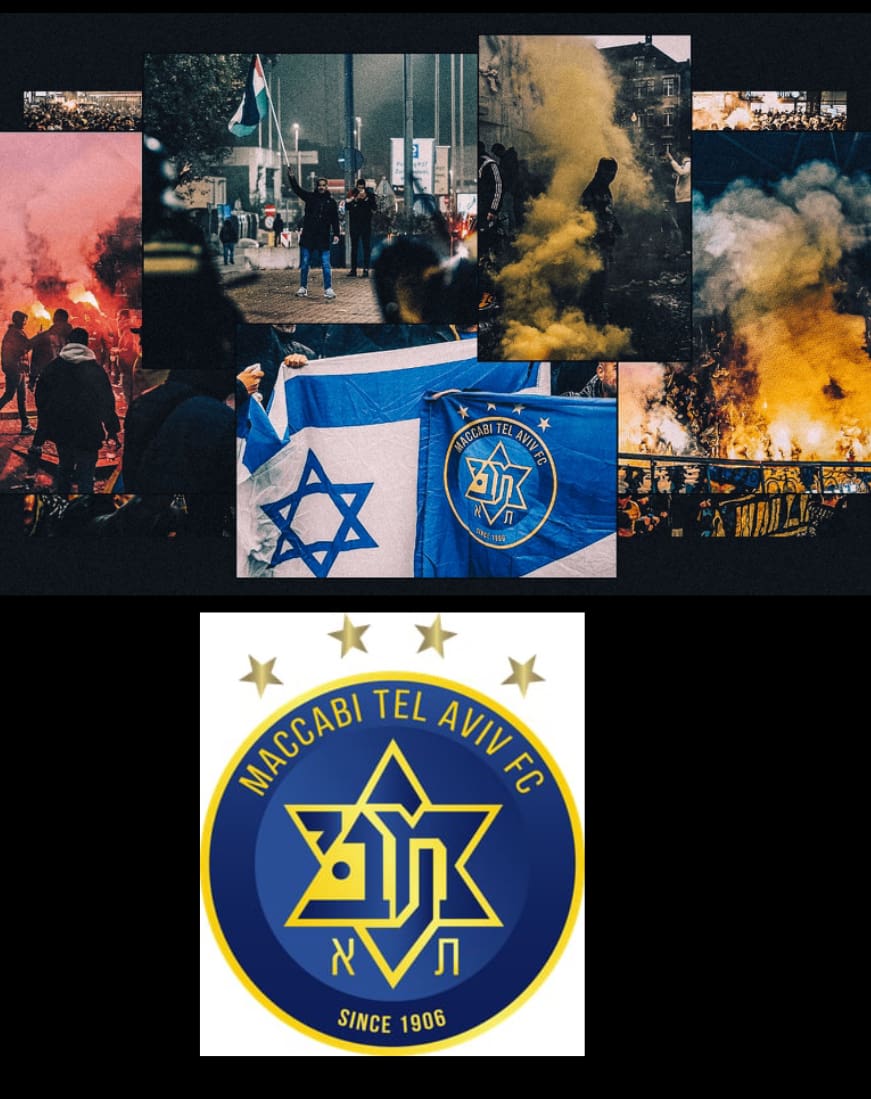
The Yellow Wall of Sound and Fury: A History of Maccabi Tel Aviv’s Hooligan Element
In the vibrant, often chaotic, world of Israeli football, few clubs command a presence as formidable as Maccabi Tel Aviv. With a record number of league titles, the club is a bastion of the establishment, representing the secular, bustling heart of the country’s economic and cultural capital. Yet, parallel to its on-pitch successes runs a darker, more turbulent narrative—a long and often violent history of hooliganism associated with its most fervent supporters.
The origins of organised, violent fan culture at Maccabi are deeply intertwined with the club’s identity and its bitter rivalry with Hapoel Tel Aviv. This is not merely a sporting contest; it is a socio-political schism played out on the terraces. Historically, Maccabi was seen as the club of the right-wing, middle-class, and the Revisionist Zionism movement, while Hapoel was rooted in the left-wing labour movement. This ideological fault line provided a fertile ground for intense, often hostile, rivalry from the earliest days.
The Birth of the Ultras and the Commando Faction
The modern era of hooliganism at the club began in the late 1980s and early 1990s with the formation of organised ultra groups, most notably the “Maccabi Fans” and “Yelowlnach” (a portmanteau of ‘Yellow’ and the Hebrew word for ‘crazy’). These groups brought a new level of co-ordinated support, with giant flags, constant chanting, and impressive tifos. However, within this broad supporter base, a more militant faction emerged, known as the “Commando” fans.
The Commando faction quickly became synonymous with violence, both planned and spontaneous. Their activities mirrored the hooligan firms of Britain in the 1970s and 80s: organised pre-arranged fights with rival firms, pitch invasions, and vicious confrontations with the police. They adopted a notorious, menacing chant—”Whoever doesn’t jump is a Hapoel fan”—using the rivalry as a constant justification for aggression.
A Chronology of Violence
The history of the Commando faction is punctuated by numerous serious incidents:
- Violence against Rivals: Clashes with Hapoel Tel Aviv fans are a near-ritualistic occurrence, often requiring a massive police presence to keep the factions apart. But the violence has extended to other rivals, particularly Beitar Jerusalem, whose own notoriously far-right and anti-Arab fan base provides a volatile adversary. Matches between Maccabi and Beitar have frequently descended into large-scale street battles.
- The 2000 State Cup Final Riot: A particularly dark chapter occurred at the 2000 Israel State Cup Final against Hapoel Tel Aviv. After Maccabi conceded a late equaliser, hundreds of their fans stormed the pitch, attacking Hapoel players and fans. The riot caused extensive damage and led to a major police investigation, resulting in numerous arrests and a temporary ban on Maccabi fans attending away matches.
- Racism and Intolerance: While not as institutionally associated with racism as Beitar Jerusalem, Maccabi’s hardcore fringe has been responsible for numerous racist incidents, primarily directed at Arab players or those from other clubs. This bigotry is often weaponised as part of the tribal warfare of Israeli football.
- Attacks on Their Own: The fury has even been turned inwards. In 2013, following a disappointing loss, a group of fans attacked the Maccabi team bus, shattering windows and leaving players visibly shaken. This incident starkly illustrated that the threat of violence was not confined to rival factions but could be directed at their own club when perceived failures occurred.
A Modern Consequence: The Birmingham Ban
This history has now collided with the geopolitics of the present day, with significant consequences for the club’s European travels. Now in 2025, West Midlands Police have made the unprecedented decision to stop Maccabi Tel Aviv fans from attending their Europa League match against Aston Villa in Birmingham. The decision, coming just two weeks after a deadly terror attack on a Manchester synagogue, raised fresh and alarming concerns about Britain’s ability to protect its Jewish community.
The police force cited fears of unrest and potential protests, referencing “hate crime offences” and implying that the Israeli fans could be responsible for them as well. Officers partly justified the ban by pointing to the fact Maccabi Tel Aviv supporters were caught up in clashes involving pro-Palestinian protesters when attending a game against Ajax in Amsterdam in 2024.
This move was met with widespread condemnation. The Israeli government called for it to be reversed, and the Prime Minister, Sir Keir Starmer, issued a strong rebuke, calling it the “wrong decision” and stating, “We will not tolerate antisemitism on our streets,” affirming that all fans should be able to enjoy the match without fearing “violence or intimidation.” Jewish groups in Britain, including the Jewish Leadership Council and the Campaign Against Antisemitism, also criticised the move.
The ban, overseen by a Labour-run council, is being propagandised as a message that Birmingham had become unsafe for Israelis and that its authorities could not guarantee their protection. This apparently raises a serious question for a city with ambitions to host matches for the 2035 FIFA Women’s World Cup: if it cannot safely manage a club football match, is it capable of holding a major international sports event again?
Causes, Context, and an Uncertain Future
Understanding the persistent violence around Maccabi requires looking beyond simple footballing passion. Israel is a country existing in a state of perpetual tension, with military service compulsory for most young adults. Some sociologists argue that the hyper-masculine, confrontational behaviours learned in a militarised society can easily spill over into football culture, where the terraces become another front line.
Furthermore, the internal Israeli socio-political landscape, with its deep-seated divisions, provides a ready-made framework for football rivalries to become proxies for wider societal conflicts. For the Commando fans, defeating Hapoel is about more than points; it is a symbolic victory for their entire worldview.
The story of Maccabi Tel Aviv’s hooliganism is a tale of two clubs: one of celebrated sporting excellence, and another of a militant, vocal minority whose legacy is one of fear and conflict. The Birmingham episode demonstrates how this history, when combined with contemporary geopolitical tensions, can now lead to the collective punishment of all supporters and spark a national debate about safety, antisemitism, and the very ability of British cities to host international sport. The Yellow Wall, for all its impressive noise and colour, has been built, in part, with bricks of sound and fury whose echoes are now being heard on British streets. This was never about antisemitism despite the political narrative being constructed. It is about a violent right-wing group who use football matches as their place of gathering.