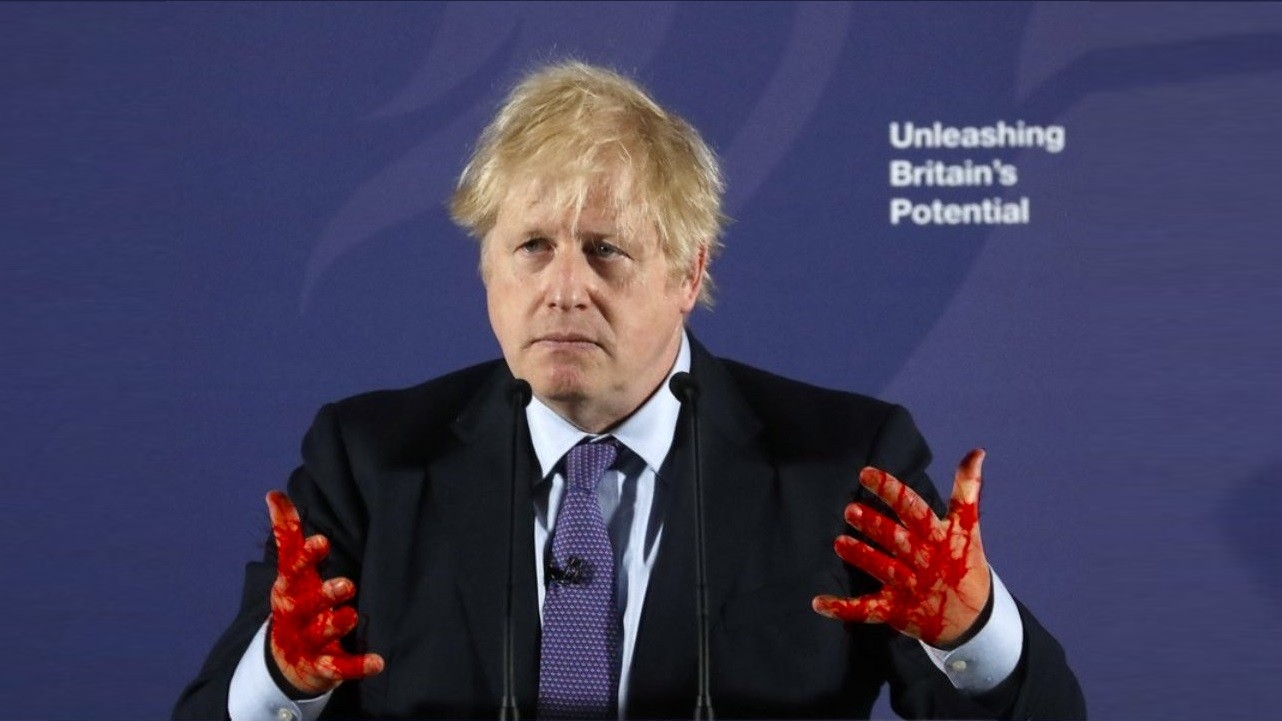
The Hallett Report’s conclusion of a “toxic and chaotic culture” is not an abstract judgement but a finding borne out by a cascade of specific failures, interpersonal conflicts, and systemic dysfunctions that plagued the heart of UK government decision-making. This analysis breaks down the manifestations of this toxicity and their direct consequences.
1. Leadership Vacuum and Strategic Dithering
At the top, the problem was epitomised by Prime Minister Boris Johnson’s leadership style, which was described as volatile and indecisive.
- Initial Optimism and Denial: Johnson’s well-documented preference for optimism over grim reality led to a disastrously slow start. He famously boasted of shaking hands with COVID-19 patients in a hospital in early March 2020, at a time when scientists were urging social distancing. This signalled a fundamental failure to appreciate the threat.
- “Bunker” Mentality and Absence: Testimony revealed that during critical periods, Johnson would retreat into a “bunker” with a small group of advisors, often excluding key ministers and experts. His own near-fatal bout with the virus in April 2020 created a power vacuum at a moment of peak crisis, stalling decision-making.
- Indecisiveness and U-Turns: The inquiry heard evidence of a government paralysed by hesitation. The decision on lockdowns was a prime example. Johnson was reportedly deeply reluctant to impose restrictions due to their economic and social cost, leading to a cycle of delayed action, followed by a sudden, panicked reversal. This “stop-start” approach created public confusion and eroded trust.
2. “Loudest Voices” and a Hostile Environment
The report’s finding that the “loudest voices prevailed” points to a culture where bullying, machismo, and ideological fervour trumped evidence and collegiality.
- The Dominic Cummings and Lee Cain Dynamic: The most prominent example was the role of Chief Adviser Dominic Cummings and Director of Communications Lee Cain. Witnesses, including senior civil servants and ministers, described a hostile environment where these advisors would belittle and shout down officials and ministers who disagreed with them.
- “The Proles” and “Useless Pigs”: Leaked messages revealed the contempt in which the core team held their colleagues. Cummings referred to the Cabinet Secretary as a “c” and a “crazed b**d,” while in one exchange about testing, a senior official suggested “I think we are in the terrible position of… relying on [the Department of Health] and their fucking useless tests.” Another adviser, Henry Cook, was described as “a complete waste of space.” This language created a culture of fear and intimidation.
- Treatment of Women: The report explicitly states that the views of women “often went ignored.” The most glaring incident was the treatment of the then-Health Secretary, Matt Hancock. While not the subject of the bullying, his performance was a point of contention. More tellingly, senior female officials like Helen MacNamara (Deputy Cabinet Secretary) testified about the “macho” and “toxic” atmosphere. She was forced to apologise for a single, historic incident (a karaoke party), while the pervasive, systemic bad behaviour of male colleagues went unchecked for months. Her warnings about the lack of consideration for the pandemic’s impact on women and families were initially sidelined.
3. A Culture of Rule-Breaking and “One Rule for Them”
Perhaps the most damaging aspect for public confidence was the revelation that those designing the rules were frequently breaking them.
- The Barnard Castle Incident: Dominic Cummings’ infamous trip to Durham during the first lockdown and his subsequent press conference in the Downing Street rose garden where he defended his drive to Barnard Castle to “test his eyesight,” became a symbol of government hypocrisy. The inquiry heard that this single event significantly damaged public trust and compliance with lockdown rules.
- Partygate: While the Module 2 report focuses on early 2020, the subsequent revelation of multiple illegal gatherings in Downing Street and across Whitehall throughout lockdowns is the ultimate expression of this toxic culture. The Metropolitan Police issued 126 fixed-penalty notices, including one to the Prime Minister himself. This proved that the chaotic, rule-disregarding environment described in the early days had become institutionalised.
4. Systemic Failures and “Misleading Assurances”
The toxic interpersonal culture was compounded by systemic failures in government machinery and preparedness.
- Chlorine Dioxide and the “Nudge Unit”: Early discussions, influenced by behavioural scientists from the “Nudge Unit,” reportedly considered a strategy of allowing the virus to spread to build “herd immunity.” While the government denies this was official policy, the inquiry heard it contributed to a delay in imposing lockdowns. The focus was on managing public behaviour rather than suppressing the virus.
- Failure of PPE Procurement and NHS Preparedness: The “misleading assurances” about preparedness were brutally exposed. The NHS was found to have inadequate stocks of Personal Protective Equipment (PPE), leading to a desperate and often corrupt “fast lane” for procurement. Frontline healthcare workers were left exposed, a direct consequence of years of austerity and a failure to act on pandemic preparedness exercises.
- The Eat Out to Help Out Scheme: Launched in August 2020, this policy was cited by the government’s own Chief Scientific Adviser, Sir Patrick Vallance, as having potentially fuelled transmission. It was a prime example of a siloed decision, driven by economic concerns (the Treasury) without adequate consultation with public health experts, and was described in one scientific adviser’s diary as “eat out to help the virus out.”
The Confluence of Toxicity and Catastrophe
The “toxic culture” was not a sidebar to the UK’s poor pandemic response; it was the engine of it. The analysis shows that:
- Indecisive leadership caused delayed action, costing lives.
- A bullying, “macho” culture silenced dissenting voices and excluded valuable perspectives, leading to groupthink and flawed policies.
- A blatant disregard for the rules by those in power shattered public trust and compliance, undermining the entire strategy.
- Systemic arrogance and a lack of preparedness meant the UK was reacting to, rather than controlling, the crisis.
The 23,000 deaths that could have been prevented with an earlier lockdown are not just a statistic; they are, in part, the human cost of a government that was as chaotic and dysfunctional in its own operations as it was slow to act against the virus. The Hallett Report confirms that the UK’s failure was not merely a matter of bad luck but a profound failure of culture, character, and competence at the highest levels of power.