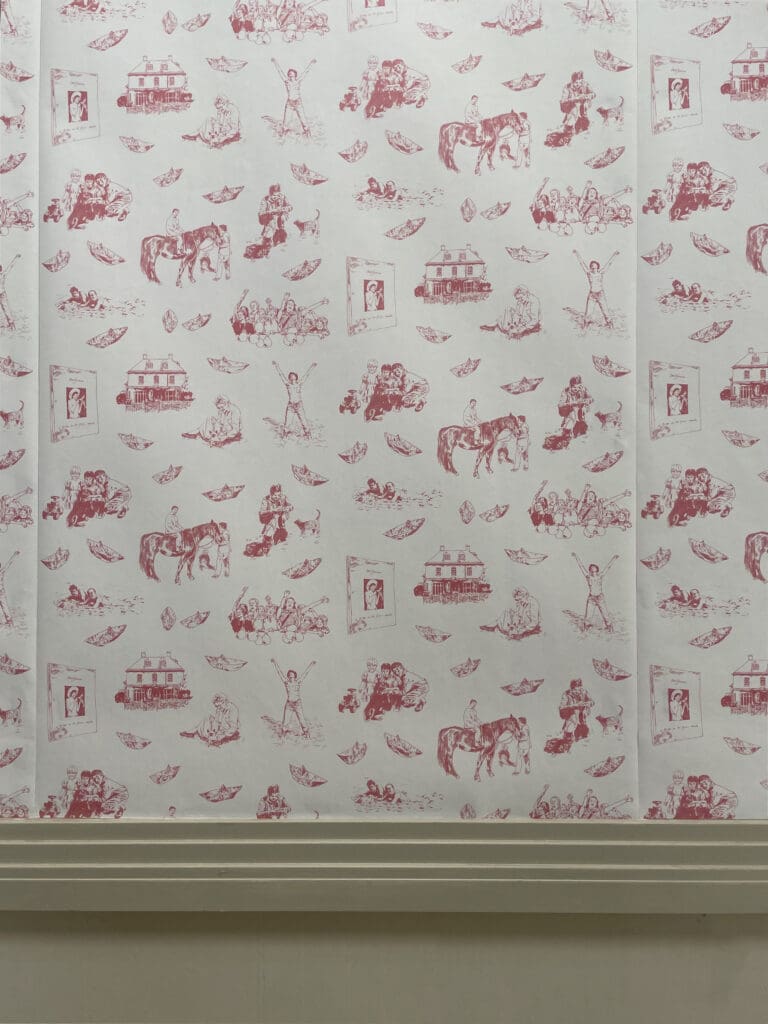
If you’re in Bridport this summer, remember to stop by Bridport Arts Centre. Set back from South Street and Buckydoo Square, BAC’s entrance is down the side street to the right. Once you’re inside, you’ll see a newly commissioned artwork marking the end of their Queer in the Countryside season of events: an illustrated wallpaper set into one of their advertising quads, and if you’re lucky, there will be free postcards left on a table nearby.
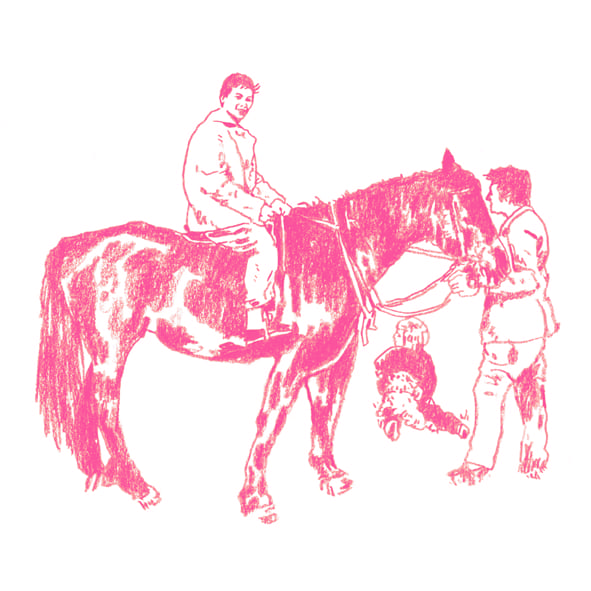
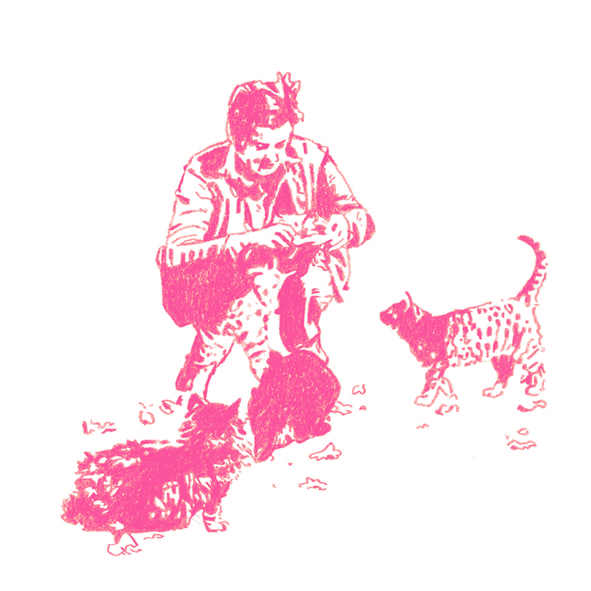
The wallpaper, titled Lisome Rum, from the old Dorset words for ‘happy’ and ‘queer,’ contains a repeating pattern of images drawn from LGBTQIA+ stories across rural Dorset, including writers Sylvia Townsend-Warner and Valentine Ackland outside with their cats; musician Douglas Dare as a boy wearing a dress while playing with his brothers on a country path; and silver paper boats that artist and activist Derek Jarman floated off Dancing Ledge into the sea whilst making a film.
BAC’s Director Claire Tudge had set out to curate this Queer in The Countryside season ‘to demonstrate and acknowledge their unique position as a multidisciplinary arts centre to use storytelling to highlight issues and contribute towards importance societal discourse.’ The Arts Centre prides itself in the platforming of diverse voices, and this season was an opportunity to foreground local stories that might not otherwise be heard.
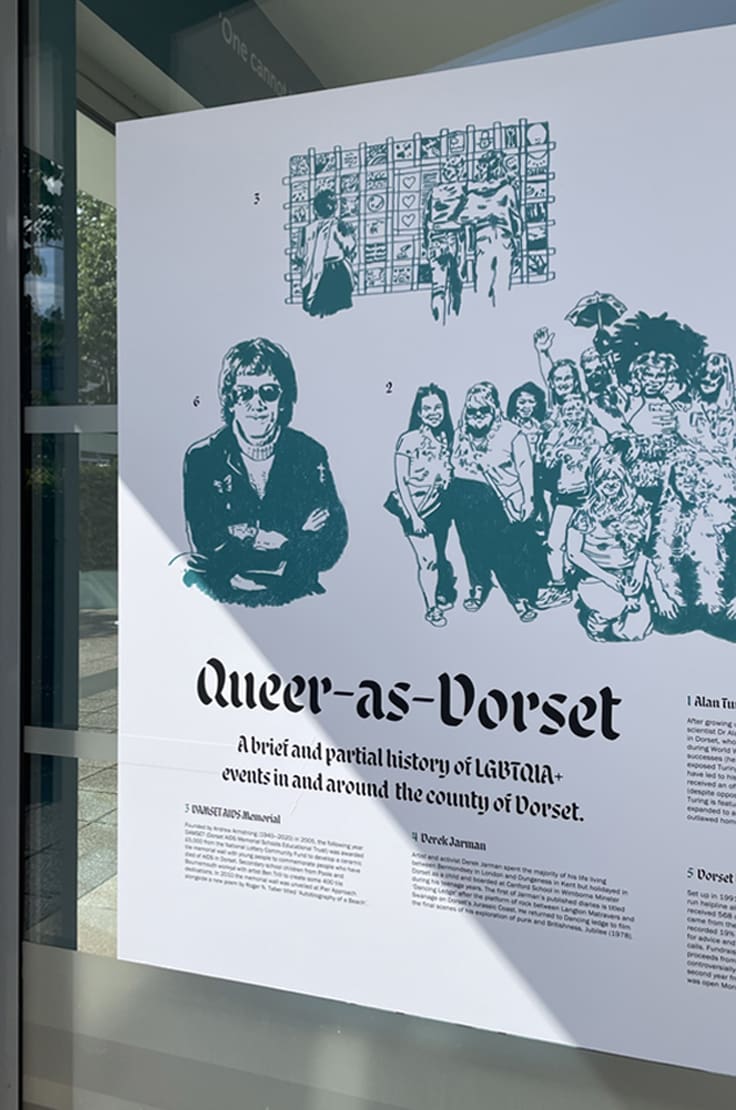
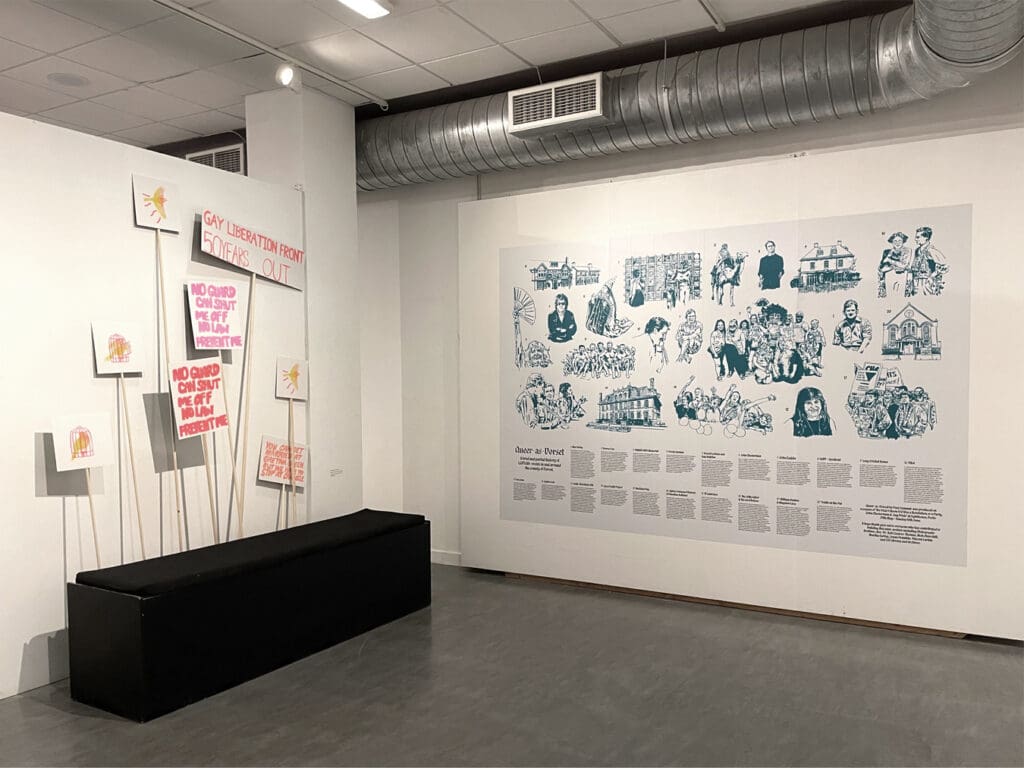
I was invited to contribute to BAC’s season after producer Michael Armstrong saw some work I was commissioned to make for Lighthouse, Poole, last year. Vincent Larkin of Arts Bournemouth University approached me to create Queer-as-Dorset, a work that collected and shared LGBTQIA+ histories from across Dorset. The artwork was displayed in Lighthouse’s gallery with student work and archival items as part of a larger research project.
During early conversations with Michael, he directed me to the film, Rufus Stone, a creative outcome of a Bournemouth University research project led by Dr. Kip Jones. Jones’ investigation was focused on ‘positioning, aging, and gay life in rural Southwest England and Wales.’ Rufus Stone is the story of a man returning to rural Dorset as an adult after facing discrimination in the area as a youth. My response to the film was that, despite how well shot, acted, and put together the film was, it was bleak. It seemed to pit homosexuality against the rural by portraying their negative connections, whereas, for Lisome Rum, we wanted to demonstrate that LGBTQIA+ people do and have chosen to live in rural Dorset, so it can’t all be bigoted opinions and ostracization.
At the time I was also working on a project for Buckinghamshire County Archives, creating a comic book out of their research into Victorian LGBTQIA+ lives. This kind of historical research into marginalised lives is difficult for many reasons, but one of the rudimentary ways of identifying people who had queer experiences is through finding criminal records. The connection to criminality immediately portrays negative aspects of the individual’s life.
Based on these other works, I was moved to suggest that we try and put together a work based on notions of Queer joy in the countryside – sharing stories of people in Dorset who have had positive experiences living rurally and being queer. To put this together, I went about doing some historical research while we also announced an open call for people to contribute stories or anecdotes about being LGBTQIA+ that connect joy to their queer experiences.
Through the open call we were able to include some contemporary voices in the project. I also made use of the Dorset History Centre’s excellent LGBT+ Speakout Project, which conducted and collected interviews with LGBT+ folk in Dorset (now available to listen to on their website!). Multiple interviewees mention the brilliant work that Space Youth Project does across Dorset. Their services have provided community and hope for many young people who have experienced loneliness due to their queerness.
The Lisome Rum outcome is presented as a wallpaper to suggest a sense of domesticity and an embeddedness within the landscape, hopefully to make clear to anyone who sees it that LGBTQIA+ folk have always been a part of all kinds of communities throughout history. I attempted to maintain a diversity of stories, including the joy of a local organiser and activist in their gender transition, Derek Jarman’s only book of poetry published out of Bettiscombe Manor, and Long Crichel House, once a haven for a community of queer men and their friends.
Other stories that we were able to include were those of David Brynley and Norman Notley, both musicians, who lived relatively openly as a couple in Dorset from the early 1920s, long before homosexuality was even partially decriminalised; and sculptor Mary Spencer Watson sharing her home at Dunshay Manor with her partner, Margot Baynes. Discreetly but unhidden, together they raised Margot’s five children, and Mary, the breadwinner, supported their endeavours as they moved on in the world.
For this new commission, the specific focus on the notion of queer joy is ultimately an artistic act of resistance against the ongoing attacks on queer rights taking place across the world. Despite the rolling back of rights and even divisions within our communities, there is love and joy, and as I mentioned at the beginning of this article, there are also postcards available. The postcards depict some of these happy queer lives and can be shared to spread the joy to anyone else who may need it.