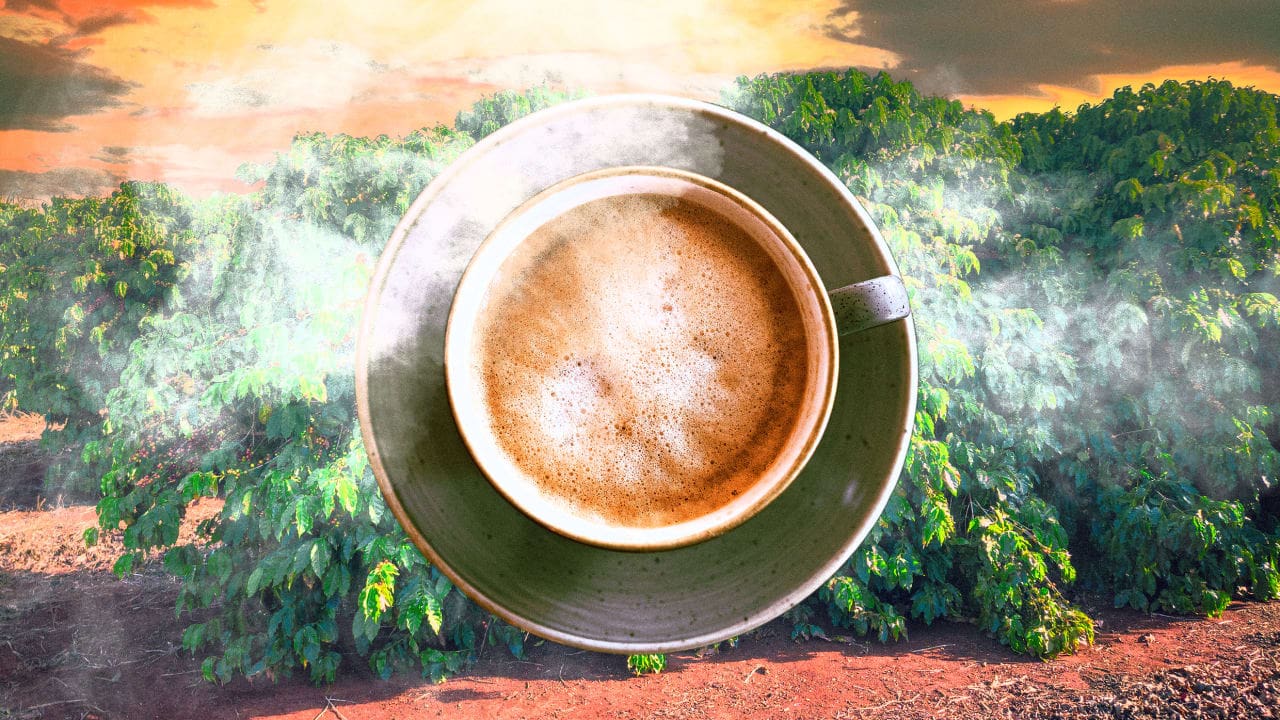
The humble cup of coffee that millions reach for each morning faces an increasingly uncertain future. Scientists and industry analysts warn that climate change is not just squeezing yields; it is shrinking the very land where coffee can be grown, which risks sharply increasing prices and threatening the livelihoods of millions of farmers.
The Heat Is Turning Up Where Coffee Grows
Coffee, especially the prized Coffea arabica species, is incredibly sensitive to temperature. Arabica thrives in cool, stable climates between roughly 18°C and 22°C; beyond those limits, plant growth, bean quality and yields all suffer.
According to recent analysis by Climate Central, the world’s top five coffee-producing countries, including Brazil, Ethiopia, Vietnam, Colombia and Indonesia, are now experiencing, on average, 57 extra days per year above 30°C, compared with what would be expected in a world without human-made carbon pollution. That kind of sustained heat is harmful to coffee trees and their ability to produce quality beans.
Other climate models forecast that by 2050, up to 50 percent of land currently suitable for coffee cultivation may no longer be viable unless significant adaptation measures are taken.
Why Warming Matters So Much for Coffee
Climate scientists highlight several ways in which a warming world threatens coffee production:
- Heat stress and drought reduce plant productivity and bean quality. Prolonged heat can result in poor flowering and lower coffee yields.
- Shifts in climatic zones: Areas that were once ideal are becoming too hot, pushing cultivation upslope or forcing farmers to relocate crops entirely.
- Increased pests and diseases: Warmer temperatures enable pests like the coffee berry borer and fungal diseases (such as coffee leaf rust) to spread into new areas and altitudes, further harming crops.
- Rainfall variability: Erratic rain patterns and longer dry spells make it harder to manage water and sustain healthy trees.
In simple terms, crops that have historically relied on steady temperature and rainfall patterns are now being forced to cope with new extremes and often losing out.
Smallholders Bear the Brunt
Most of the world’s coffee comes from smallholder farmers, more than 25 million producers in over 60 countries. Many of them have limited access to irrigation, crop insurance, or capital to invest in more resilient systems.
In regions like Ethiopia, coffee is not only an agricultural product but also a cornerstone of rural economies, supporting millions of households and making up a significant share of export revenue. Yet these farmers often receive a tiny fraction of the funding needed to help them adapt to changing conditions, as little as 0.36 percent of the climate adaptation finance estimated to be required.
Deforestation and Feedback Loops
In key producing nations such as Brazil, coffee expansion has sometimes been linked to forest loss, reducing rainfall and soil moisture that coffee plants depend on. Between 2002 and 2023, an estimated 737,000 hectares of forest were cleared or degraded in regions tied to coffee cultivation, potentially worsening local drought conditions.
What This Means for Prices and Coffee Lovers
Higher temperatures and shrinking coffee lands are already contributing to rising prices for both green beans and roasted coffee worldwide. In some years, severe droughts have halved expected harvests in major producing countries and helped push wholesale prices to record levels.
With global demand still high, about 2 billion cups consumed each day and climate change intensifying, coffee could shift from being a daily staple to a more premium, expensive product for consumers.
What Can Be Done?
Researchers and growers are exploring several strategies:
- Agroforestry and shade management: Growing coffee under tree cover can help regulate temperature and retain soil moisture.
- Breeding heat-tolerant varieties: Scientific teams, including those at research institutions like Royal Botanic Gardens, Kew, are investigating wild coffee species and genetic traits that could thrive under hotter, drier conditions.
- Relocation and adaptation: Some producers are shifting coffee farms to higher altitudes or more favourable microclimates.
- Policy support: Improved climate finance, crop insurance and technical assistance will be critical to help vulnerable farmers adapt.
A Brewing Crisis
Coffee’s future rests on both local adaptation and global climate action. Without meaningful reduction in greenhouse gas emissions and sustained support for farming communities, the familiar coffee belt that today supplies a large portion of the world’s beans may shrink significantly, making those daily cups both rarer and more expensive.
In short: Climate change is not just a future threat; it is already reshaping coffee production and could make your morning brew a true luxury unless greenhouse gas emissions are cut and resilient farming practices are widely adopted.