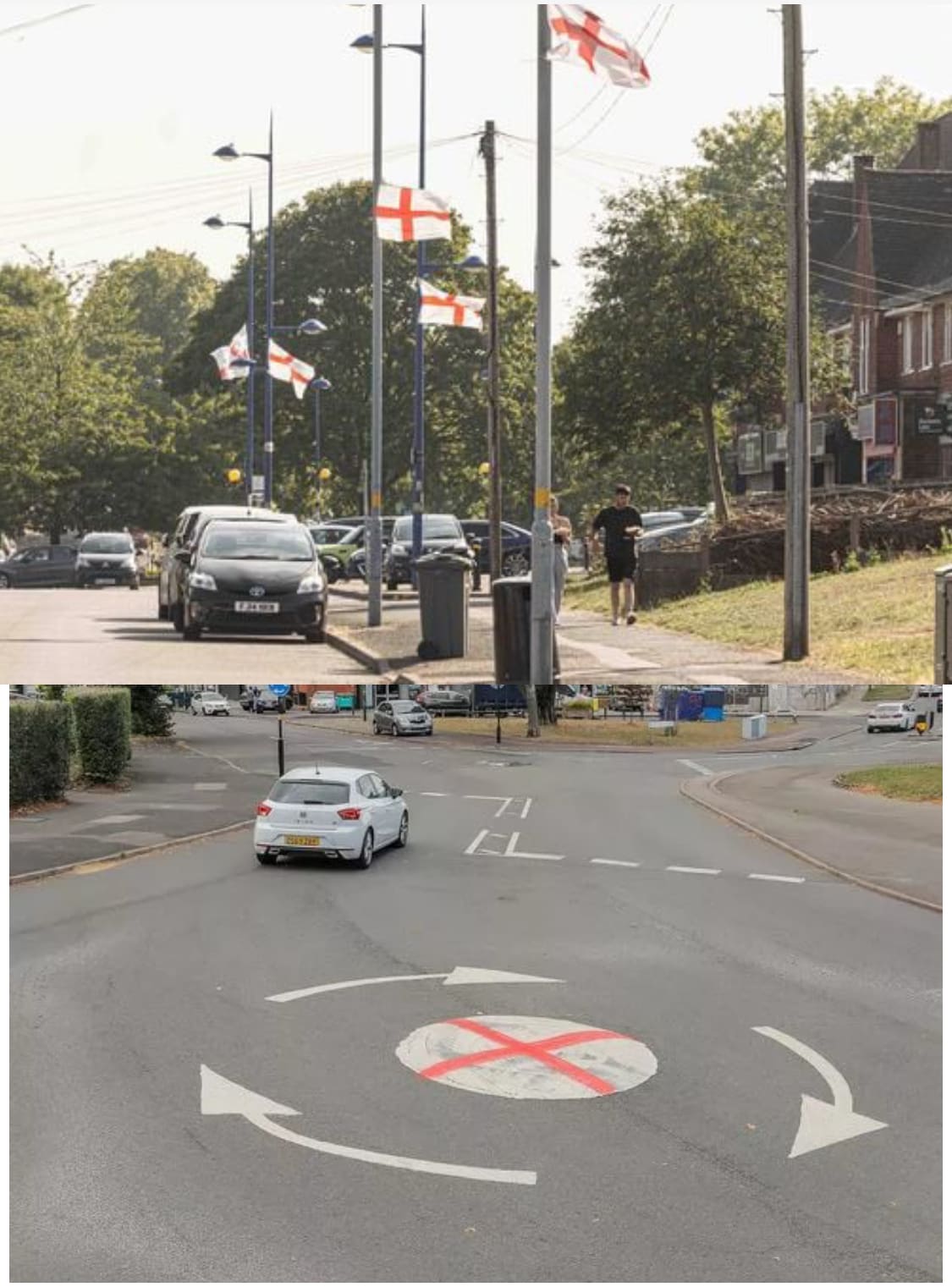
Some people try to convince us that the sudden need to fly the flag is not about being racist, and yet the evidence up and down the country speaks for itself. Whether online or interpersonally, the abuse has reached fever pitch. To be a patriot is one thing; to be a racist is quite another.
A council claims an increase in "flag flying" has coincided with a rise in racist incidents, including children being abused on their way to school.
— Simon Gosden. Esq. #fbpe 3.5% 🇪🇺🐟🇬🇧🏴☠️🦠💙 (@g_gosden) September 12, 2025
York City Council has decided to remove hundreds of St George and Union flags.
pic.twitter.com/XlPAcMb7jb
A Victim Of Racism In Dorset Shares His Story
My own father fought in the First World War and the Second World War. He was tortured, had his nails pulled out, and his legs were full of shrapnel fighting for Britain. And yet as a child, I would hear our neighbours say, “go back home, you Black bastard; you don’t belong here”!
Many other immigrants after the war made many sacrifices, leaving behind their loved ones and living in terrible conditions because the UK government called on them to help make this country great. They made Britain their home only to have themselves and their children escorted like criminals out of the country decades later.
And if any one of you made it your business enough to do some research, they would find that their blood, sweat, and tears contributed to building the roads that we walk on, the homes we live in, London transport, the NHS, and so much more.
Many, like my father, had fought in the First World War and the Second World War because they truly believed that all human beings should be treated equally and live in peace, enjoying their freedom.
Unfortunately, the great sacrifices that were made mean nothing to many of the British organisations and people that begrudge you living and working in their neighbourhood or having equal access to normal everyday services such as education, medical care, social care, or local authority services.
Throughout my life, I felt the sharp end of racism and discrimination day in and day out. And it can be a very lonely, isolating place to exist.
Constantly having to struggle to get even the basics of human rights for myself and my family to live and work within a very cold and hostile environment and being stared at by people who look at me with hatred in their eyes or observe me with suspicion had become so stressful and tiring I just wanted to get my life over and done with because I could not see any hope of my life or my children’s lives getting easier in the future.
By the time I discovered the organisation Dorset Race Equality Council (DREC) it had taken its toll on my health.
The local authorities and other powers that be refused to listen to anything I had to say for as far back as I can remember.
I had tried to be as independent as possible, not asking for access to any public services, but it’s impossible to be completely independent because sometimes an individual or their children need to go to school, see the doctor, or be in contact with the local council or authorities, and that’s when experiencing the full force of hostility and discrimination and mental beating steps up to a whole new level. It’s soul-destroying, and it really hurts.
DREC thankfully welcomed me and listened to me and the problems I was facing. Nathalie Sherring, the chief officer, listened to my story and allocated my first caseworker, Tina, who was so helpful but sadly, has now retired. My case was then taken over by Penelope, and I was absolutely amazed at the way that Penelope set about solving all the issues one by one that I had been struggling to get sorted by the Local Authority.
And I no longer felt ignored; it made me feel more hopeful about the future, and I am no longer having to tackle racism alone. Penelope has made me feel that my life matters and that my needs matter too. Her support has been like a breath of fresh air, and as a result, I am feeling a sense of empowerment. DREC has also introduced me to other members of our society from all walks of life that also want to join forces in wanting to make positive changes in the realm of equality, racism, and discrimination.
I am no longer invisible and powerless; instead, I am starting to feel much more empowered and in a better position to be able to contribute in any way that I can to making our society a better place to live for all of us.
Reported Prevalence
Data indicates that a significant number of ethnic minority residents in Dorset report experiencing racism.
- A 2021 report by Dorset Race Equality Council (DREC), based on a survey of over 300 ethnic minority residents, found that 72% of respondents had experienced racial abuse.
- The same DREC report stated that 76% of respondents believed racism was a problem in the county.
- Office for National Statistics (ONS) data for the year ending March 2023 shows that Dorset Police recorded 536 race-related hate crimes. This figure has risen from previous years, a trend consistent with the national increase in hate crime reporting across England and Wales.
Do not suffer in silence. Contact DREC here.