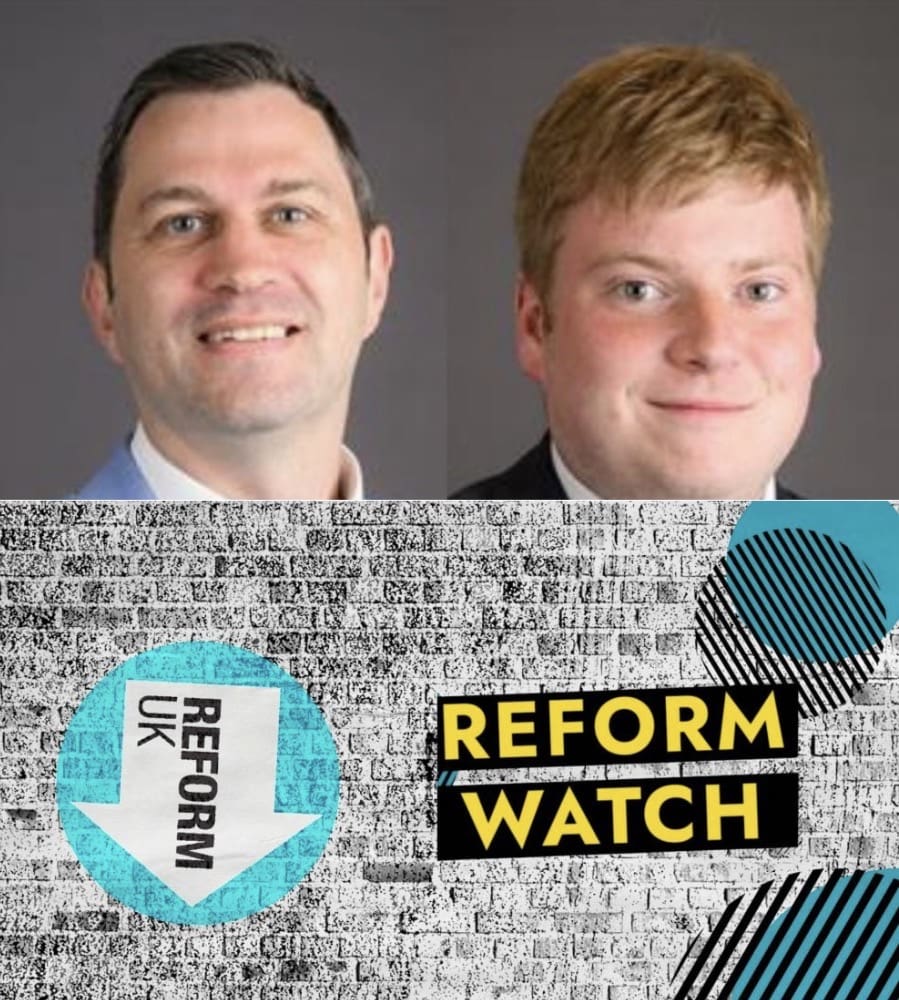
BCP Council finds itself embroiled in controversy as Reform UK councillors Cameron Adams and Duane Farr openly defy formal standards processes, despite multiple upheld complaints for bullying, disrespect, and bringing the council into disrepute. The actions, or lack thereof, of these councillors raise serious questions about accountability, public trust, and the culture of compliance within the party.
A report presented to the council on 10 February revealed that Councillor Cameron Adams had five complaints upheld against him over a single incident of disrespectful behaviour, bullying, and conduct bringing the council into disrepute. Adams was instructed to apologise privately and publicly on social media, attend refresher Code of Conduct training, and review his online language. He was notified on 4 June 2025 and given 14 days to comply. More than eight months later, he has still failed to act, prompting three further complaints.
Similarly, a separate report highlighted Councillor Duane Farr’s misconduct. On 10 February, the council found that Farr had failed to treat others with respect, brought the council into disrepute, attempted to compromise officers’ impartiality, and intimidated those connected to the investigation. He was instructed to issue a written apology to be read at a future committee meeting, post an approved retraction on Facebook, and remove the offending post. Farr was notified on 18 November 2025 and given until 2 December 2025 to comply, yet, like Adams, he has ignored the sanctions.
In their defences, both councillors framed their failures as principled resistance rather than disregard for council rules. Adams claimed that his comments, made on a personal account, were reactions to Councillor Adrian Chapmanlaw filming children outside local schools. He argued that Chapmanlaws faced no sanctions for similar or worse behaviour, including swearing at residents, suggesting the standards board applied rules selectively.
Farr, meanwhile, alleged bias within the standards board itself. “I raised concerns about the standards board and thought they are biased — I still do and make no apology for that,” he said. Farr argued that any attempt to access information to support his claims was refused, and that he had been investigated by the very board he had criticised, creating a conflict of interest. He cited what he perceived as double standards, pointing to Adams’ social media sanction versus Chapmanlaw uninvestigated conduct.
Both statements highlight a wider problem: instead of accepting responsibility, the councillors turned to political grievance and personal attacks, undermining the council’s standards process. Adams’ statement even dismissed legitimate child safety concerns, mocking Chapmanlaw while trying to justify his own conduct. Farr framed his sanctions as politically motivated, despite the cross-party makeup of the standards committee at the time, which included members from Liberal Democrat, Green, Conservative, Labour, Independent, and Christchurch Independent backgrounds.
Chapmanlaw responded firmly, emphasising the seriousness of safety concerns that Adams sought to trivialise. He highlighted that vehicles parked illegally on school zig-zag lines create real dangers for children, parents, and other road users and that police encourage reporting via Operation Snap. “Continuing to attack someone for reporting clear road safety offences particularly outside schools, serves no public interest,” he said. “Road safety should unite us. Children’s safety should never be politicised.”
Robin Watson, interim monitoring officer, reiterated the importance of the standards process. “We welcome the government’s proposed measures to strengthen standards. We look forward to working with the government and other councils to implement these changes and will respond fully when legislative proposals are published.”
The repeated defiance of Adams and Farr highlights a dangerous erosion of public accountability. Both councillors have ignored explicit council-sanctioned actions, undermining the authority of the standards process and casting doubt on the integrity of Reform UK councillors within BCP Council. Their behaviour sends a troubling signal: rules exist, but some are seemingly above them.
This is not an isolated incident. Other Reform UK councillors have previously been admonished for similar breaches of conduct, including inflammatory social media posts and disrespect toward colleagues and members of the public. Taken together, these incidents suggest a pattern of defiance that threatens to normalise disregard for professional standards.
Residents are right to question what accountability looks like when councillors flout council orders. Bullying, harassment, and disrespect are not abstract offences; they are clear breaches of professional conduct, and repeated non-compliance erodes trust in local government. Political grievance, personal attacks, and selective outrage cannot substitute for responsibility.
BCP Council now faces a stark choice: enforce its own rules and demonstrate that no councillor, regardless of party affiliation, is above the standards expected of them, or allow these breaches to stand unchallenged, further undermining public confidence. The stakes are particularly high given that these complaints relate to conduct that impacts both the council’s reputation and the safety of the public.
Ultimately, the behaviour of Adams and Farr exposes a deeper issue. Accountability, respect and public trust are foundational to effective local government. Reform UK councillors’ repeated failure to comply with sanctions undermines those foundations and raises urgent questions about whether party loyalty is being prioritised over duty to the public. Until both councillors comply, BCP residents are left with the stark reality: council standards exist on paper, but for some, adherence is optional.