There is a moment in every public tragedy when the script kicks in. The candles appear. The trembling voice thanks God. The camera lingers. And somewhere between the prayer emoji and the official statement, faith stops being belief and becomes branding.
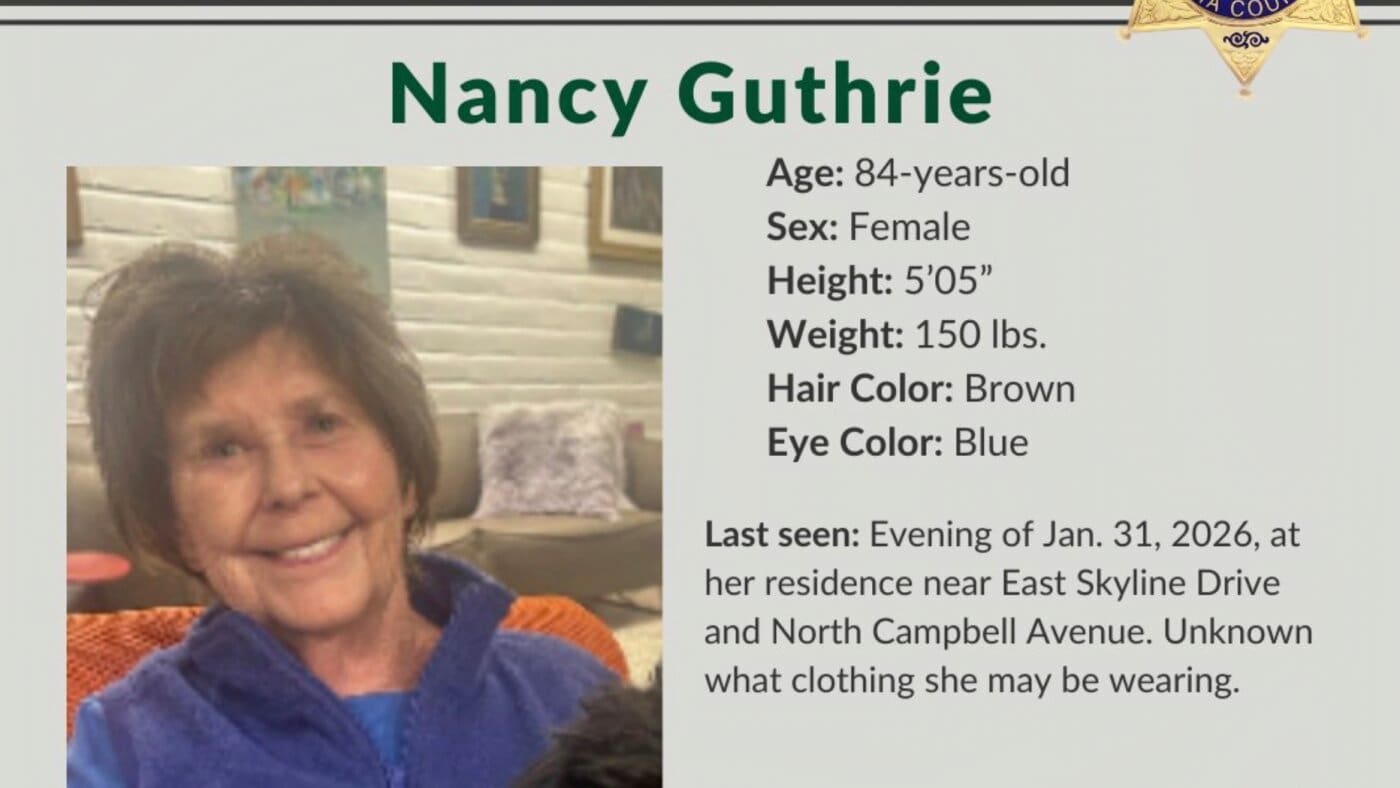
The disappearance of Nancy Guthrie should be treated with nothing but gravity. An elderly woman, forcibly taken from her home, in pain, without medication, her family desperate for proof of life. Savannah Guthrie’s plea is raw, human, and recognisably real. When she calls her mother “God’s precious daughter,” it does not feel performative. It sounds like what people reach for when language runs out.
But almost immediately, the machinery of public piety whirs into action.
Within hours, Donald Trump is on Truth Social, capital letters blazing, announcing he has “directed ALL Federal Law Enforcement” to act, wrapping state power in a religious benediction: “The prayers of our Nation are with her… GOD BLESS AND PROTECT NANCY!” It reads less like a private expression of sympathy and more like a campaign poster hastily stapled to a tragedy. God invoked. Authority asserted. Credit quietly claimed.
This is the modern ritual: crisis first, faith second, optics always.
Politicians have perfected this move. When disaster strikes, belief is no longer something lived or wrestled with; it is deployed. God becomes a verb, sending, protecting, guiding, and prayer a stand-in for accountability. The louder the invocation, the less anyone has to explain what actually failed, who delayed, or why systems designed to protect people so often don’t.
Celebrities play a parallel game. Faith, once intimate, becomes a performance of sincerity. Public suffering is sanctified in real time, curated for maximum emotional resonance. God is name-checked not as mystery or doubt, but as reassurance to the audience that the speaker is good, grounded, authentic. Belief is reduced to a badge pinned to grief.
None of this is new. After mass shootings, we get “thoughts and prayers” instead of laws. After floods and fires, leaders thank God for survival rather than answer for prevention. After war, presidents kneel rhetorically while authorising the next strike. Faith is endlessly summoned but never allowed to ask difficult questions of power.
And that is the mockery at the heart of it.
Real faith, whatever form it takes, is uncomfortable. It sits with uncertainty. It does not guarantee outcomes or promise protection on demand. It does not trend well. What we see instead is a hollowed-out version, scrubbed clean for television, where God conveniently agrees with whoever has the microphone.
In the Guthrie case, the family’s language of faith feels earned, born of fear and love. The political response feels rehearsed, a reminder that even in moments of genuine human terror, public figures cannot resist turning belief into spectacle. God is no longer a refuge; He is a prop.
When faith is used this way, it doesn’t comfort the afflicted; it flatters the powerful. And in turning belief into a public relations tool, politicians and celebrities don’t elevate God. They shrink Him to fit the frame.