Is It Getting Colder? The Answer is Yes, No, and Why You’re Asking the Wrong Question
It’s a familiar scene: a news report details another alarming heatwave, while outside your window, a cold wind blows and rain lashes against the pane. It’s easy to think, “Global warming? It doesn’t feel very warm today.”
This is one of the most common, and understandable, points of confusion in the climate change discussion. To make sense of it, we need to untangle two key concepts: the difference between weather and climate and how a warming planet can, paradoxically, sometimes lead to bitter cold.
Part 1: The Basic Science of Global Warming
Let’s start with the fundamentals. Imagine the Earth is wrapped in a snug, invisible blanket. This blanket is our atmosphere, and for millennia, it has kept our planet at a stable, comfortable temperature—just right for life to flourish. This is the natural Greenhouse Effect.
Here’s how it works in simple terms:
- Sunshine In: Energy from the sun, in the form of sunlight, passes through our atmospheric blanket and warms the Earth’s surface.
- Heat Out: The Earth then radiates some of this heat back towards space.
- The Blanket Holds On: Naturally occurring greenhouse gases in the atmosphere, like carbon dioxide (CO₂) and methane, trap a portion of this outgoing heat, preventing it from all escaping. Without them, our world would be a frozen ball of ice.
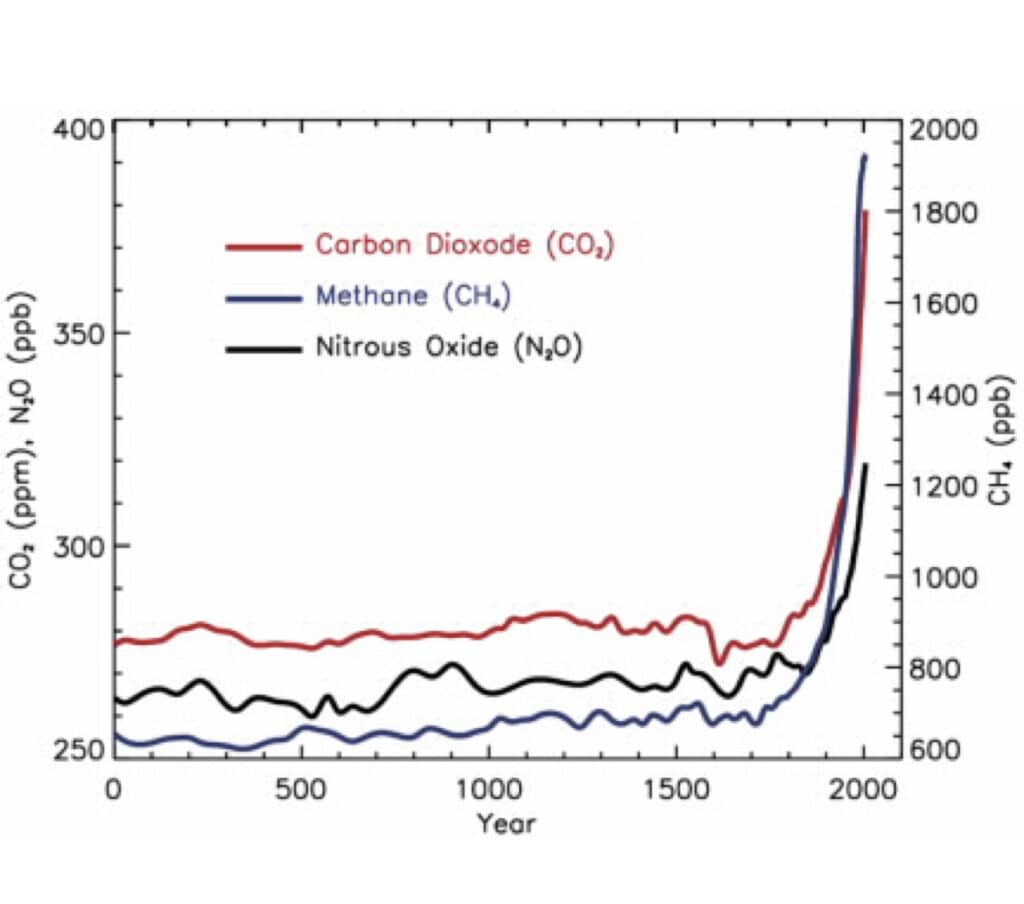
The problem we face now is that humans have been thickening this blanket at an unprecedented rate.
Since the Industrial Revolution, we have been burning vast quantities of fossil fuels—coal, oil, and gas—for energy. This process releases enormous extra volumes of CO₂ into the atmosphere. We’ve also added other potent greenhouse gases through agriculture and industry.
The result? The Earth’s blanket is now too thick. Too much heat is being trapped, and the entire planet is warming up. This is the enhanced Greenhouse Effect, and it’s the engine of human-caused global warming.
The evidence is overwhelming and comes from millions of measurements across the globe: rising average air and ocean temperatures, warming oceans, shrinking ice sheets and glaciers, and rising sea levels.
Part 2: So, Why Is It So Cold Outside? Weather vs. Climate
This is where the crucial distinction comes in.
- Weather is what you experience when you step outside today. It’s the day-to-day change in the atmosphere—rain, sunshine, cold snaps, and heatwaves. It is chaotic, local, and short-term.
- Climate is the long-term average of weather patterns in a specific region, typically measured over 30 years or more. It’s the big picture.
A helpful analogy is to think of a game of dice. Climate is the average of all the rolls. In a stable climate, rolling a six is relatively rare. Weather is a single roll of the dice. You might get a six, or you might get a one.
Global warming is loading the dice. It’s making extreme rolls—like heatwaves (rolling a six), severe droughts, or heavy rainfall—much more common and intense. But it doesn’t eliminate the possibility of rolling a one—a period of unusually cold weather.
A cold day in Birmingham is just a single roll of the dice. The long-term trend, seen by looking at all the rolls over decades, shows the average is relentlessly creeping upwards.
The Polar Vortex Twist: How Warming Can Cause Cooling
Interestingly, scientists are discovering that global warming can directly influence some cold weather events, particularly in regions like the UK and North America.
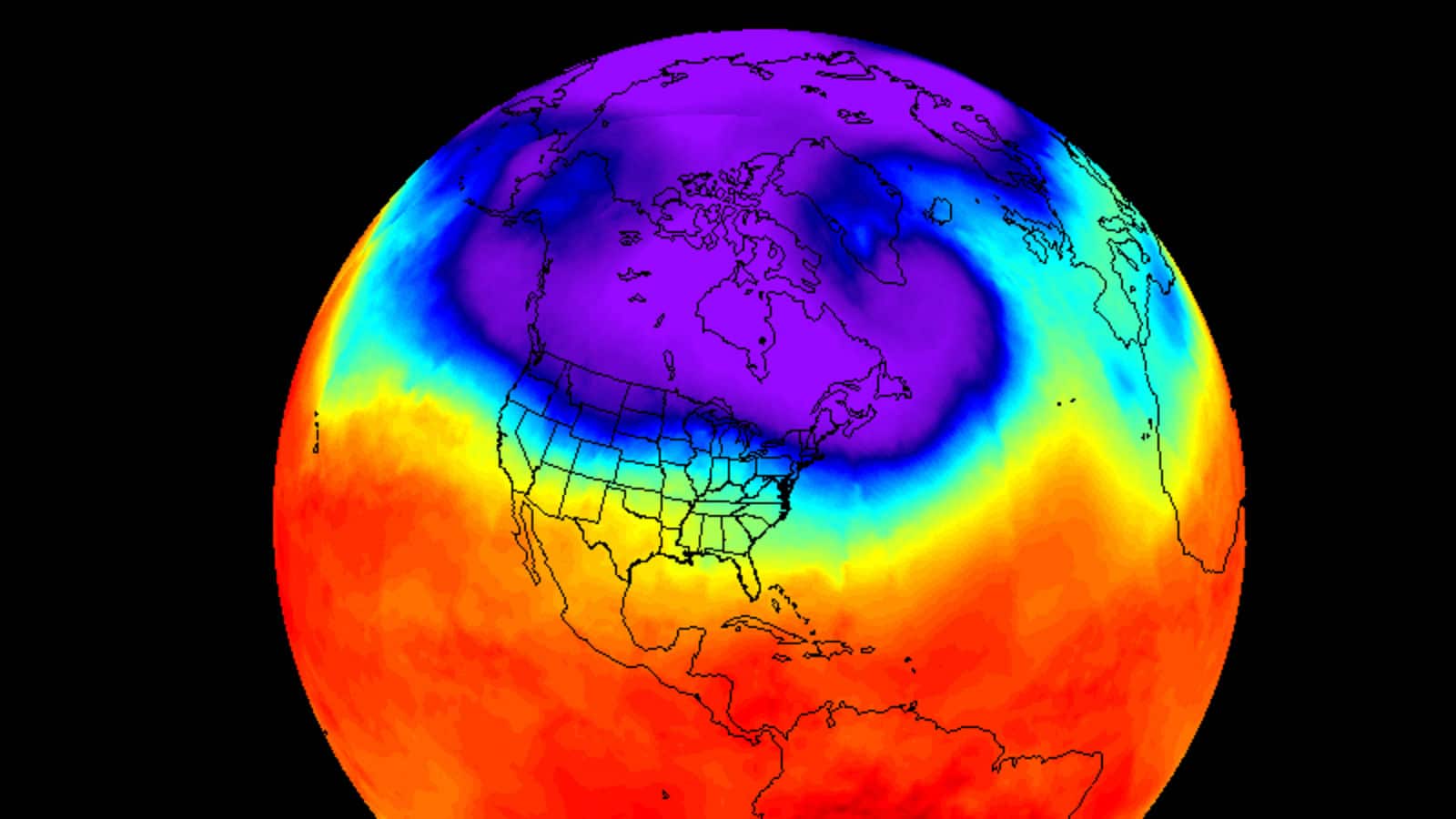
The key player is the Jet Stream. This is a fast-flowing ribbon of air high in the atmosphere that acts like a boundary, separating the cold Arctic air from the warmer mid-latitude air. Normally, it flows steadily from west to east, keeping our weather patterns relatively predictable.
A warming Arctic, however, is disrupting this system. The Arctic is heating up about two to three times faster than the rest of the planet. This reduces the temperature difference between the Arctic and the equator, which weakens the jet stream.
A weaker jet stream becomes wobbly and meandering, like a slow-moving river developing big loops. These loops can allow frigid polar air to spill much further south than it normally would—a phenomenon often linked to a disrupted Polar Vortex (the large area of low pressure and cold air surrounding the poles).
So, while the Earth as a whole is warmer than average, you might be experiencing a sharp cold snap because a lobe of the polar vortex has temporarily dipped right over you. This isn’t proof against global warming; it’s a potential consequence of it.
The Bottom Line
When you experience a cold day or week, you are feeling the weather. When scientists talk about global warming, they are analysing the climate—the long-term data that shows a clear, undeniable upward trend in global temperatures.
The next time someone uses a cold day to question climate change, remember the loaded dice. One cold roll doesn’t change the average. The overwhelming scientific consensus, backed by decades of data from across the world, confirms that our planet is warming, and the primary cause is the thickening of our atmospheric blanket by human activity. Understanding this distinction is the first step in grasping the true scale and nature of the challenge we face.
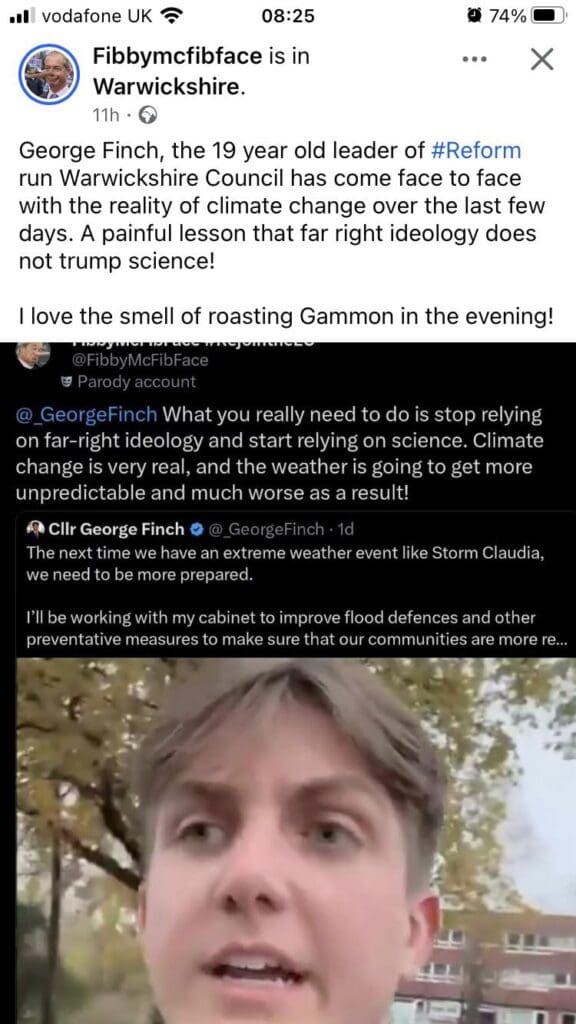
At last Reform UK are seeing the light: