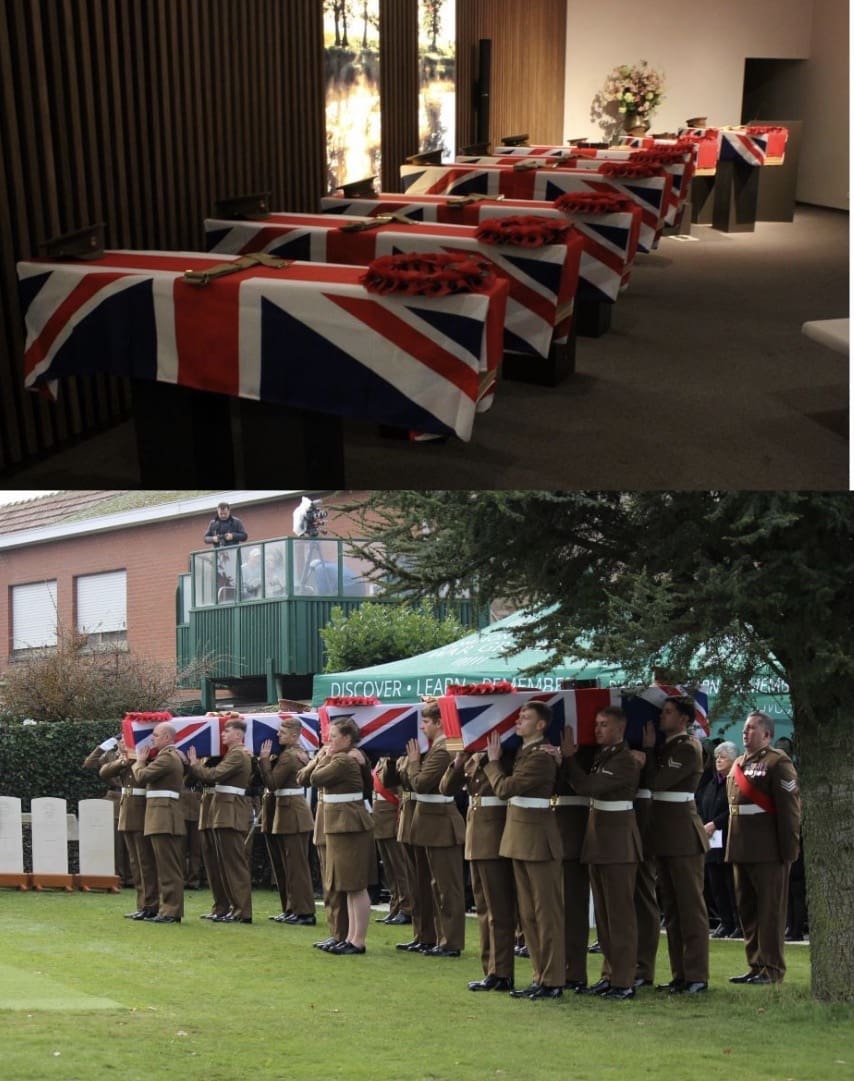
There is something profoundly immoral about the way nations go to war. Decisions are taken in polished chambers by men and women in suits, yet the consequences are carried in coffins by people who were never asked whether they wished to fight at all. The pattern is ancient and depressingly familiar: politicians debate, generals plan, newspapers beat the drum, and then the young are sent away to die. If a war is truly necessary, then the most honest principle would be simple enough: those who vote for it should be the first to fight it.
War is almost always presented to the public as a noble necessity. Leaders talk of duty, security, freedom, honour, or civilisation itself. The language is grand and carefully polished, designed to stir pride and fear in equal measure. Yet beneath these words lies a far uglier reality. War is not experienced in parliamentary speeches or press conferences; it is experienced in mud, blood, terror, and grief. And it is experienced overwhelmingly by people who had no role in deciding that war should happen at all.
The typical soldier is young. Often barely out of school, frequently too young to have developed a clear political opinion, and almost always lacking any direct influence over the policies that sent them to the battlefield. They do not sit in cabinet meetings. They do not negotiate treaties. They do not decide whether diplomacy has failed. Yet they are the ones expected to kill strangers and risk their own lives.
If the moral responsibility for war truly lies anywhere, it lies with the leaders who create it. The decision to invade another country, to retaliate militarily, or to escalate a conflict is not made by the ordinary citizen. It is made by politicians and the powerful institutions around them. Yet when the time comes to pay the price, those decision-makers remain far from the battlefield, insulated by security details and political privilege.
Kay Burley nails it.
This moral contradiction has been recognised for generations. One of the most powerful literary expressions of it appears in All Quiet on the Western Front, the famous novel about the First World War. In a moment of clarity among exhausted soldiers, the narrator reflects on the absurdity of the conflict and the strangers they are ordered to kill. As he puts it: “We have no quarrel with them. The war is caused by people who are not here.”
That sentence cuts through centuries of patriotic rhetoric with brutal simplicity. The soldiers facing one another across the trenches had never met. They had never insulted one another, cheated one another, or harmed one another in any personal way. Yet they were expected to kill each other because distant governments had fallen into conflict.
The truth is that wars often pit ordinary people against other ordinary people who are fundamentally similar to themselves. Young men from farms, factories, towns, and cities are sent to destroy one another, each convinced that they are defending their homeland. Meanwhile the architects of the conflict remain safely removed from the violence they have authorised.
The First World War is perhaps the most glaring historical example. Millions of young Europeans were marched into slaughter over alliances, imperial rivalries, and diplomatic failures they barely understood. An entire generation vanished in the trenches while kings, ministers, and generals debated strategy from comfortable headquarters miles away.
But the problem is not confined to the past. The same moral imbalance persists in modern conflicts. Politicians authorise military action while knowing they personally will never face the consequences of a bullet or a bomb. Their own children are rarely among those on the front lines. War becomes an abstract policy decision rather than a direct personal risk.
Imagine how differently wars might unfold if the rules were reversed. Suppose that every politician who voted for military action was required to serve on the front line. Suppose cabinet ministers and presidents had to pick up rifles and walk into the same dangers as the young soldiers they command. Would wars still be declared so easily?
It is difficult to believe they would. The distance between decision and consequence is what makes war politically manageable. Remove that distance, and the appetite for conflict would almost certainly shrink. Leaders who had to risk their own lives might suddenly rediscover the value of patience, diplomacy, and compromise.
This is not to say that every war is avoidable. History shows that some conflicts have indeed been forced upon nations by aggression or tyranny. But even in those circumstances, the moral burden should fall most heavily upon those who wield power. They should never treat war as an abstract tool of policy while expecting others to suffer its horrors on their behalf.
The young who go to war are often brave, loyal, and motivated by a genuine desire to protect their communities. Their courage is not the problem. The problem lies with a political culture that too easily converts that courage into expendable currency.
A society that truly values its people should hesitate before spending their lives in conflict. Every soldier lost represents a lifetime that will never be lived, families that will never exist, ideas that will never be expressed, and futures that vanish before they even begin. War is not merely a strategic calculation; it is the permanent destruction of human possibility.
Perhaps the most honest response to war is the one those fictional soldiers voiced in that trench a century ago: they had no quarrel with the men on the other side. The quarrel belonged to the powerful, not the powerless.
Until the day politicians themselves must fight the wars they declare, the rest of us should remain deeply sceptical of their willingness to send our children to die in them.