

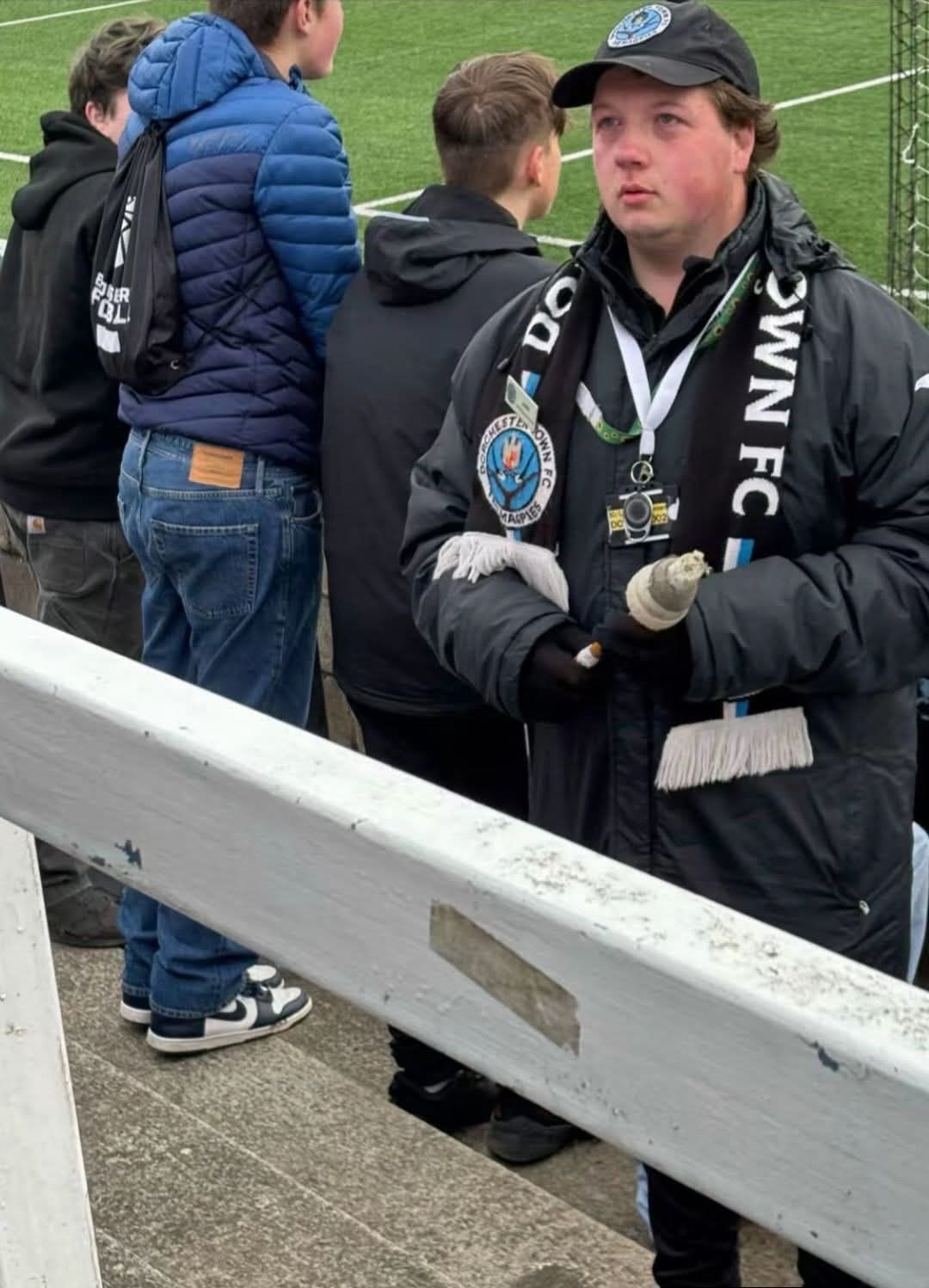
There is something profoundly dispiriting about the quiet exit of someone who simply wanted to contribute joy. This week, a devoted supporter of Dorchester Town FC announced that, after two years as the club’s matchday drummer, they would be stepping down. Not because their enthusiasm had waned or because their love for the club had faded, but because sustained bullying, both online and in person, made continuing unbearable. Their final appearance is set for the home fixture against Gloucester City AFC on 11 April 2026. It should be a celebration of community spirit. Instead, it stands as a stark reminder of how easily that spirit can be corroded.
The individual’s statement on social media is understated, almost apologetic, as though they feel responsible for a situation they did not create. For nine months, they endured being “picked on,” choosing to suffer in silence rather than burden family or the club. That silence is not unusual; it is one of bullying’s most insidious effects. It isolates victims, convincing them that speaking out will worsen the situation or that they simply have to endure it. By the time action is taken, if it ever is, the damage is already deep. Deleting social media accounts, withdrawing from spaces that once brought joy, and stepping away from a cherished role are not overreactions; they are survival strategies.
What makes this case particularly troubling is that the individual lives with special educational needs and a disability. Football prides itself on being inclusive, a space where difference is not merely tolerated but celebrated. Yet here we see the opposite: vulnerability exploited rather than protected. The drumbeat that once energised the terraces became, over time, drowned out by cruelty. This is not just a personal tragedy; it is a collective failure. A club is more than its players and results; it is its supporters, its culture, its willingness to stand up for those who give their time and passion freely.
Bullying, especially in the age of social media, rarely stays confined to one arena. The line between online abuse and real-world hostility has blurred to the point of near invisibility. Words typed behind screens carry real weight, shaping how people feel about themselves and their place in a community. When that abuse is reinforced in person, it creates an inescapable environment of intimidation. The psychological toll can be severe: anxiety, depression, loss of confidence, and in many cases a complete withdrawal from activities that once provided purpose and belonging. That this individual felt compelled to remove themselves from platforms entirely speaks volumes about the intensity of what they faced.
There is also a broader cultural issue at play. Football, particularly at grassroots and non-league levels, often prides itself on authenticity and closeness, a world away from the corporate sheen of the top tiers. But that closeness can cut both ways. Without clear standards of behaviour and a willingness to enforce them, small communities can become echo chambers where bullying is normalised or dismissed as “banter.” It is not banter when it drives someone out. It is not harmless when it chips away at mental well-being. And it is certainly not acceptable when it targets someone already navigating additional challenges.
The departing drummer makes clear they are not leaving the club entirely. Their love for Dorchester Town endures, as does their hope of finding another way to belong. That resilience is admirable, but it should not be necessary. The burden should not fall on victims to adapt; it should fall on communities to change. Clubs must take a proactive stance, establishing clear anti-bullying policies, encouraging reporting, and fostering an environment where supporters look out for one another rather than tearing each other down.
As the final drumbeat sounds at The Avenue this April, it should prompt reflection. Not just on what has been lost, but also on what must be done to prevent it from happening again. Because when someone who only wanted to contribute positivity is driven away, the real loss is not theirs alone; it belongs to everyone who claims to value community, inclusion, and the simple, unifying joy of football.
On a final note, if anyone seeks to identify those responsible, just look at those who expose themselves as Reform UK and Restore Britain supporters and check them out online.







