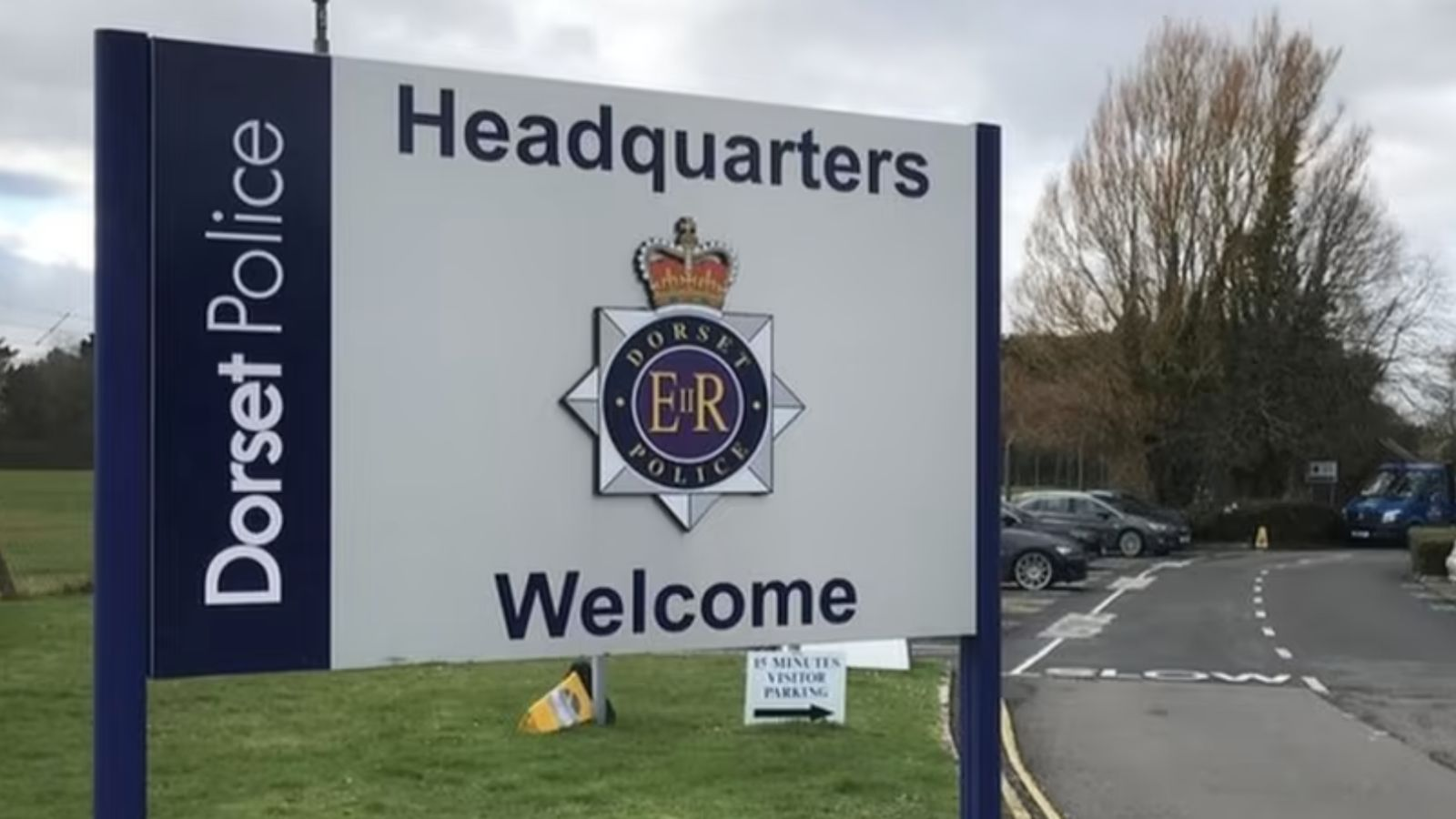
Official figures reveal how often complaints about Dorset Police are reviewed and overturned, raising questions about the force’s handling of public grievances and the effectiveness of its accountability processes.
Dorset Police is facing renewed scrutiny over its complaints procedures after figures published by the Independent Office for Police Conduct (IOPC) showed that a number of decisions involving public complaints were subsequently found not to be reasonable and proportionate.
The latest available IOPC complaints bulletin, covering the financial year from April 2025 to March 2026, provides a more detailed picture of how complaints are handled, how decisions are reviewed and how frequently independent scrutiny leads to a different conclusion.
The data identified does not establish that Dorset Police is the worst-performing force in England and Wales, nor do they prove misconduct by individual officers. They do, however, provide evidence that deserves public examination.
Independent reviews find complaints handling shortcomings
The IOPC’s latest bulletin records 128 completed reviews by the local policing body concerning complaints that had not been investigated. Of these, 24 were upheld because the handling or outcome was judged not reasonable and proportionate.
That means approximately 19% of these completed reviews identified a problem with the original handling or outcome.
Separately, the IOPC completed 40 reviews of complaints that had not been investigated and upheld 14, a rate of 35%.
These are separate review routes and should not be combined into one overall failure rate. The distinction matters because different bodies are responsible for reviewing different categories of complaint.
Nevertheless, both sets of figures raise an important question: how effectively are complaints being handled in the first instance, and what lessons are being learned when an independent review identifies shortcomings?
An upheld review does not automatically mean the original allegation against an officer was proved. It means the handling or outcome of the complaint did not meet the applicable standard of reasonableness and proportionality.
For members of the public who have spent months trying to resolve a complaint, however, that distinction may offer little comfort if the original process failed to address their concerns adequately.
More than 1,300 complaints in a single year
The IOPC’s national statistics recorded 1,325 complaint cases logged against Dorset Police in 2024/25. That equated to 457 cases per 1,000 employees.
Comparable figures were 516 per 1,000 employees in Wiltshire, 596 in Hampshire, 426 in Avon and Somerset, and 198 in Devon and Cornwall.
These figures must be treated cautiously. A complaint is not proof of wrongdoing, and differences in recording practices and public demand can affect comparisons. They nevertheless demonstrate the scale of dissatisfaction being formally recorded and the importance of transparent complaint handling.
The IOPC describes its national complaints statistics as experimental, meaning comparisons should be interpreted with care.
Referrals to the independent watchdog
The latest Dorset bulletin also records 66 referrals from Dorset Police to the IOPC during 2025/26.
These comprised 18 complaint referrals, six conduct referrals and 42 referrals relating to death or serious injury.
Referrals allow the IOPC to consider whether a matter requires investigation and, where appropriate, what type of investigation should take place. The watchdog may decide on an independent investigation, a directed investigation, a local investigation, or that the matter should be returned to the force.
A referral is not evidence that misconduct has occurred. Nor does it mean every matter will result in a full independent investigation.
However, the referral figures underline the importance of an effective system for identifying serious concerns, escalating them appropriately and ensuring that decisions are made independently where required.
What about misconduct within Dorset Police?
Dorset Police’s own published misconduct investigation disclosure provides further information about the work of its Professional Standards Department.
The force recorded 87 internally generated conduct cases in 2024/25, compared with 43 in 2020/21. This represents an increase in the number of conduct cases recorded, but it should not be interpreted as proof that actual misconduct doubled.
The disclosure also records 1,332 complaint cases in 2024/25 within the force’s Professional Standards data. This differs slightly from the IOPC’s national figure of 1,325, illustrating that figures from different reporting systems and snapshots may not match exactly.
Dorset Police’s disclosure includes allegations involving honesty and integrity, authority and respect, equality and diversity, use of force, discreditable conduct and duties and responsibilities.
These are allegations recorded for investigation, not findings that officers committed the alleged breaches.
The force’s published data also records outcomes ranging from no further action and management action to formal warnings, dismissals and cases in which an officer resigned or retired while under investigation.
The crucial issue is whether allegations are investigated consistently, decisions are properly justified and appropriate action follows when wrongdoing is established.
How long do investigations take?
Dorset Police reported an average duration of 112 days for professional standards complaint and conduct cases concluded during 2024/25. The median was 76 days.
The difference between these figures is significant. The average can be affected by particularly long-running cases, while the median indicates that half of the concluded cases took no more than 76 days and half took at least that long.
These figures cover concluded cases and do not necessarily reflect the experience of people whose complaints remain unresolved.
For complainants, delays can add to the frustration of an already difficult process. Clear communication, realistic timescales and properly explained decisions are therefore essential.
What does the IOPC say about accountability?
The IOPC’s published guidance makes clear that police forces’ professional standards departments handle most complaints, while the watchdog investigates the most serious complaints and incidents and sets standards for the complaints system.
Its complaints statistics and guidance are intended to help identify differences between forces, assess how complaints are handled and highlight areas that may require further attention.
The latest figures provide statistical findings rather than a specific public statement declaring Dorset Police’s complaints system satisfactory or unsatisfactory overall. It would therefore be wrong to attribute such a verdict to the watchdog.
What the published evidence does show is that independent reviews sometimes identify shortcomings in the handling of complaints about Dorset Police. It also shows that the force refers matters to the IOPC and records a substantial volume of complaint and conduct cases.
The public interest lies in understanding what happens next: whether the force learns from upheld reviews, improves its procedures and ensures that similar problems are less likely to recur.
Public trust must be earned
Police officers exercise considerable powers over the public. Confidence in policing depends not on every complaint being upheld, but on every complaint being treated fairly, investigated where appropriate and answered with a clear explanation.
The available evidence does not establish that Dorset Police is the worst force in the country. It does establish that complaints handling and accountability deserve continued scrutiny.
Dorset residents should be able to see whether shortcomings identified through independent reviews lead to meaningful improvements, whether investigations are completed within reasonable timescales and whether disciplinary decisions are proportionate to the evidence.
Transparency is not an optional extra. It is an essential part of public accountability.
The fundamental question is not how many complaints Dorset Police receives, but whether the force deals with them fairly, learns from its mistakes and demonstrates that nobody is above scrutiny.
Sources:
IOPC — Dorset Police complaints bulletin, 2025/26
IOPC — National police complaints statistics, 2024/25
Dorset Police — Misconduct investigations and outcomes
Questions for Dorset Police: Complaints Handling, Accountability and Professional Standards
Following the publication of Independent Office for Police Conduct (IOPC) statistics concerning complaints against Dorset Police, we would welcome answers to the following questions in the public interest.
Independent reviews and upheld complaints
- How many complaints against Dorset Police were reviewed by the IOPC during the 2025/26 financial year?
- How many complaints were reviewed by the local policing body, and how many were reviewed by the IOPC itself?
- Of the 128 completed local policing body reviews concerning complaints that had not been investigated, 24 were upheld because the handling or outcome was not considered reasonable and proportionate. What were the principal reasons for these findings?
- Of the 40 reviews completed by the IOPC concerning complaints that had not been investigated, 14 were upheld. What specific shortcomings did the IOPC identify?
- How many upheld reviews resulted in Dorset Police being required or recommended to reconsider a complaint, undertake further enquiries, change a decision, or take other remedial action?
- Has Dorset Police accepted all the findings and recommendations arising from these upheld reviews? If not, how many has it disputed, and on what grounds?
Recurring problems and lessons learned
- Has Dorset Police identified any recurring themes or systemic problems in the complaints that were upheld on review?
- If recurring problems have been identified, what are they? For example, have they concerned the quality of investigations, communication with complainants, the recording of evidence, decision-making or the application of complaints procedures?
- Has the force conducted an internal review or audit of complaints handling in response to the latest IOPC findings?
- Has Dorset Police identified any particular departments, units or stages of the complaints process where shortcomings occur more frequently? If so, what action has been taken?
- How does the force ensure that lessons identified through individual complaints are shared across the organisation and used to prevent similar problems recurring?
- Does Dorset Police maintain a formal record of recommendations arising from upheld complaint reviews, including whether each recommendation has been implemented? If so, will the force publish the results?
Changes and improvements
- What specific changes has Dorset Police introduced to its complaints-handling procedures following findings that complaints were not handled reasonably or proportionately?
- Have officers or Professional Standards Department staff received additional training as a result of these findings? If so, what training was provided, to whom and when?
- What measures does the force use to assess whether changes to its complaints procedures have improved the quality and consistency of decisions?
- Has Dorset Police set targets for reducing the number or proportion of complaints subsequently upheld on review?
- What proportion of the recommendations or remedial actions arising from upheld reviews have been completed, and how many remain outstanding?
- Will Dorset Police publish a summary of the improvements made in response to upheld reviews, together with evidence showing whether those changes have been effective?
Investigation timescales and complainant communication
- Dorset Police reported an average duration of 112 days for concluded professional standards complaint and conduct cases during 2024/25, with a median of 76 days. What are the equivalent figures for 2025/26?
- How many complaints currently remain unresolved, and how many have been open for more than six months or one year?
- What procedures are in place to keep complainants informed of progress, explain delays and ensure that cases are not left unresolved unnecessarily?
- How does the force assess whether complainants have been treated fairly and kept adequately informed throughout the process?
- Does Dorset Police record the number of complainants who remain dissatisfied after their complaint has been concluded, and will it disclose the latest figures?
Misconduct, referrals and accountability
- How many complaints and conduct matters resulted in formal disciplinary proceedings during 2025/26?
- How many cases resulted in findings of misconduct or gross misconduct, and what sanctions were imposed?
- How many officers resigned or retired while subject to misconduct proceedings during the reporting period, and how were those cases concluded?
- The IOPC’s latest bulletin records 66 referrals from Dorset Police during 2025/26, including 18 complaint referrals, six conduct referrals and 42 death or serious injury referrals. How many resulted in an independent or directed investigation, a local investigation, or no further action by the IOPC?
- What arrangements ensure that allegations involving serious misconduct are handled independently where required and that conflicts of interest are properly managed?
- How does Dorset Police ensure that officers subject to complaints or misconduct investigations are treated fairly while also protecting complainants and maintaining public confidence?
Public accountability
- Does Dorset Police consider its current complaints-handling performance satisfactory in light of the upheld review findings? What evidence supports that assessment?
- What assurance can the force provide that the shortcomings identified by independent reviews are being addressed and that similar failings are less likely to recur?
- Will the Chief Constable or the force’s Professional Standards Department provide a formal response to the IOPC findings, including details of remedial action and any outstanding recommendations?
- Will Dorset Police agree to publish an annual summary of upheld complaint reviews, recurring themes, remedial actions and the results of subsequent audits, subject to appropriate privacy and legal safeguards?
- What would the force say to residents who believe their complaints have not been taken seriously or that the complaints process lacks sufficient independence?
The public would welcome the following:
Written answers, relevant supporting statistics and copies or links to any published audits, action plans or policy changes that can be disclosed. Where information is not held, is unavailable or cannot be disclosed, please identify the relevant questions and explain why.