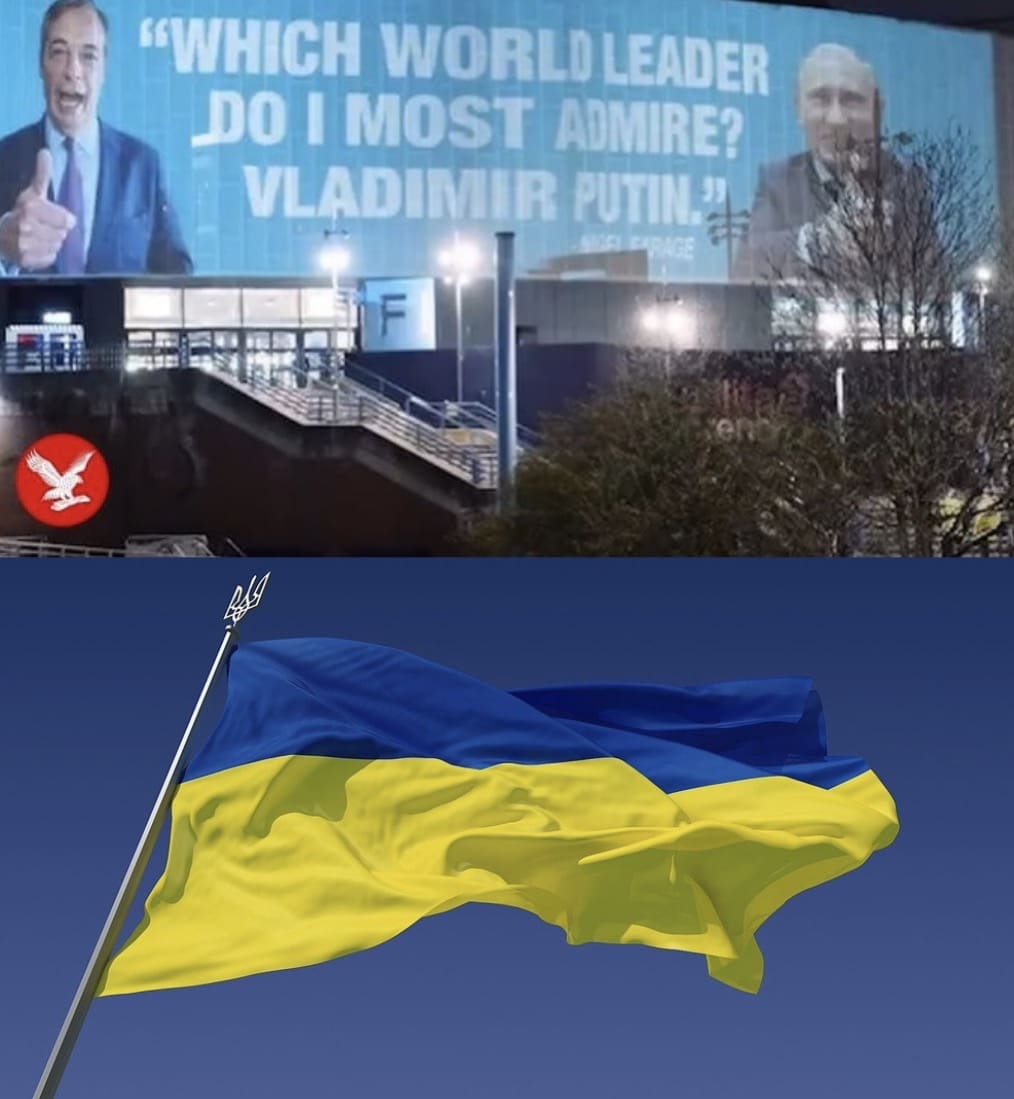
Four years after the full-scale invasion of Ukraine ordered by Vladimir Putin, Dorset Council has reaffirmed its commitment to supporting those who have fled the conflict. On 24 February, the Ukrainian flag was flown above County Hall as a visible symbol of solidarity, mirroring commemorations held across the United Kingdom to honour those killed and to recognise the resilience of the Ukrainian people.
Since 2022, Dorset has welcomed 1,143 Ukrainians seeking safety. Of these, 712 remain in the county, 175 living in hosted accommodation and 537 now settled in privately rented homes. A further 26 are expected to arrive in the near future. The council continues to seek new host families, both to sponsor new arrivals and to support re-matching arrangements where existing hosting placements are ending.
Cllr Ryan Hope, Cabinet Member for Customer, Culture and Community Engagement, said: “Four years on, the war in Ukraine continues to have a big impact on individuals and families who have been forced to leave their homes. Dorset’s residents have shown remarkable generosity in offering safety, stability and kindness to those arriving in our county. As we mark this anniversary, we want to reaffirm our commitment to supporting Ukrainian guests for as long as they need our help.”
A widening political divide
While Dorset’s position is unambiguous, debate continues nationally about Britain’s response to the war, particularly around comments made by Nigel Farage, leader of Reform UK.
Farage has repeatedly argued that Western foreign policy contributed to the outbreak of war. In a BBC Panorama interview, he said:
“We provoked this war … of course it’s his fault — he’s used what we’ve done as an excuse.”
He also pointed to “ever-eastward expansion of NATO and the European Union” as giving Putin “a reason” to go to war.
Those remarks drew sharp criticism across the political spectrum, with senior Conservatives and Labour figures arguing that such framing risks echoing Kremlin narratives that shift responsibility away from Moscow. Former Prime Minister Boris Johnson described the comments as “morally repugnant,” while others said they “play into Putin’s hands.”
Farage has also faced scrutiny for earlier remarks about Putin himself. In previous interviews, he said he admired Putin “as an operator, but not as a human being,” elaborating more recently that he admired the Russian president “as a political operator because he’s managed to take control of running Russia.” Critics argue that such language risks normalising or softening perceptions of an authoritarian leader responsible for a war widely condemned as an act of aggression.
For his part, Farage has insisted he does not defend Putin and has described him in more recent interviews as a “very bad dude.” He maintains that discussing how the war began is not the same as excusing it and argues that pursuing negotiations and a settlement should be part of the long-term objective.
Why the contrast resonates locally
The distinction between rhetoric and action is particularly visible at the local level. While national political debate continues, Dorset Council’s approach has focused on practical humanitarian support: housing families, helping children into schools, and assisting people into work.
Four years into the conflict, the moral clarity expressed by many local authorities, including Dorset, stands in marked contrast to arguments that the West bears significant responsibility for triggering the invasion. For many residents, flying the Ukrainian flag is not a partisan gesture but a statement of solidarity with civilians displaced by war. However, sadly this is often not reflected in support for many other countries, but that is another discussion.
As the anniversary passes, Dorset’s message remains consistent: the county will continue to support Ukrainian guests for as long as needed. Residents interested in becoming a sponsor or host can find further information via Dorset Council’s Ukraine Response pages.
In a national political climate where narratives about responsibility and provocation remain contested, Dorset’s stance is simple: solidarity with those forced from their homes and clear support for Ukraine’s sovereignty.
If you would like to find out more about becoming a sponsor or a host, visit: Ukraine Response – Dorset Council