Dorset Council is marking Empty Homes Week by highlighting the many reasons homes become empty and how the council can support owners, families, and anyone who may be responsible for an empty home now or in the future.
This year’s focus follows last year’s approval of the council’s ambitious Empty Homes Strategy, which sets out a plan to bring long term empty homes back into use and reduce their impact on communities.
The strategy strengthens the council’s proactive work, expands the options available to help owners, and reinforces that enforcement powers are only used where necessary.
Since 2022, Dorset Council’s interventions have brought 64 long‑term empty properties back into use. In 2025/26, the number returned to use increased from 16 in the previous financial year to 23.
This reflects the strong work being carried out by the council, even though not all empty homes can be brought back into use due to limitations such as resources and funding. In the Dorset Council area there are still more than 800 properties that have been empty for two years or more, highlighting the scale of the challenge.
Homes fall empty for a wide range of reasons, including:
- probate or inheritance delays
- owners entering hospital or long-term care
- financial barriers to repairs
- abandoned or unused second homes
- stalled renovation or planning issues
Cllr Gill Taylor, Cabinet Member for Health and Housing, said:
“Every empty home has a story and every story is different. What matters is that people know we are here to help. Whether you own an empty home yourself, are supporting a relative or friend, or think you may inherit a property in the future, please contact us early.
We can offer practical solutions, guidance, and, where needed, more formal action to ensure these homes come back into use for the benefit of our communities and to help increase the availability of homes to meet the needs of local people.”
Focussing on the most urgent cases, the council may also find it hard to locate owners or next of kin, and legal processes can take a long time. There are also important human rights and equality issues to consider.
Despite the challenges, Dorset Council continues to help owners through advice, incentives, ethical loans, leasing schemes and where necessary, proportionate enforcement.
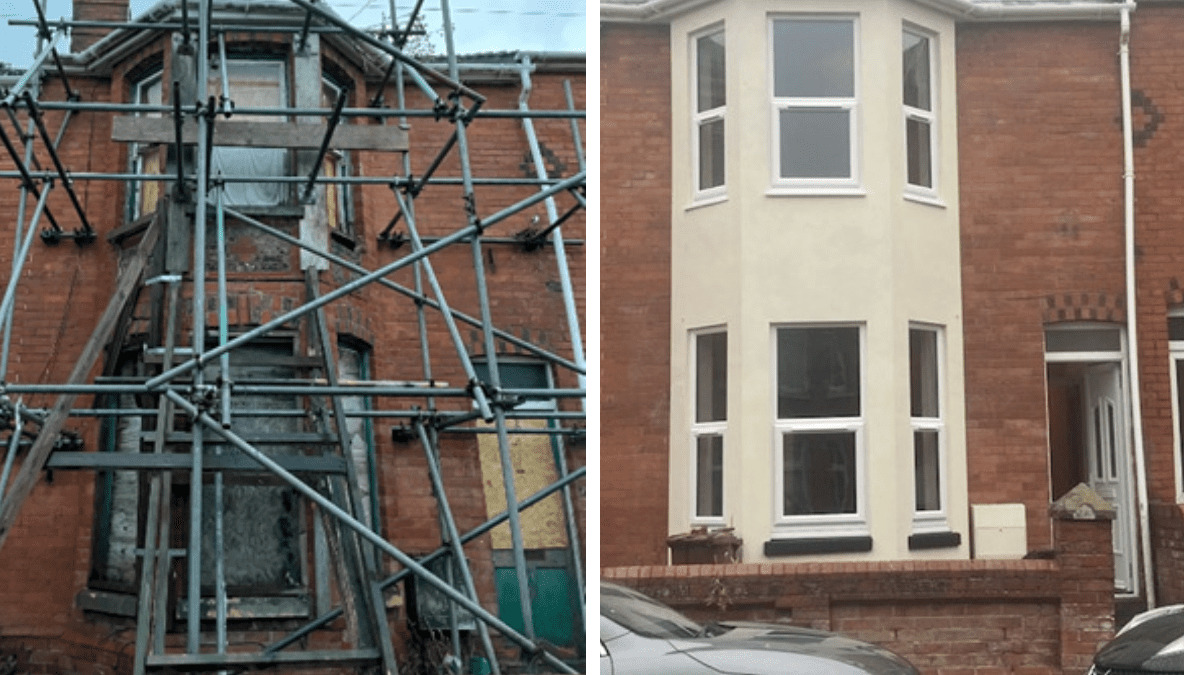
Case study: Southview Road, Weymouth
A long-term empty property in Weymouth had become unsafe, vandalised and illegally occupied. After many attempts to engage the owner, Dorset Council used Compulsory Purchase as a last resort. Following the purchase, the property was sold to a new owner who undertook a full refurbishment. The transformation is now nearing completion, and the house is set to become a home once again.
The improvements made to the property included, rebuilding the front bays and rendering the entire front face for stability and safety, a brand-new central heating system, an extra bedroom and a new bathroom; and a completely new kitchen installation and a new extension.
Empty homes can also benefit from energy efficiency improvements, and the Homewise tool, which was launched in January, offers free, tailored guidance on making properties warmer and more affordable to run.
It provides a personalised energy action plan along with information on funding options like the Warm Homes Local Grant.
If you would like to find out more or access advice and support, please contact the team: Empty homes – Dorset Council
National Empty Homes Week is organised by Action on Empty Homes. This year it takes place from Monday, the 9th, to Sunday, the 15th, of March, 2026.
Read more about energy support and the Homewise tool.
Learn more about Ethical Homes improvement loans
Visit here for Possible VAT savings on renovation work
For free advice on what repairs are essential to make a home safe and liveable visit:
Read more here for Dorset Council’s offer to landlords visit:
Read more case studies on Empty Homes