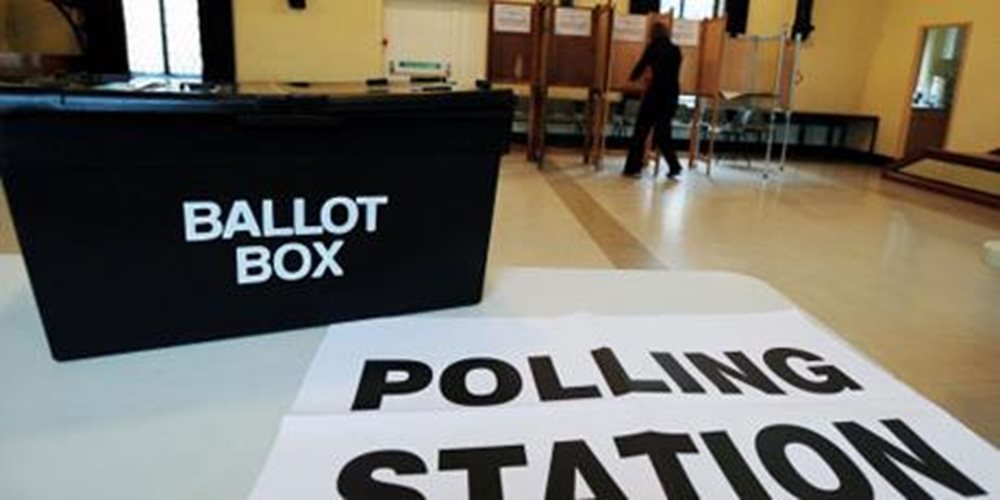
In the tumultuous arena of British politics, the rise of Reform UK has been a defining feature of the last couple of years. While political opponents dismiss their platform as extreme, a closer examination of their proposed policies reveals a blueprint for a societal transformation so profound it would fundamentally reshape the United Kingdom. Based on their stated direction; their borrowing from the Trump playbook and member’s rhetoric, a Reform UK government would embark on a course unlike any in modern British history.
The Erosion of Legal Protections and Personal Freedoms
The most immediate and alarming shift would be in the legal framework that protects individual rights. The proposal to decriminalise hate speech against minorities would not merely be a symbolic gesture; it would signal state-sanctioned intolerance, potentially emboldening prejudice and dismantling decades of work towards a more inclusive society. This would be coupled with the abolition of the Human Rights Act, severing the UK from international legal standards and leaving citizens with little recourse against state power.
This new legal landscape would extend deep into personal life. The state would dictate the structure of the family, with policies forcing women out of the workforce and into domestic roles, and banning same-sex couples from having children. Furthermore, the criminalisation of abortion even for rape victims would remove vital healthcare choices, prioritising a rigid ideological stance over the wellbeing and autonomy of women.
A Radical Economic and Public Sector Overhaul
The economy would undergo a fire-sale of unprecedented scale. The wholesale privatisation of schools, hospitals, and utilities represents the logical endpoint of market-driven ideology. Critics argue this would not lead to efficiency, but to essential services being owned by unaccountable multinational corporations and the world’s wealthiest individuals, with cost and profit prioritised over public health and education. The concept of a publicly-funded National Health Service or state education system would cease to exist.
For those struggling in this new economy, the state’s response would be punitive. The introduction of mandatory national service for the unemployed frames joblessness not as an economic issue but as a moral failing, demanding compulsory labour in return for support.
An Authoritarian Shift in Justice and Daily Life
The justice system would become notably more severe and omnipresent. The reintroduction of the death penalty would place Britain in a small and controversial group of nations, raising profound ethical questions about state power and the risk of judicial error. The plan to build a prison in every town suggests an expectation of mass incarceration, normalising the concept of imprisonment within the fabric of daily community life.
This authoritarianism would permeate everyday existence. Mandatory ID cards would increase state surveillance capabilities, while the requirement for every home to display a state-determined flag is a move more associated with totalitarian regimes than a modern democracy, enforcing a performative and compulsory patriotism.
The End of Intellectual Freedom and Scientific Inquiry
Perhaps the most profound long-term impact would be on knowledge itself. The education system would be purged of critical thinking, with subjects like sociology, philosophy, and modern history likely banned for challenging established power structures. This would be accompanied by the banning of books that offer alternative perspectives, creating a generation educated on a diet of state-approved ideology rather than critical inquiry.
We are already seeing this in Dorset with a rumoured Reform candidate already displaying a call for censorship:
This war on knowledge would extend to science. The official denial of climate change and the disciplinary action threatened against scientists who reveal it would isolate UK research, sabotage environmental policy, and betray a fundamental disregard for evidence-based governance. The nation would be steered into the future with its eyes deliberately closed to one of the greatest challenges of our time.
A Fundamental Crossroads
It is crucial to note that these proposals represent a direction of travel rather than a guaranteed, immediate reality. The British constitution, the House of Lords, international treaties, and public protest would provide significant checks and balances. However, the stated ambition of this platform is clear: to dismantle the liberal, democratic settlement that has defined post-war Britain.
An election victory for Reform UK would not simply mean a change in government; it would represent a referendum on the very nature of British society. The outcome would determine whether the UK embraces a future of enforced conformity, diminished liberty, and intellectual isolation, marking a definitive break with the values it has professed to hold for generations.
The Britain Reform UK Would Build: A Point-by-Point Analysis of their Proposed Platform
Below is an analysis of the key policies they are associated with and their potential impact.
1. Hate against minorities will no longer be a crime.
- Commentary: This proposal would effectively repeal hate speech laws and legislation protecting minority groups from incitement to violence. Proponents argue it promotes absolute free speech. In reality, it would signal state-sanctioned intolerance, potentially emboldening prejudice and dismantling legal protections that have taken decades to establish. The message to minority communities would be that they are second-class citizens without the full protection of the law.
2. Privatisation of all public utilities including schools and hospitals – sold off to the world’s richest.
- Commentary: This represents the most extreme extension of free-market ideology. The sell-off of core institutions like the NHS and state schools would end the principle of universal, free-at-the-point-of-use public services. Critics argue this would create a two-tier system where quality of healthcare and education is determined entirely by wealth, with profits for distant shareholders prioritised over patient care and student development.
3. All human rights to be scrapped.
- Commentary: Scrapping human rights legislation, notably the Human Rights Act, would sever the UK from an international framework designed to protect citizens from state overreach. It would remove vital legal recourse for individuals against government power, affecting everything from the right to a fair trial to privacy and freedom of assembly. This would fundamentally alter the balance of power between the citizen and the state.
4. All critical thinking subjects to be banned in schools.
- Commentary: Subjects like sociology, philosophy, critical theory, and aspects of history and English literature that encourage questioning of societal structures would likely be targetted. The goal appears to be an education system that produces compliant citizens rather than inquisitive minds. The long-term effect would be a population less equipped to analyse propaganda or challenge authority.
5. All books that challenge far-right ideology or propose alternative perspectives to be banned.
- Commentary: This is the definition of censorship. Such a policy would lead to the purging of school and public libraries, banning everything from George Orwell’s *1984* to texts on anti-racism, LGBTQ+ issues, and alternative political theories. It is a direct assault on intellectual freedom and the cornerstone of a democratic society: the right to access information and form one’s own opinions.
6. Women to be made to stay at home to bring up children.
- Commentary: This policy would seek to enforce a traditional, state-mandated gender role, likely through punitive tax measures or the removal of support systems like childcare. It would dismantle decades of progress in gender equality, forcibly removing women from the workforce and undermining their economic independence and career aspirations.
7. All same-sex couples to be banned from having children.
- Commentary: This would involve outlawing adoption, surrogacy, and IVF for same-sex couples. It is a deeply discriminatory policy that denies LGBTQ+ people the right to family life, legally defining their relationships as inferior and invalid. It would cause profound distress and tear apart existing loving families.
8. Every town to have a prison.
- Commentary: This suggests an expectation of a massive increase in the prison population. Instead of focusing on rehabilitation and addressing root causes of crime, this policy normalises incarceration as a primary tool of social control. The psychological and social impact of making prisons a central feature of every community would be significant.
9. The death penalty to be brought back.
- Commentary: Reintroducing capital punishment would place the UK alongside nations like China, Iran, and Saudi Arabia in the eyes of the world. Beyond the profound ethical objections, it carries the irreversible risk of executing an innocent person. Most modern democracies have abolished it, seeing it as a mark of a barbaric justice system.
10. All climate change to be denied and scientists who reveal it to be sacked or disciplined.
- Commentary: This would mandate an official state policy of science denial. It would sabotage any meaningful environmental policy, lead to the UK’s withdrawal from international climate agreements, and silence experts. Scientists would face the choice of staying silent or losing their jobs, effectively ending the UK’s reputation as a leader in scientific research.
11. National service for all those out of work.
- Commentary: Framing unemployment as a moral failure requiring compulsory labour, this policy would be intensely punitive. It ignores the complex economic reasons for joblessness and would create a state-sanctioned forced labour programme for the most vulnerable, rather than addressing skills gaps or economic stagnation.
12. Abortion for rape victims to be criminalised.
- Commentary: This removes a vital, time-sensitive healthcare option for women in the most traumatic circumstances. It prioritises a rigid ideological stance over compassion, medical advice, and the bodily autonomy of victims, forcing them to carry a pregnancy resulting from a violent crime.
13. Everyone to have ID cards.
- Commentary: While some countries use ID cards effectively, in this context, it would be a tool for increasing state surveillance and control. Coupled with the scrapping of human rights, it could be used to monitor movement, access to services, and political activity, creating a society where citizens are constantly accountable to the state.
14. Every home to have a flag as determined by the state.
- Commentary: This is a move straight from the playbook of totalitarian regimes. Enforcing a performative, state-mandated patriotism seeks to squash dissent and create an illusion of uniform loyalty. True patriotism is voluntary; compelled display is a sign of insecurity and control.
A Fundamental Choice
The population has to decide whether they want small changes to their daily lives or a radical shift that will abandon British values and re write the future. Do we want a society that empowers us all or one that embraces authoritarian control and empowers an ideology to explicitly determine our existence?
Do we want to be consumed by harmony or hate? In 2029 that will be the decision in front of us and it could be one that unites or destroys us.