Update:
‘There certainly *were* many, many more of us than them.
Not a surprise when their racism, paranoia and descent down conspiracy theory rabbit holes lead them to protest against such a beloved BRITISH institution as the RNLI.
Whoever made that decision for the so-called “patriots” should probably be considering their position.’
Before we go full throttle, let us remember that decent people always rise to the surface:
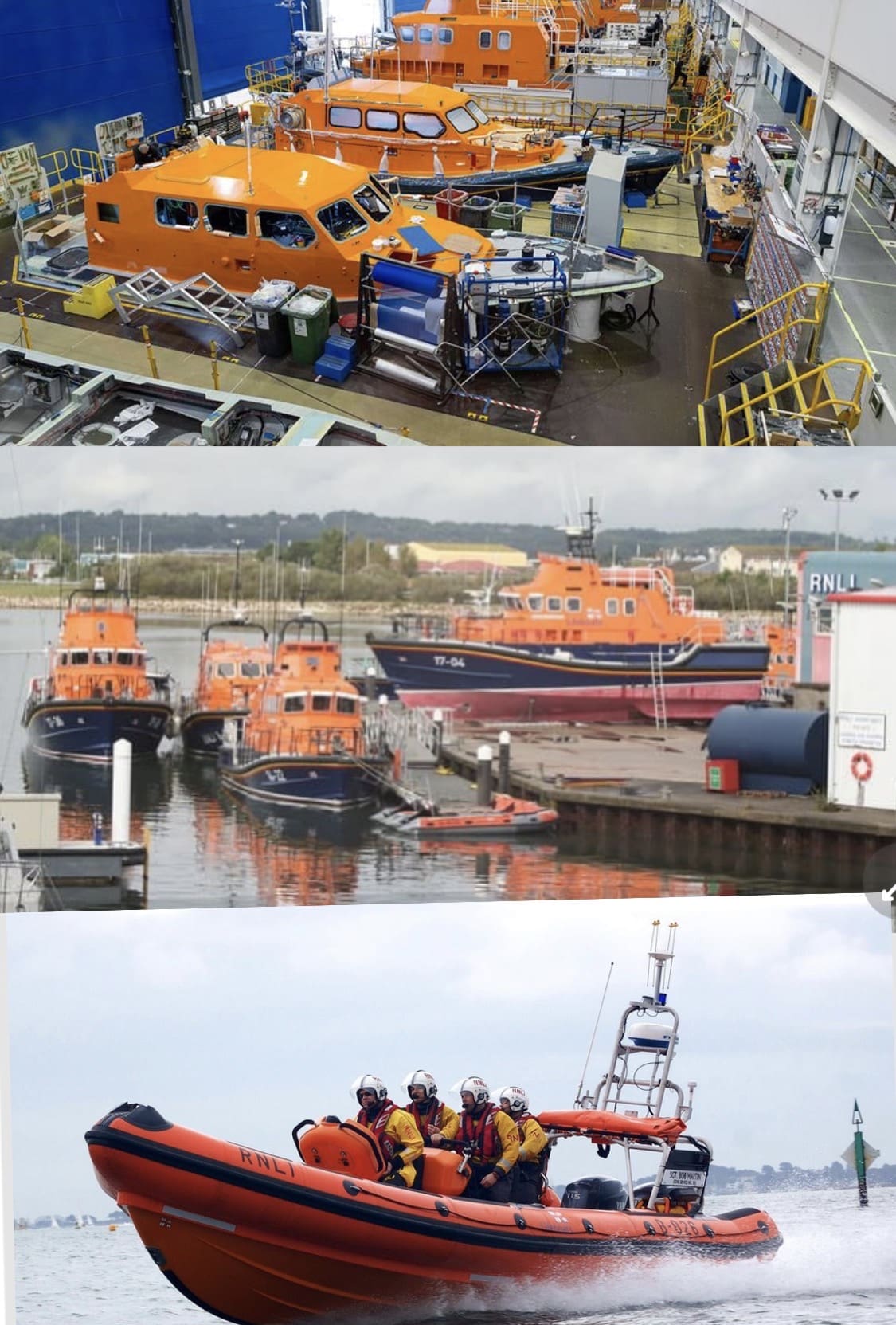
The planned “send the boats home” demonstration outside the RNLI headquarters in Poole on Saturday, 14 February, represents a grim new low in Britain’s political discourse. Protesting a life-saving charity is not an act of principled dissent; it is an attack on the very idea that human life has value regardless of nationality, status or circumstance. That this is happening in Poole, home to the RNLI and a town shaped by maritime history, makes it all the more disturbing.
The Royal National Lifeboat Institution exists for one reason alone: to save lives at sea. It does not set immigration policy, it does not patrol borders and it does not decide who “deserves” help. It responds when people are in danger, because that is both a moral obligation and a requirement of maritime law. Yet this basic principle has been wilfully distorted by sections of the far right, who have attempted to reframe rescue as complicity.
The facts tell a very different story. In 2024, the RNLI launched its lifeboats 9,141 times and assisted more than 17,000 people in distress. Of those launches, just 114 involved small boats in the English Channel. That equates to roughly 1.2% of RNLI activity. In other words, well over 98% of RNLI rescues had nothing whatsoever to do with migrant crossings. The overwhelming majority involved fishermen, sailors, swimmers, kayakers, leisure craft and people who simply found themselves in trouble on the water around the UK and Ireland.
Even when looking specifically at Channel crossings, the RNLI’s role has been deliberately exaggerated. Official figures show that 36,816 people crossed the Channel in small boats during 2024. The RNLI rescued 1,371 of them. (Latest data from RNLI as of July 2025). That means around 96% of those crossings did not involve RNLI intervention at all, with Border Force and other agencies carrying out the majority of responses. The idea that the RNLI is somehow running a ferry service for migrants collapses instantly when confronted with these numbers.
And yet, despite this clarity, volunteers and staff have found themselves targeted by abuse, misinformation and now physical protests outside their workplace. This matters because the RNLI is not a faceless institution. It is made up largely of volunteers, people who leave their homes in the middle of the night, in storms and freezing seas, to rescue strangers they will never meet again. They do this without asking who those people are, where they come from, or what passport they carry, because the sea does not discriminate and neither should those who answer its dangers.
Neil Duncan-Jordan MP, who lives and works in Poole, captured this reality plainly. He has spoken of seeing firsthand how vital the RNLI is to the town, the harbour and everyone who uses local waters. He has emphasised that the RNLI operates 24 hours a day, 365 days a year, responding to need alone, and that there is nothing patriotic about denigrating one of the country’s most respected and widely supported charities. His words echo a view held quietly by most of the public, even if it is shouted down by a vocal minority.
What makes this protest particularly bleak is the deeper shift it reveals. Over years of inflammatory headlines and dehumanising rhetoric, migrants have been reduced from people to problems, from human beings to talking points. When language strips people of their humanity, cruelty begins to feel reasonable. The question subtly changes from “how do we prevent deaths?” to “do these people deserve to live?” That is the road we are now being asked to walk.
This is no longer an abstract debate. Recent Channel incidents have once again shown how lethal these crossings are, with deaths and miscarriages reported after boats ran into trouble. These are the consequences of desperation meeting danger, not evidence of moral failure on the part of those drowning. No one risks the Channel lightly. People do so because the alternatives feel worse.
Against this backdrop, protesting outside the RNLI is not just misguided, it is grotesque. It implies that the correct response to people in mortal danger is indifference, or worse. It invites a society to look at someone drowning and begin asking questions instead of extending a hand. Would you save them? Would you hesitate? Would your answer change depending on their accent, their skin colour, their paperwork? And at what point does hesitation become complicity?
A counter-protest has been organised, and that matters more than symbolism. RNLI staff and volunteers have said that visible public support makes them feel safer and valued. It reinforces the idea that most people still understand the difference between political debate and basic humanity. Immigration policy can be argued about fiercely, but letting people die should never be one side of that argument.
The RNLI has been saving lives for over two centuries. It has done so through wars, economic crises and political upheaval, guided by a single principle: that anyone can drown, but no one should. When a society begins to question that principle, it isn’t the RNLI that has lost its way. It’s us.
And if the idea of rescuing a drowning person fills someone with anger rather than compassion, Oscar Wilde’s words feel painfully relevant: better to remain silent and appear foolish than to open one’s mouth and remove all doubt.