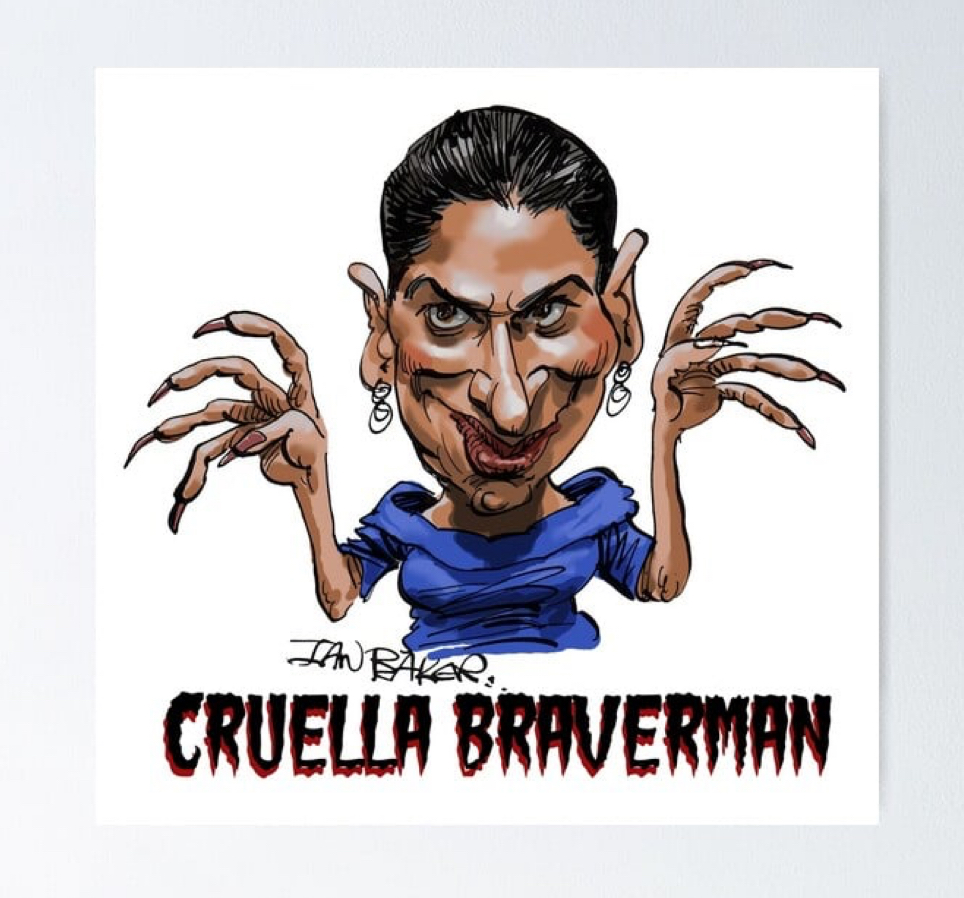
Suella Braverman has threatened schools with “consequences” if they fail to make pupils regularly sing Christian hymns and the national anthem under a future Reform UK government; a proposal that would take compulsory religious and patriotic observance to a new level.
Reform’s education spokesperson made the announcement at the party’s conference before telling Schools Week that the requirements would apply to “every school”, including sixth forms. She said they would be placed “in law, in guidance” and enforced through Ofsted inspections, while parents would be encouraged to report schools that failed to comply.
Asked whether inspectors would check whether schools were obeying the rules, Braverman replied: “We will find out if schools are breaking the law and there will be consequences.”
She declined to specify how frequently pupils would have to sing hymns or the anthem, saying only that it would have to happen regularly enough for children to know God Save the King by heart.
The proposal is part of a wider programme of what Braverman calls a “balanced, patriotic curriculum”. She has also proposed requiring schools to fly the Union flag and has said the British Empire should be taught for the “good” it did, citing the abolition of slavery, the defeat of Hitler, the spread of democracy and the construction of railways.
For critics, however, the issue goes considerably deeper than flags and songs.
Britain already has unusually strong legal requirements surrounding religious worship in state schools. In England, schools without a religious character are required to provide a daily act of collective worship that is broadly Christian. Humanists UK says the requirement is widely disregarded and has argued for decades that compulsory worship should be replaced by inclusive assemblies.
That existing requirement is itself increasingly controversial.
In 2016, the UN Committee on the Rights of the Child called on the UK to repeal compulsory worship requirements. Humanist campaigners have also challenged schools through the courts where children have been subjected to religious activities their parents objected to.
And in November 2025, the Supreme Court delivered a significant judgment concerning Christian religious education and collective worship in a Northern Ireland school. The court found that the Department of Education had failed in its obligation to ensure religious teaching was conveyed objectively, critically, and pluralistically and held that the provision in question amounted to indoctrination.
The case concerned Northern Ireland rather than England, so it does not simply establish that all compulsory Christian worship in English schools is unlawful. But it has intensified questions about whether existing arrangements adequately respect freedom of thought, conscience and religion.
Humanists UK policy and campaigns manager Lewis Young said threatening schools over hymns was “a step in the opposite direction” from the reforms required.
There is also a fundamental question about what schools are for.
Should teachers be concentrating on literacy, numeracy, science, critical thinking, safeguarding and preparing young people for adult life, or should they be policing whether teenagers know the words to a Christian hymn and the national anthem?
A government can legitimately teach children about Britain’s history, culture, institutions and traditions. But compulsory participation is something very different from education about those subjects.
Reform’s proposal would place schools under the threat of sanctions for failing to enforce a particular conception of British identity.
That is not simply an education policy. It is a demand for ideological conformity, with the classroom potentially becoming an instrument for enforcing patriotism and religious observance rather than encouraging children to think for themselves.