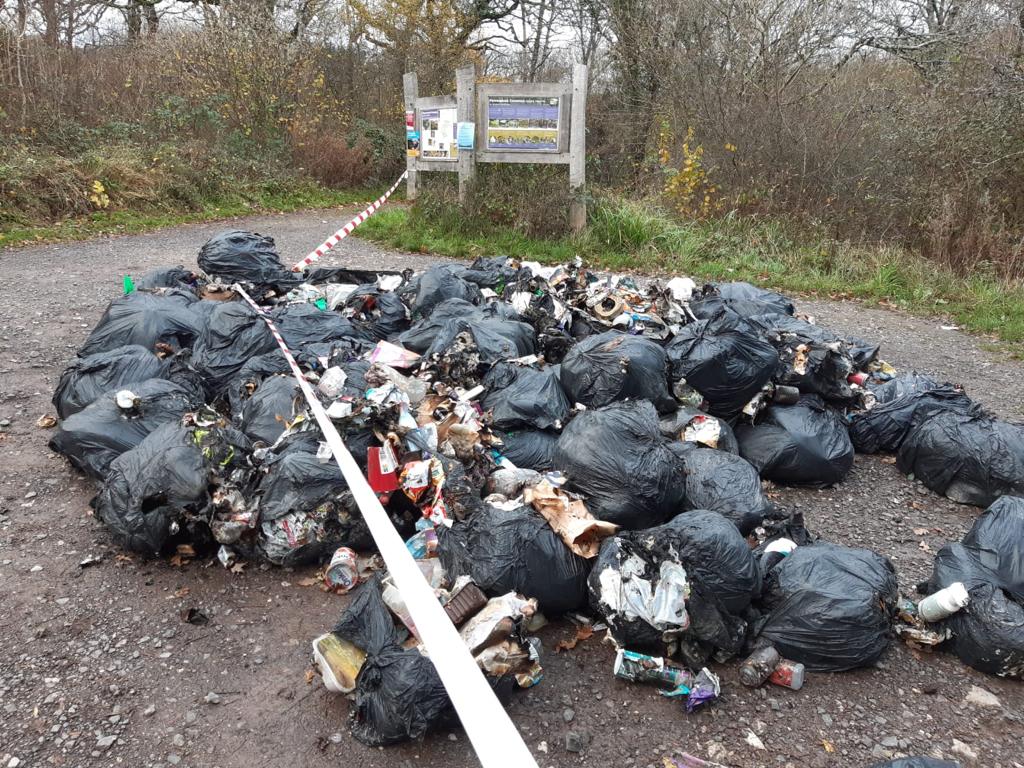
Fly-tippers could soon find themselves swapping illegal dumping for enforced community labour under new government plans designed to crack down on the growing waste crisis blighting towns and countryside across England.
The proposals, announced as part of a wider strategy led by the Environment Agency, would see offenders compelled to join so-called “clean-up squads”, carrying out up to 20 hours of unpaid work clearing rubbish from streets, parks and known dumping hotspots. The scheme would be administered by local authorities using conditional cautions, allowing penalties to be imposed more swiftly and without the need for lengthy court proceedings.
At present, action against fly-tippers typically follows a conviction, a process that can take months and often results in limited penalties. Ministers believe the new approach will provide a more immediate and visible form of justice, one that not only punishes offenders but forces them to confront the consequences of their actions directly.
Environment Secretary Emma Reynolds framed the policy in stark terms, signalling a shift towards tougher, more public-facing enforcement. She said those caught dumping waste would be made to “clean up and pay up,” adding that the burden of dealing with illegally discarded rubbish should no longer fall on taxpayers.
The clean-up squads form part of a broader 10-point plan set to be unveiled this week, targeting both small-scale fly-tipping and the more complex networks involved in organised waste crime. Illegal dumping has long been a persistent issue, but in recent years it has evolved into a lucrative criminal enterprise, with rogue operators exploiting gaps in regulation and enforcement to dispose of waste cheaply and unlawfully.
Government figures suggest that enforcement activity is already increasing. Local authorities carried out around 572,000 enforcement actions in the 2024/25 period—an 8% rise on the previous year. However, critics argue that these figures mask the true scale of the problem, with many incidents going unreported or unresolved.
Funding remains a central concern. The Environment Agency’s enforcement budget is set to rise to £15.6 million for 2025/26, a boost that ministers say will strengthen its ability to tackle waste crime. Yet many local councils and environmental groups insist that the increase falls short of what is needed to address a problem that continues to grow in both scale and sophistication.
Fly-tipping is not just an eyesore; it carries significant environmental and economic costs. Hazardous materials dumped in rural areas can contaminate soil and water, harm wildlife and pose risks to public health. Meanwhile, councils are left to shoulder the financial burden of clean-up operations, diverting resources from other essential services.
Supporters of the new policy argue that making offenders physically remove waste could have a powerful deterrent effect. The visibility of clean-up squads working in affected areas may also reassure communities that action is being taken, addressing long-standing frustrations over perceived inaction.
However, questions remain about how the scheme will be implemented in practice. Local authorities, already under financial strain, will need the capacity to supervise offenders and manage the logistics of the programme. There are also concerns about consistency, with the potential for uneven application across different regions.
Despite these challenges, the government is pressing ahead, with plans to introduce the measures at the start of 2027. The initiative reflects a broader shift towards more immediate, restorative forms of justice, policies that aim not only to punish wrongdoing but also to repair the damage it causes.
Whether cleanup squads will succeed where previous efforts have struggled remains to be seen. But with fly-tipping continuing to scar communities and drain public funds, ministers are betting that a more hands-on approach could finally begin to turn the tide.