The Making of a Modern Bigot: Nigel Farage at Dulwich College and Beyond
Nigel Farage, one of the most prominent and polarising figures in British politics, has built a career as a political disruptor: anti-establishment, anti-EU, often provocative. But beneath the bravado and the media persona lies a contested and controversial past — one that, according to many of his former schoolmates and teachers, includes deeply troubling episodes of racism, antisemitism, and flirtations with extremist imagery.
Much of this evidence comes from Michael Crick, veteran investigative journalist, whose 2022 biography One Party After Another: The Disruptive Life of Nigel Farage painstakingly assembled testimonies, archival material, and contemporaneous accounts of Farage’s youth at Dulwich College, a prestigious independent school in south-east London. In late 2025, further reporting (notably in The Guardian) brought forward new witnesses and sharpened the political stakes. This exposé collates that evidence, examines Farage’s responses, and analyses what it might says about a man currently leading the political polls.
1. The Teacher’s Letter: Chloe Deakin’s Warning
One of the most striking pieces of evidence is a letter written in June 1981 by Chloe Deakin, a young English teacher at Dulwich College, addressed to the headmaster, David Emms. Crick discovered this letter, which he describes in his biography.
In her letter, Deakin argued strongly against Farage being appointed a prefect. Her concerns were not framed merely as disciplinary: she flagged what she called “publicly professed racist and neo-fascist views.” The Independent
Deakin included several alarming details:
- She relayed the testimony of another teacher who said Farage had made racist remarks so offensive that a pupil had to be removed from a lesson. The Independent+1
- She mentioned that at a Combined Cadet Force (CCF) camp, Farage and others allegedly marched through a Sussex village at night “shouting Hitler‐Youth songs.” The Independent+1
- The letter also records that in a staff meeting, one teacher reportedly remarked that Farage was “a fascist, but that was no reason why he would not make a good prefect.” The Independent+1
Deakin claimed not to know Farage well personally, but she wrote from second-hand reports from colleagues “deeply disturbed” by his views. indy100+1
This letter is, in many respects, the foundational document for the more serious allegations about Farage’s youth — and Crick treats it as such.
2. Testimonies from Classmates and Cadets
Beyond Deakin’s letter, Crick’s biography and recent reporting draw on testimonies from numerous former pupils, cadets, and contemporaries at Dulwich College, some of them now speaking publicly.
2.1 Antisemitic and Racist Verbal Abuse: Peter Ettedgui
One of the most powerful voices is that of Peter Ettedgui, a BAFTA- and Emmy-winning director who was Farage’s classmate at Dulwich. According to his account:
- Farage would sidle up to Ettedgui and “growl: ‘Hitler was right’ or ‘Gas them’,” sometimes adding a hiss to simulate the sound of gas showers. The Guardian+1
- Ettedgui said he had never personally encountered antisemitism before, and that Farage’s verbal abuse “was deeply shocking.” The Guardian+1
- He also heard Farage using racial slurs against other students, reportedly calling them “Paki” or “wog” and telling them to “go home.” The Guardian+1
- Ettedgui strongly believes Farage’s behaviour was not a joke: “there’s no doubt in my mind that he was a profoundly, precociously racist teenager.” The Guardian+1
2.2 Jean-Pierre Lihou: Songs, Salutes, and Mocking
Another ex-pupil, Jean-Pierre Lihou, also provides damning recollections:
- He reports that Farage “used to say things like ‘Hitler was right’ and ‘gas ’em’.” The Guardian
- Lihou remembers a song Farage sang, set to the tune of George Formby’s Bless ’Em All, but with grotesque lyrics: “Gas ’em all, gas ’em all, into the chambers they crawl. We’ll gas all the Paks, and we’ll gas all the Yids, and we’ll gas all the coons and all their fucking kids.” The Guardian
- According to him, Farage also performed Nazi salutes (“Sieg heil”) in class, “strutting around the classroom” and repeating extremist slogans. The Guardian
- Lihou describes Farage’s behaviour in the cadet force as provocative but consistent: he claims Farage “led the singing” of the “gas ’em all” song on coaches travelling to training areas, despite the presence of Jewish, Black, and Asian cadets. The Guardian
2.3 Tim France: Habitual Nazism
Tim France, another former pupil, corroborates much of Lihou’s account:
- He states that by the sixth form (age ~17–18), Farage had become “very right-wing … shockingly so.” The Guardian
- France claims he saw Farage habitually perform Nazi salutes, say “Sieg heil,” and walk around in camo uniform as a member of the cadet force. The Guardian
- He also reports chanting: “BM, BM, we are British Nazi men.” (“BM” referring to the British Movement, a far-right group active at the time.) The New Voice+1
- According to France, Farage once joked about a bus full of cadets calling it “the gas chamber”: “One of the buses was … like a fog of thick smoke. Farage called that the gas chamber. He was … joking about it being the gas chamber: ‘Let’s get back in the gas chamber.’” The Guardian
2.4 Other Contemporaries
- At least 20 people (former peers of Farage) have come forward more recently, reporting a pattern of racist and antisemitic behaviour during his school years. The Guardian
- Among them: some allege that Farage would ask minority-ethnic children “where are you from?” and point dismissively, saying, “That’s the way back.” The Guardian
- Others talk of repeated use of terms such as “wog” and “yid,” and a “central, public school persona” defined by brazen prejudice. The Guardian
- One former cadet says Farage “taught the younger members … the infamous ‘Gas ’em all’ song … or at least led the singing of it.” The Guardian
3. Michael Crick’s Assessment
Michael Crick, in One Party After Another, synthesises these testimonies with a critical eye. Some of his key judgments:
- Ambivalence and complexity: Crick does not simply depict Farage as young Hitler-worshipper. He acknowledges that for each person who alleges racist behaviour, there was someone else who did not recall it. The Guardian
- No evidence of formal extremism: Despite the shocking testimonies, Crick found no evidence that Farage officially joined any far-right or extremist party during his youth. The New Voice
- Changed persona: Crick thinks Farage’s modern political identity is deeply rooted in his school days — intentionally provocative, and willing to push boundaries. The Guardian
- Moral distance: In interviews, Crick has said: “I don’t think Farage is a racist, though there is plenty of evidence that he was … in his teenage years.” The Guardian
Crick goes on to argue that Farage’s flirtation with extremist imagery in youth should not be entirely separated from his later populist rhetoric, especially when he “panders at times to racists.” The Guardian - Call for accountability: With the resurgence of the allegations, Crick has called on Farage to apologise to those who say they were targeted in his school days. The Guardian
Point of order Mr Crick:
Michael Crick states that Nigel Farage’s support for Israel is a sign that he is no longer antisemitic. I entirely disagree. It is entirely possible for someone to support the existence of Israel as a state, or even identify with certain strands of Zionism, whilst still holding antisemitic beliefs. This can occur when support for Israel is rooted not in respect for Jewish identity, history, or safety, but in geopolitical, religious, or ideological motivations that are unrelated to the wellbeing of Jewish people themselves. In such cases, attitudes towards Jews outside the context of Israel may still be shaped by harmful stereotypes, conspiratorial thinking, or prejudice.
History provides clear examples of this contradiction. A person may back Israel’s right to self-determination yet still engage in rhetoric that demeans or dehumanises Jews, or perpetuate tropes that hold Jewish people collectively responsible for world events. In the 1930s, even Adolf Hitler and sections of the Nazi leadership temporarily tolerated—indeed, at times encouraged—Zionist efforts to facilitate Jewish emigration to Palestine. This was not because they supported Jewish self-determination, but because they sought to expel Jews from Germany. The existence of the Haavara (Transfer) Agreement, which allowed some German Jews to relocate to Palestine, demonstrates that support for a “Jewish state” can be entirely compatible with profoundly antisemitic motivations. (Incidentally, Ken Livingstone was thrown out of the Labour Party just for revealing this).
Ultimately, backing Israel’s existence does not automatically signal an absence of prejudice. Support can be instrumental, selective, or rooted in motives that have nothing to do with solidarity with Jewish people. Genuine opposition to antisemitism requires more than endorsing the idea of a Jewish homeland: it demands a rejection of harmful myths, stereotypes, and discriminatory attitudes wherever they appear.
4. Farage’s Response
Farage has responded forcefully to these allegations. His responses over time and more recently include:
- In a 2013 interview (when Channel 4 first reported Deakin’s letter), he called himself a “troublemaker” who liked to provoke people, but denied being part of the far right. He said: “any accusation I was ever involved in far-right politics is utterly untrue.” The Independent
- On the “Hitler-Youth songs” claim, Farage told Channel 4: “I don’t know any Hitler youth songs, in English or German.” The Independent
- In recent legal letters to The Guardian, he has “emphatically denied” making any explicitly racist or antisemitic remarks as a teenager, and questioned the public interest in rehashing events from 40–45 years ago. The Guardian
- A spokesperson for Reform UK (Farage’s party) has labelled the allegations as “entirely without foundation,” arguing that there is “no primary evidence” — framing the debate as “one person’s word against another.” The Guardian+1
5. Political and Moral Stakes
The resurfacing of these claims is not happening in a vacuum. By late 2025, the matter had become politically charged — and morally urgent.
- Senior political pressure: Several UK cabinet ministers, including Liz Kendall and Jo Stevens, have publicly urged Farage to address the allegations. (They called his alleged teenage racism “repulsive.”) The Guardian+1
- Prime Minister’s intervention: Keir Starmer has called the school-boy racism claims “disturbing” and demanded an explanation. ITVX
- Extremism expertise: John Woodcock (Lord Walney), a former government adviser on extremism, described Farage’s outright denials in the face of detailed testimonies as “troubling.” The Guardian
- Public trust and leadership: Critics argue this is not just about youthful mischief — that the behaviours described (singing racist songs, mocking Holocaust gas, salutes, slurs) reflect deep character flaws that are relevant to how he leads today. The Guardian
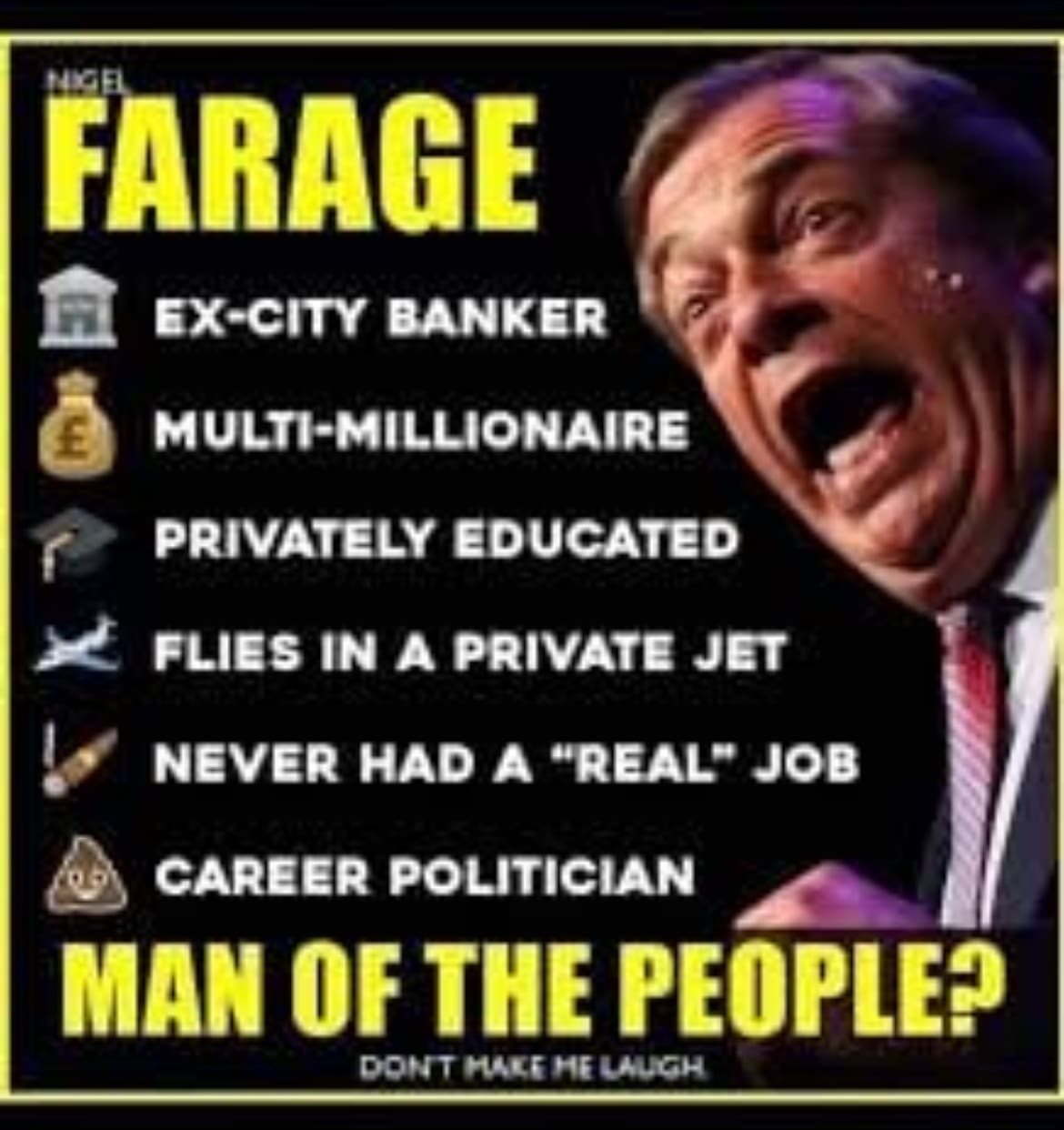
- Contradiction with public persona: Farage has long portrayed himself as the underdog, the outsider, the man who speaks plainly. The school stories, by contrast, suggest a privileged youth indulging in provocative, extremist symbolism among peers.
6. Critical Analysis
Putting together the evidence, several key themes and questions emerge:
6.1 Provocation or Ideology?
- Some defenders of Farage may argue his behaviour was simply teenage provocation — a desire to shock, to challenge authority, to be rebellious. Indeed, Crick often highlights that Farage relished being provocative. The Guardian
- But for many of his classmates, the behaviour was not trivial: it involved explicit Nazi imagery, sustained chants of “gas ’em all,” racist slurs, and salutes. These are not harmless japes; they reflect a willingness to flirt with extremism.
6.2 Consistency into Adulthood
- One question is whether the views or behaviours that Farage exhibited (if the testimonies are accurate) have persisted in his adult political life.
- Crick suggests there is a continuity: Farage’s brand of populist nationalism, his focus on immigration, and his willingness to court controversial or fringe support all echo aspects of his school persona. The Guardian
- The recent political pressure — particularly from ministers and extremism experts — implies that his past is no longer deemed irrelevant simply because it is old.
6.3 Accountability and Apology
- Crick and some former classmates argue not just for a public explanation, but for a genuine apology.
- For victims (or witnesses) of his school-day behaviour, an admission and apology could carry real moral weight, even decades later. Some of them say they have lived with shame, hurt, or fear that Farage never addressed.
6.4 Evidence and Memory
- A fair critique: much of the evidence is testimonial, based on memory of events that happened nearly half a century ago.
- Farage and his team point to the lack of contemporaneous documentary evidence (beyond Deakin’s letter) — no official recordings, no public archive of chants, no school disciplinary files in the public domain.
- But memory is not meaningless: when multiple, independent witnesses (former cadets, classmates) recount broadly consistent stories, the weight of their testimony is significant.
6.5 Impact on Public Trust
- Farage has positioned himself as a political outsider, someone who speaks for ordinary people against elites. But if true, these school-boy behaviours expose a different truth: a privileged, privately educated youth indulging in extremist theatrics.
- For voters, especially in a climate of rising political polarisation, reckoning with this history may reshape perceptions: is Farage a provocateur, a populist, or someone who once embraced far-right iconography more seriously than he now admits?
7. Conclusion
The accumulated evidence, as laid out by Michael Crick, and bolstered by recent reporting, paints a deeply troubling picture of Nigel Farage’s teenage years: a boy who not only courted controversy but apparently embraced, or performed, extremist symbols and language — from chanting Nazi-inspired songs to mocking the Holocaust.
Farage’s denials, while strong, must be measured against the consistency, number, and credibility of his accusers: former classmates, cadets, and teachers. At least 20 individuals have now spoken of repeated, racially abusive behaviour, including antisemitic remarks and slurs. The Guardian
The political consequences are profound. Farage is not just a media personality; he is a political leader whose past may carry resonance in his policies, public persona, and relations with his party. Senior politicians, including the prime minister, are demanding accountability, suggesting that for many, his schoolboy behaviour is not in the past — it remains a matter of public concern.
Given the scale of the testimonies, the gravity of the allegations, and the lack of a full, credible refutation from Farage (beyond blanket denial), there is a strong case for moral accountability. A genuine apology, heeding Crick’s call, would not only address past victims but also demonstrate a willingness to confront uncomfortable truths — a quality often claimed, but rarely demonstrated, by political figures in today’s Britain.