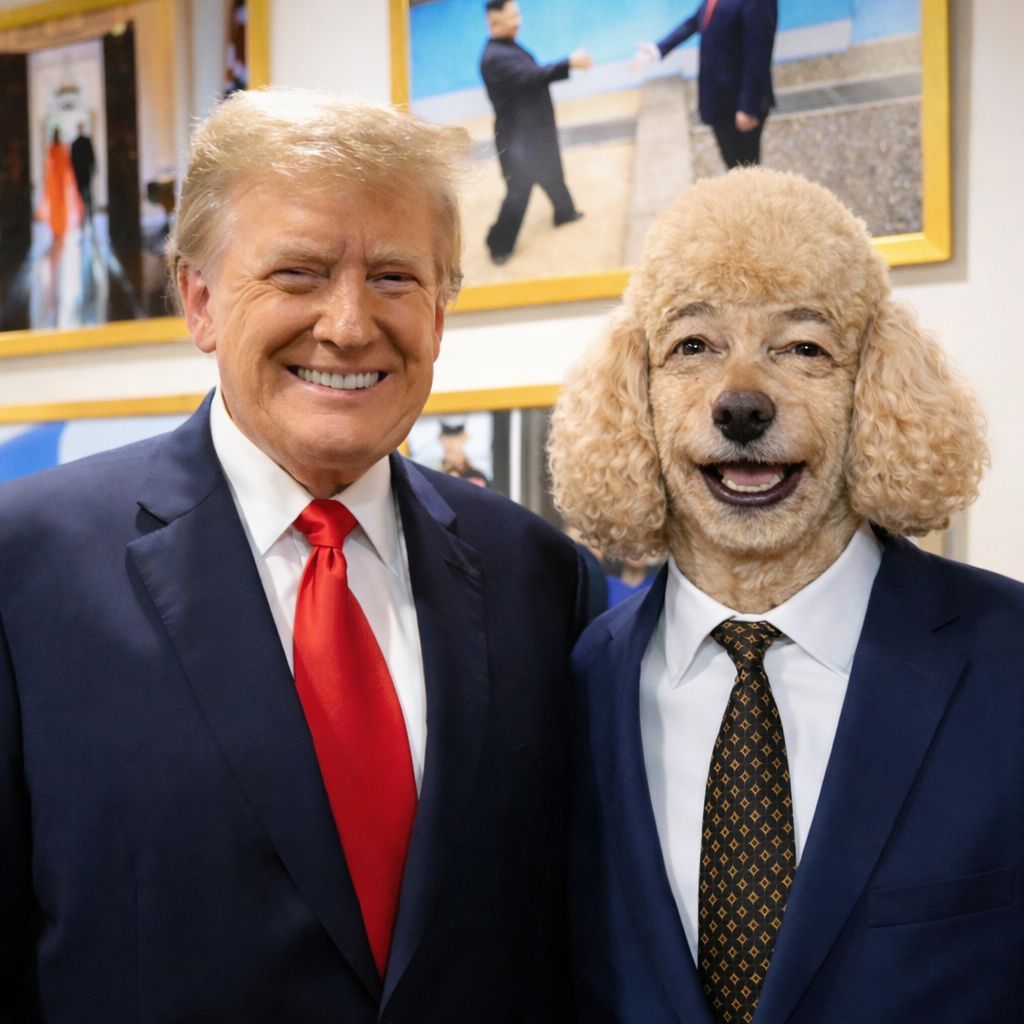
Brexit’s Faux Patriot-in-Chief Goes Shopping for a New Master
For years, Nigel Farage presented himself as the uncompromising defender of British sovereignty. The word became his mantra. Every speech, every rally, every television appearance returned to the same message: Britain must be free to govern itself. Britain must “take back control”. Britain must no longer bow to foreign power.
That message reached its climax in the Brexit referendum, where Farage and his allies promised that leaving the European Union would restore democratic self-government. Laws would once again be made in Westminster. Britain would stand proudly on its own feet.
It was an emotionally powerful argument. For many voters, it seemed rooted in patriotism and democratic principle.
But the years since Brexit have revealed something increasingly difficult to ignore: the sovereignty campaign was never about sovereignty at all.
It was about power, publicity and political grievance.
And now the mask is slipping.
The same man who spent decades screaming about Brussels now appears perfectly comfortable with Britain subordinating itself to Washington. Farage’s increasingly open political devotion to Donald Trump exposes the entire Brexit narrative for what it was: a political fraud.
As critics have put it:
“Nigel Farage and his Reform Party are desperate for Britain to fall into step behind America. They are backed by the entire British right-wing media, the same newspapers and commentators who cheered for the disaster of the Iraq War.
Farage squawked endlessly about sovereignty during his destructive Brexit campaign. Now he seems very keen not only on bad-mouthing his own country to a foreign power but also to do all he can to make sure Britain throws sovereignty away in obeisance to Trump.”
The contradiction could hardly be more glaring.
Farage claimed Britain could not tolerate sharing sovereignty with European neighbours in a political union where it possessed a vote, representation and influence. Yet he now promotes a political alignment with the United States in which Britain would possess none of those things.
Inside the European Union, Britain had ministers at the table, commissioners in the institutions and members in the European Parliament. It was not a colony; it was one of the largest and most powerful states in the bloc.
Outside it, Farage’s preferred geopolitical vision seems to reduce Britain to something much smaller: a loyal follower of American power.
This is the uncomfortable truth at the heart of the Brexit mythology.
The campaign was never really about independence. It was about choosing a different patron.
For decades Farage railed against the idea that laws affecting Britain could be shaped abroad. Yet he now openly celebrates a political project in which Britain would align its interests with a nationalist movement centred thousands of miles away in Washington.
He once warned of Brussels bureaucrats imposing rules. Now he cheers a political ideology imported directly from American culture wars.
It is difficult to square these positions unless one accepts the obvious conclusion: sovereignty was simply a slogan.
In reality, Farage’s politics have always been less about national independence than about resentment against European cooperation. The European Union represented compromise, diplomacy and shared governance. It demanded negotiation between states with different interests.
That complexity never suited Farage’s populist style.
Washington, by contrast, represents something simpler in his political imagination: a powerful ‘ally’ whose cultural and ideological battles mirror those he wishes to fight in Britain.
His admiration for Trump has been particularly revealing. Farage has spoken at Trump events, defended him through scandal after scandal and presented him as the model of political leadership. He has effectively tied the future of his own party, Reform UK, to the fortunes of the American populist right.
For a man who built a career warning against foreign influence, the spectacle is extraordinary.
What makes the hypocrisy even more brazen is the historical memory involved.
Many of the newspapers and commentators who champion Farage today are the same voices who loudly supported the Iraq War. That disastrous invasion, launched by the United States and joined by Britain under Tony Blair, remains one of the most glaring examples of Britain subordinating its foreign policy to American strategy.
The war destabilised an entire region, cost hundreds of thousands of lives and shattered public trust in government. It was precisely the kind of foreign entanglement that a genuine sovereignty movement might have opposed.
Yet the political ecosystem around Farage enthusiastically backed it.
And now the same ecosystem demands even deeper alignment with American political power.
The pattern is unmistakable. Sovereignty is invoked only when convenient.
When cooperation with Europe is involved, it becomes a sacred principle. When loyalty to Washington is involved, it quietly disappears.
This selective nationalism exposes the deeper truth about Farage’s political project.
Populism thrives on grievance. It requires an external enemy — a villain blamed for national problems. For years the European Union filled that role. Brussels bureaucrats were the perfect target: distant, technocratic and easy to caricature.
But once Britain actually left the EU, that narrative began to collapse.
The economic complications of Brexit could not simply be blamed on Brussels. The promises of effortless prosperity proved unrealistic. The grand vision of global independence turned out to be far more complicated in practice.
Faced with that reality, Farage and his allies have increasingly turned their gaze elsewhere.
America’s culture wars now provide a new battlefield. British politics is reframed through the language of American populism: attacks on institutions, suspicion of expertise and a constant insistence that the nation is under siege from internal enemies.
It is political theatre imported wholesale from another country.
And this is perhaps the ultimate irony.
The man who once warned darkly about foreign influence now seems eager to import the entire ideological framework of American political conflict into Britain.
If that is sovereignty, it is a strange kind indeed.
In truth, Farage’s career reveals a pattern familiar throughout populist politics. Grand slogans conceal far simpler ambitions. “Taking back control” was never a coherent constitutional programme. It was a campaign tool, a phrase designed to mobilise anger.
Once the anger achieved its objective, the principle quietly faded.
Britain did leave the European Union. But the sovereignty promised to voters has proved far more elusive.
Trade agreements still require compromise. Global markets still impose constraints. International alliances still demand cooperation.
The fantasy of absolute independence was always just that: a fantasy.
Yet Farage continues to sell the myth.
The difference now is that the contradictions are harder to hide. The man who once presented himself as Britain’s champion against foreign control increasingly looks like something else entirely, a political entrepreneur willing to trade sovereignty for relevance.
The Brexit campaign was sold as a patriotic uprising against outside domination.
But watching Nigel Farage today, it is difficult to escape a darker conclusion.
The loudest prophet of sovereignty never really believed in it.
He simply needed a slogan.