With emergency departments across Dorset experiencing unprecedented pressure over the past few weeks, local clinicians are appealing for people to seek the most appropriate care for them, especially during the Easter break.
While most of those seen in emergency departments and minor injury units are in need of urgent care, there are still many patients who could get treatment elsewhere.
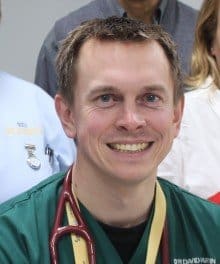
Dr Gary Cumberbatch, clinical lead for emergency care at Poole Hospital, said: “We are expecting an increase in emergency department attendances over Easter – we believe that around one in five attendees could be appropriately seen in another healthcare setting.
I would urge anyone who believes their condition is not an emergency to consider other options to their local emergency department – a number of GP practices will offer extended access during Easter, for example”.
Dr David Martin, Consultant in Emergency Medicine at the Royal Bournemouth Hospital, added: “Many of the people we are seeing are the frail elderly so we are also appealing to their families, carers and those working in nursing homes to keep a close eye on them and ensure that if they become ill, they get help sooner, for example from their GP or pharmacy, before their condition gets worse.”
For colds and flu like symptoms the most effective way to get better is with self-care. It is unlikely that antibiotics will help so local clinicians are asking people not to visit their GP or hospital as this could possibly mean other people become ill.
If you do become ill though or your symptoms worsen, there are a number of ways to get help across the county – each providing a particular service:
· 111 – Call 111 if you are not sure who to ask or you just need advice. NHS 111 is available 24 hours a day, 365 days a year. Calls are free from landlines and mobile phones;
· Pharmacy – headaches, coughs and colds, upset stomach;
· GP routine care – chronic backache, persistent pain, painful cough, earache;
· GP urgent care / MIU – sprains, strains and minor injuries;
· Emergency departments – heavy bleeding, broken bones, chest pain, suspected stroke, burns.
The NHS111 service is staffed by a team of fully trained advisers, supported by experienced nurses and paramedics. They will ask you questions to assess your symptoms, then give you the healthcare advice you need or direct you straightaway to the local service that can help you best. That could be A&E, an out-of-hours doctor, an urgent care centre or a walk-in centre, a community nurse, an emergency dentist or a late-opening chemist.
During the public holidays it is important to know where your local GP practice and pharmacy are and when they are open. Full details can be found online at www.nhs.uk.
Some GP practices across Dorset will be open longer than normal to help people who need treatment over the break. No appointments are needed and you may not have to be a patient of the practice to attend. Full details are available at www.keepwellindorset.nhs.uk.
Local GP Dr Simon Watkins said “Doctors across the county recognise that there are key times throughout the year services are in demand with the Easter weekend being one of these. A number of practices across the area will be opening their doors for longer during the break to help ensure people who are in genuine need of health care are able to get the treatment they require”.
Healthcare advice along with a full list of additional and extended clinics, minor injury units and dental services can be found at www.keepwellindorset.nhs.uk.