

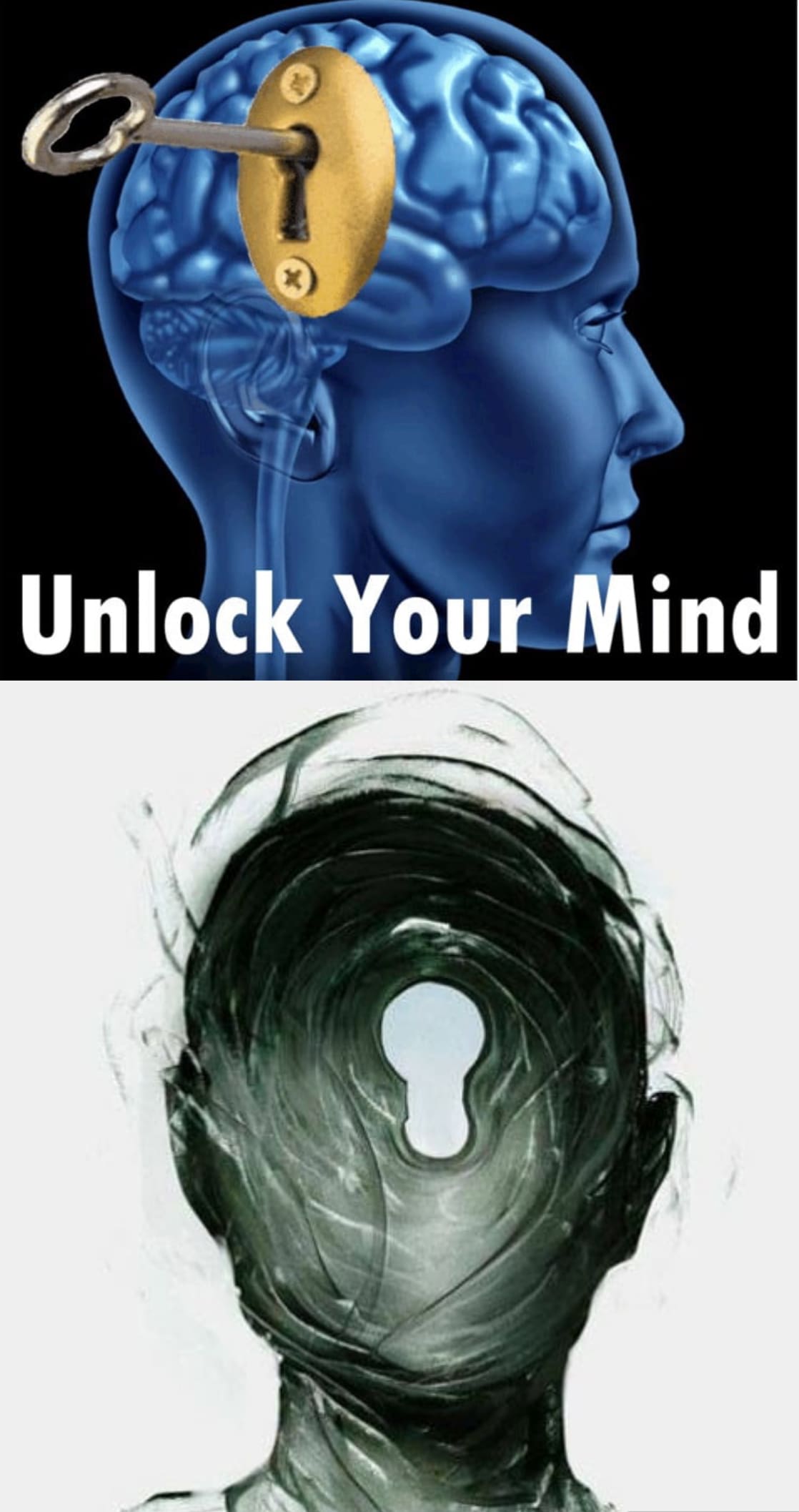
Imagine giving a child a set of keys. Not to a house or a car, but to understanding the world itself. One key is forged in the fires of stars and explains why things fall apart. The other is shaped by the clash of ideas and explains how things grow and change. These keys are not made of metal, but of ideas: Entropy and Dialectics.
While these concepts sound like the preserve of university lecture halls, they are, in fact, fundamental patterns that play out in everyday life. Teaching them from a young age would not just create better scientists or philosophers; it would create more resilient, adaptable, and thoughtful human beings.
Key One: Entropy – The Law of Cosmic Messiness
In simple terms, the Second Law of Thermodynamics—entropy—states that in an isolated system, things tend to move from order to disorder. Energy spreads out, structures break down, and chaos (or more accurately, randomness) increases. It’s the reason why a dropped mug shatters, why a tidy room inevitably becomes messy, and why we must constantly expend energy to maintain order in our lives.
For a child, understanding entropy is a profound lesson in realism and acceptance.
- It Demystifies Frustration: Why is it so hard to keep my bedroom tidy? Entropy. It’s not a personal failing; it’s a law of the universe. The natural state is dispersion. This shifts the perspective from guilt (“I’m messy”) to proactive management (“I need to put energy in to creating order”).
- It Teaches Preciousness: Entropy gives time its arrow. Because things irreversibly decay, moments are precious. A sandcastle washed away by the tide, an ice lolly melting in the sun, a person getting older and death—these are not just childhood disappointments; they are gentle, tangible lessons in the fleeting nature of things. It fosters a deeper appreciation for the temporary beauty of a blooming flower or a shared laugh.
- It’s the Foundation of Environmentalism: On a planetary scale, entropy teaches us that resources are finite and energy transformations are inefficient. The concept of “waste” becomes crystal clear. We understand that creating a sustainable society is a constant battle against the dispersive tendency of the universe, requiring careful stewardship.
Key Two: Dialectics – The Engine of Change
If entropy is the universe’s tendency towards dispersion, dialectics is the process by which complex order emerges. Loosely derived from the philosophies of Hegel and Marx, it’s a framework for understanding change. It proposes that progress happens through the clash and reconciliation of opposing forces, often summarised as Thesis → Antithesis → Synthesis.
A child sees this pattern everywhere, even if they don’t know the name for it.
- It Explains Conflict and Resolution: Two friends have a disagreement (thesis and antithesis). After talking it out, they don’t just go back to how things were; they forge a new, stronger understanding that incorporates both of their views (synthesis). This is dialectics in action. It frames arguments not as disasters to be avoided, but as necessary growing pains that lead to better outcomes.
- It Makes History and Science Make Sense: Scientific progress is deeply dialectical. Newtonian physics (thesis) was challenged by Einstein’s relativity (antithesis), leading to a more complete, synthetic understanding of the universe. Social norms and laws evolve the same way. Teaching this pattern helps children see history not as a list of dates, but as a dynamic story of struggle and progress.
- It Builds Resilience and Flexibility: When a child understands that change is not linear but arises from contradiction, they become better equipped to handle it. A failed plan isn’t just a failure; it’s the “antithesis” that provides the information needed to create a better “synthesis.” It encourages critical thinking, the ability to hold two opposing ideas in mind, and the creativity to find a new path forward.
The Synergy of the Two Keys
The true power comes from holding both keys at once. They are not contradictory but complementary forces that describe the full spectrum of existence.
Entropy describes the universe’s overwhelming trend towards dissolution. Dialectics describes the localised, hard-won pockets of complexity that temporarily arise within that flow. A garden is a perfect example: left to entropy, it will become overgrown with weeds. But through the dialectical process of planning, planting, and problem-solving (fighting pests, learning what grows best), we create a beautiful, ordered synthesis—a temporary victory against the cosmic tide.
Giving children these conceptual tools would empower them to navigate life with greater wisdom. They would understand that decay is natural, but so is growth born from conflict. They would see the world not as a static collection of facts, but as a dynamic process of becoming and un-becoming.
It’s not about turning primary schools into advanced seminars. It’s about weaving these patterns into stories, science experiments, and history lessons. It’s about giving them the language to describe what they already intuitively know: that things fall apart, but that from the pieces, we can build something new, and often, something better.
In a world facing complex challenges like climate change and social division, the next generation needs more than facts. They need a fundamental operating manual for reality. Entropy and dialectics are two of its most important chapters. It’s time we handed them the keys.







