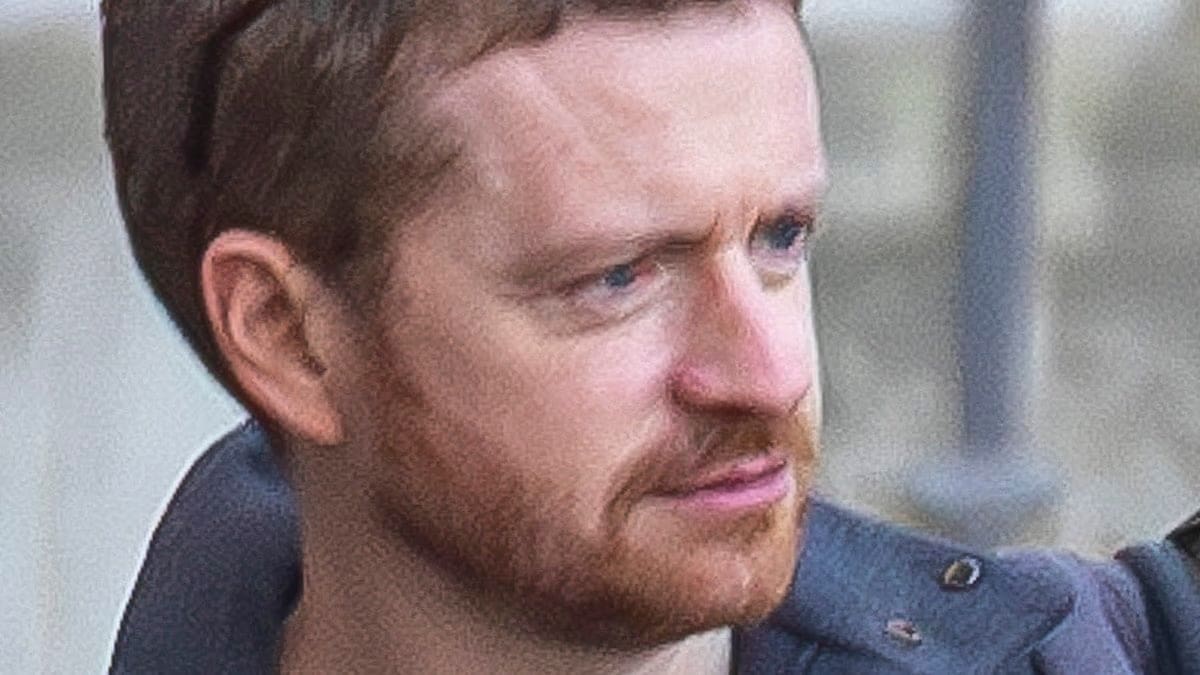
Morgan McSweeney’s resignation as Sir Keir Starmer’s chief of staff has been dressed up as an act of honour. In truth, it is the inevitable end of a political career defined less by accountability than by control, factionalism, and a ruthless belief that the Labour Party could only win if large parts of itself were crushed into silence.
His departure comes in the toxic fallout from the Peter Mandelson scandal, a scandal that has now metastasised far beyond a single disastrous appointment and into a full-blown crisis of judgement at the heart of Starmer’s operation. McSweeney himself admitted what many inside Labour had long whispered: the decision to appoint Mandelson as US ambassador was his advice, his push, and his responsibility. On that point, at least, he was refreshingly direct.
But responsibility does not begin and end with Mandelson.
The Mandelson catastrophe
The facts are now grimly familiar. Mandelson, already forced out as ambassador last September, was further engulfed this week by newly released Epstein files. These documents suggest that, while serving as business secretary after the financial crash, Mandelson shared confidential market-sensitive information with Jeffrey Epstein and received $75,000 from the convicted sex offender. Whether criminality is eventually proven or not, the judgement is indefensible.
Mandelson has quit the Labour Party and resigned from the House of Lords, though he retains the title “Lord” because Parliament would need to legislate to strip it from him, a neat symbol of how consequence-free power can be for the well-connected. Police are now investigating potential misconduct in public office, and the government has been forced, after an intervention by Angela Rayner, to allow sensitive vetting documents to be scrutinised by the Intelligence and Security Committee.
That Mandelson should never have been appointed is obvious. That he was appointed anyway tells us everything about the culture McSweeney helped create.
The man behind the Starmer project
To understand why McSweeney’s fall feels overdue rather than tragic, you have to understand his role in modern Labour. Born in Macroom, County Cork, his political ascent began in Lambeth Council under Steve Reed. There, he learned a lesson that would shape his entire career: the left was not simply a political tendency to be debated but an enemy to be eradicated.
His campaign to “cleanse” Lambeth of the hard left echoed earlier purges under figures like “Red” Ted Knight and established McSweeney as an operator willing to use the party machine as a weapon. By the time Jeremy Corbyn became Labour leader in 2015, McSweeney already regarded him as an existential threat. In 2017 he became director of Labour Together, a think tank explicitly designed to undermine Corbynism and reframe Labour as a technocratic, centrist project palatable to the establishment.
That project succeeded electorally. No one can deny that McSweeney played a central role in engineering Starmer’s leadership victory in 2020 and Labour’s eventual landslide. But success came at a cost: the hollowing out of internal democracy, the marginalisation of left-wing MPs and members, and a culture where loyalty to the leadership clique mattered more than competence or ethics.
Power without accountability
As chief of staff, McSweeney was widely accused of treating MPs with contempt, controlling parliamentary shortlists, and shutting down dissent. Welfare reform debacles, botched briefings, and chaotic internal management all bore his fingerprints. MPs complained that he simply did not listen, or worse, that he actively briefed against them.
The Hartlepool by-election disaster in 2021 briefly exposed his limits. Labour lost a seat it had held since the 1970s, Starmer considered resigning, and McSweeney was quietly sidelined. For many, it should have been the end. Instead, after a vicious internal power struggle, he returned to the role, replacing Sue Gray in circumstances that left a sour taste across Westminster. The anonymous briefings, the public undermining, and Gray’s abrupt exit reinforced McSweeney’s reputation for political brutality.
By that point, he was no longer merely an adviser. He was widely seen as the real power behind the throne.
Advisers advise, ministers decide — but cultures endure
Veteran MPs like John McDonnell are right to note that advisers do not appoint ambassadors — prime ministers do. Responsibility for Mandelson ultimately rests with Starmer, whose judgement is now under serious strain. But advisers shape cultures, constrain choices, and create environments in which bad decisions become inevitable.
McSweeney’s closeness to Mandelson and his insistence on pushing him into one of the most sensitive diplomatic posts in the world, epitomised that culture: insular, arrogant, and convinced that connections trump scrutiny.
Left-wing MPs such as Richard Burgon are right too when they say this resignation is only a first step. An independent inquiry into the practices and networks that dominated Labour under McSweeney is long overdue. Without it, the party risks learning nothing.
No tears shed
Some MPs urge Labour to “move on”. Others warn against factional glee. But outside Westminster, there is little sympathy. For many members and voters, McSweeney became the symbol of a Labour Party that won power while losing its soul—efficient, disciplined, and profoundly disconnected from the people it claimed to represent.
Sir Keir Starmer praised his “dedication, loyalty and leadership”. That may all be true. But loyalty to a project that shields the powerful, sidelines critics, and elevates compromised figures like Mandelson is not a virtue. It is a liability.
Morgan McSweeney leaves behind a party in government but mired in mistrust, a prime minister fighting for survival, and two embittered former allies, Mandelson and Sue Gray, with every incentive to settle scores.
So yes, goodbye, Morgan McSweeney. And for many in Labour, and far beyond it, good riddance.