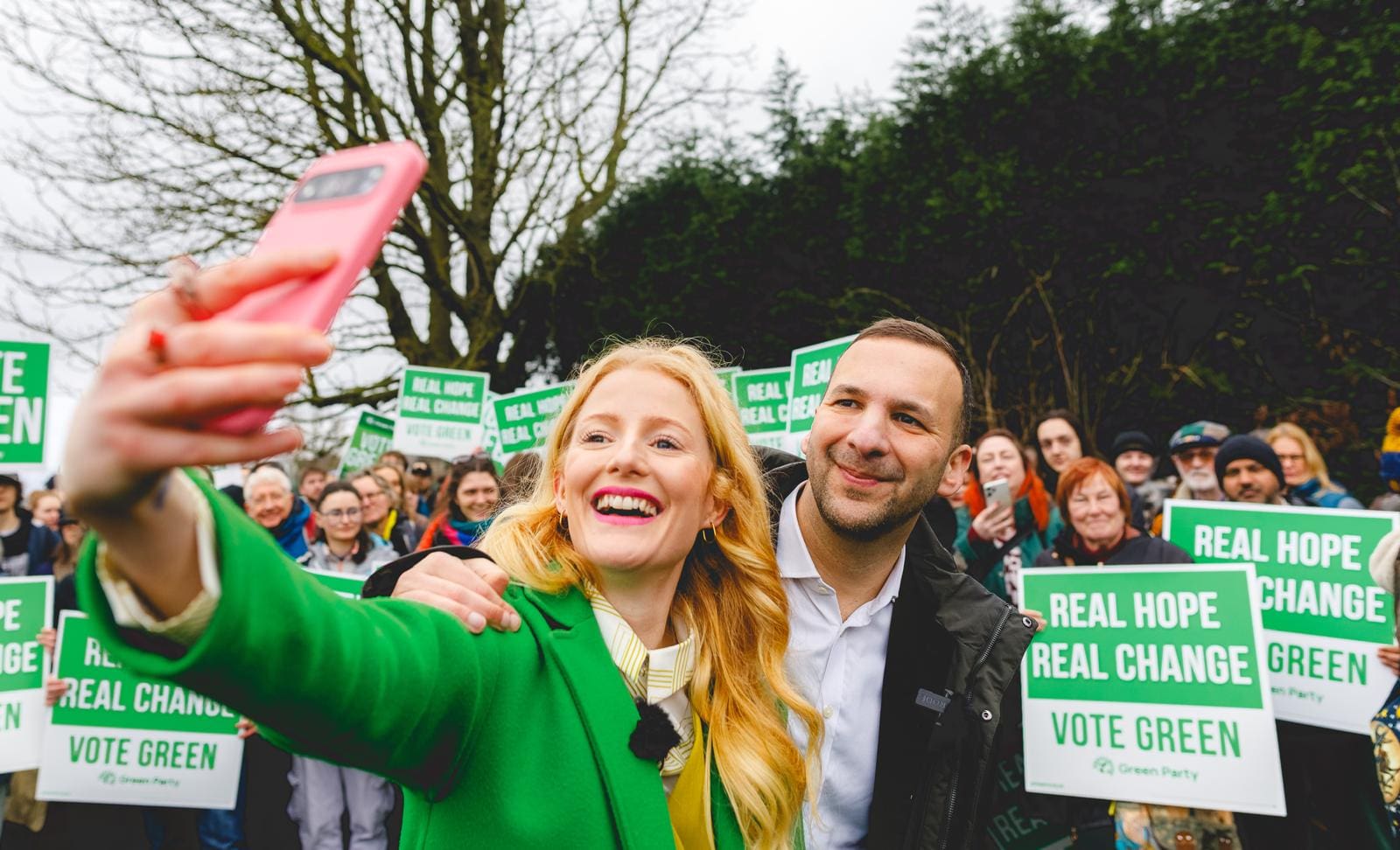
The Green Party of England and Wales has surged past a symbolic and political milestone, with membership topping 190,000 in the days following its historic Westminster by-election victory on February 26. The breakthrough win, delivered by Spencer in what had long been considered safe territory for Labour, marks the party’s first-ever Westminster by-election triumph and has sent ripples through Britain’s political landscape.
The surge in support has propelled the Greens to become the UK’s third-largest political party by membership, overtaking the Conservatives. For a movement that, for decades, was dismissed by critics as a single-issue pressure group, the transformation is profound. The by-election result was not simply a local upset; it was a declaration that environmental politics, social justice and economic reform now command a far broader coalition of voters than ever before.
Party leader Zack Polanski was quick to acknowledge the scale of the moment. In a light-hearted post on social media, he joked about the flood of new sign-ups being so intense it “crashed the website,” sharing an image of himself on a train as membership numbers climbed. The humour masked a serious reality: the Greens are riding a wave of enthusiasm rarely seen in modern British politics outside of general election cycles.
.@ZackPolanski is asked, do you regret not standing in Gorton & Denton yourself?
— Saul Staniforth (@SaulStaniforth) February 27, 2026
No, says Zack, because in the Greens we aren't unprincipled opportunists who parachute ourselves into seats to further our own careers (in so many words) #GMB pic.twitter.com/uyvzcAkC6S
The by-election victory itself carries deeper political significance. The constituency, once regarded as a Labour stronghold, had appeared firmly within the party’s orbit for years. Yet voters delivered a decisive shift, signalling frustration not only with the Conservatives but also with Labour’s positioning on key issues. Green campaigners cited concerns over inequality, the housing crisis and the cost of living as central themes that resonated on the doorstep.
In conversations with voters, party activists reported a sense of disillusionment with traditional party politics. Rising rents, stagnant wages and the visible strain on public services have sharpened demands for alternatives. The Greens argue that their focus on tackling wealth inequality, expanding social housing and accelerating climate action provides a coherent response to these pressures. For many voters, the by-election became an opportunity to register dissatisfaction while backing a candidate offering something distinctly different.
The timing of the victory is particularly significant with local elections scheduled for May 7, when more than 4,800 council seats across England will be contested. The party’s expanding membership base could translate into thousands of additional volunteers on doorsteps and phone banks. Local elections have historically been fertile ground for the Greens, who have built a growing network of councillors over the past decade. With fresh momentum, party strategists believe they can convert the by-election breakthrough into sustained local gains.
Political analysts note that membership figures do not automatically equate to electoral victories. However, they do reflect energy, financial contributions and activist capacity, all crucial ingredients in grassroots campaigning. Surpassing 190,000 members sends a powerful signal about the direction of travel within progressive politics, particularly among younger voters who are increasingly motivated by climate concerns and housing affordability.
For Labour, the defeat is an uncomfortable warning. Losing a previously dependable seat to the Greens suggests that voter patience may be thinning in certain areas. While national polling still places Labour ahead overall, the by-election underscores the risk of complacency in communities where economic grievances remain acute. The Greens’ ability to frame climate policy alongside bread-and-butter issues such as rent controls and public transport investment appears to have broadened their appeal beyond environmental activists.
Meanwhile, the Conservatives face their own reckoning. Being overtaken in membership by the Greens is symbolically damaging for a party that once prided itself on organisational dominance. Although membership totals fluctuate and do not necessarily predict electoral outcomes, the optics of falling behind a party long considered marginal add to the narrative of Conservative decline following years of internal turmoil.
The coming months will test whether this moment marks a turning point or a temporary surge. By-elections can produce unusual dynamics, with protest votes and local factors playing outsized roles. Yet the scale of the membership increase suggests something more durable may be underway. If even a fraction of new recruits remain active beyond the immediate excitement, the Greens could enter the next general election cycle with a significantly strengthened ground operation.
At its core, the February 26 victory represents a shift in what voters believe is possible. Breaking the psychological barrier of a first Westminster by-election win transforms the Greens from perennial outsiders into credible contenders. For supporters, it is proof that persistence pays off. For rivals, it is a reminder that the political map is not fixed.
As Britain heads toward the May 7 local elections, the Green Party’s challenge will be to convert enthusiasm into organisation, and organisation into representation. With over 4,800 seats up for grabs, the opportunity is substantial. Whether this surge becomes a sustained realignment or a momentary spike will depend on how effectively the party channels its growing membership into lasting political power.
One thing, however, is already clear: the Greens are no longer on the fringes of British politics. They are now a central part of the conversation and, increasingly, of the contest for power.