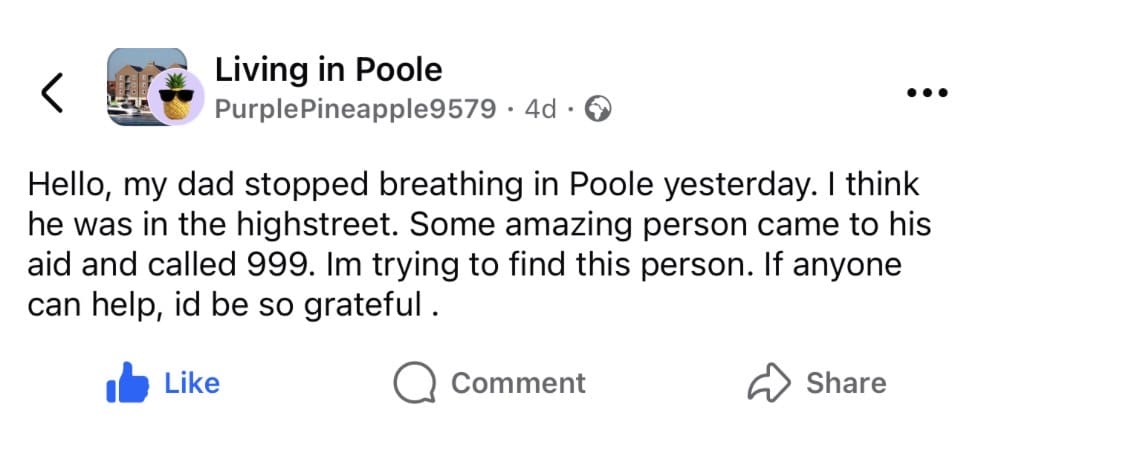
In the middle of an ordinary day on Poole High Street, when life was simply going about its business, something extraordinary happened. A man stopped breathing. In that terrifying moment, a stranger did not hesitate, did not look away, did not weigh up inconvenience or risk. They stepped forward. They called 999. They gave CPR. They chose compassion. That single decision, instinctive, human, decent, is a reminder of who we really are beneath the noise.
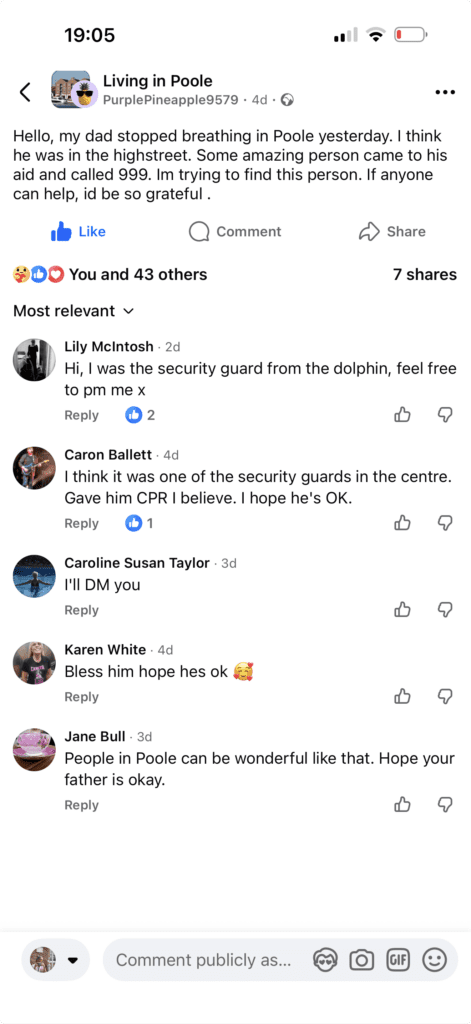
At a time when certain politicians and public figures seem determined to divide us, to reduce society to tribes and talking points, this is what endures: ordinary people quietly saving one another. No speech, no culture war, no manufactured outrage can erase the simple truth that when someone collapses in the street, it is not ideology that responds, it is humanity. It is the security guard who runs toward danger. It is the passer-by who kneels on cold pavement. It is the stranger who refuses to let another life slip away.
There is something profoundly hopeful in that. While headlines scream about fracture and fury, communities continue to prove that solidarity is stronger than suspicion. The comments of concern, the offers of help, and the effort to track down the person who stepped in—these are small acts that stitch society together. They show that beneath the political theatre, there remains a deep reservoir of kindness that no rhetoric can fully poison.
In moments like this, we see the country as it truly is: flawed, yes, but bound together by an instinct to care. When everything feels like it is being pulled apart, a stranger’s hands performing CPR on a high street in Poole become an act of quiet defiance. Humanity is not so easily dismantled. It shows up. It kneels down. It saves lives.