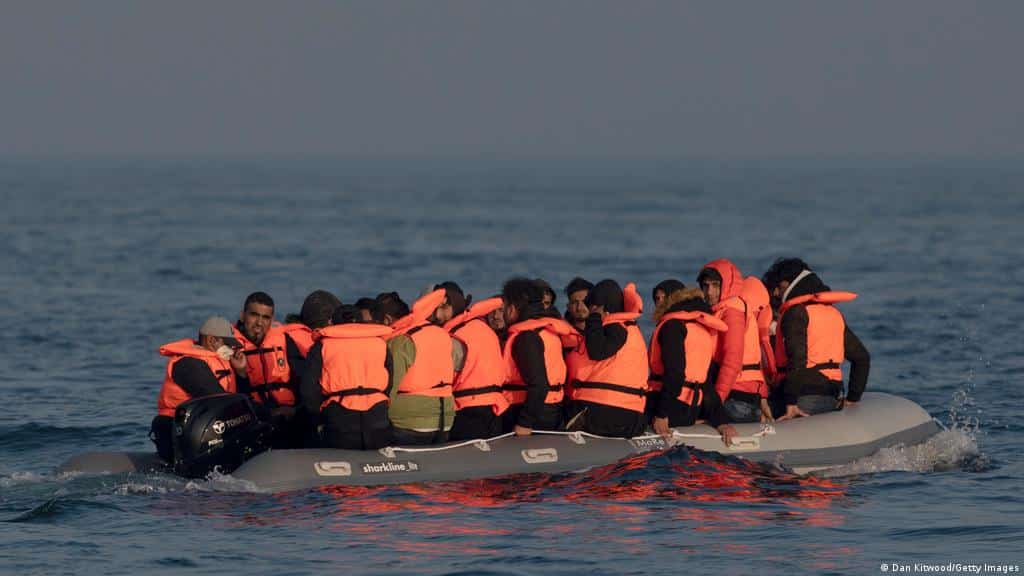
For the better part of a decade, small boat crossings in the Channel have been treated as a uniquely British failure, to be solved with ever harsher rhetoric, eye-watering budgets and increasingly theatrical policies. Barges, Rwanda schemes, floating walls, naval patrols and punitive legislation have all been tried or proposed. None has worked. The reason is simple: the problem is not primarily about toughness or technology. It is about geography, law and cooperation. And on those three fronts, the most effective solution available to the UK is also the most politically taboo: rejoining the European Union. Now hear me out.
Before Brexit, the UK did not experience anything like the scale of small boat crossings seen today. That is not because Britain was somehow less attractive to migrants, nor because the French coast was better policed. It is because the UK was embedded in a shared European asylum and border framework that made illegal crossings both unnecessary and irrational. Brexit dismantled that framework overnight. The boats followed.
| 2018 | 299 |
| 2019 | 1,843 |
| 2020 | 8,466 |
| 2021 | 28,526 |
| 2022 | 45,755–45,774 (record) |
| 2023 | 29,437 |
| 2024 | 36,816 |
| 2025 | ~41,472 |
At the heart of the issue is the absence of safe, legal routes for people with a legitimate claim to asylum to reach the UK. Under EU membership, the UK participated in the Dublin Regulation, which allowed asylum seekers to be transferred between member states so that claims could be processed efficiently and fairly. Crucially, it also allowed the UK to return people who had travelled through safe countries to have their claims assessed elsewhere, while still accepting refugees through formal resettlement programmes. Once outside the EU, Britain lost access to Dublin without replacing it with anything remotely equivalent. The result was predictable: people who might once have been transferred legally now have no option but to attempt illegal entry.
Rejoining the EU would restore that legal architecture. It would allow the UK to negotiate its participation in a modernised Dublin system, one that shares responsibility across the continent and removes the incentive for dangerous journeys. When asylum seekers know they can apply legally and that their claim will be heard without needing to evade border controls, the business model of the smugglers collapses. No dinghy can compete with a plane ticket issued under an agreed humanitarian corridor.
Equally important is intelligence and law enforcement cooperation. As an EU member, the UK had full access to Europol, real-time data sharing and joint investigation teams targeting organised crime networks. Those networks do not stop at Dover or Calais; they operate across multiple jurisdictions, adapting quickly to enforcement gaps. Outside the EU, Britain now relies on slower, more limited third-country arrangements. Rejoining would allow the UK to once again help lead coordinated operations against people-smuggling gangs, striking at the source rather than staging futile confrontations at sea.
There is also the uncomfortable truth that the Channel is not, and never was, a “British border problem”. It is a shared European space. Attempting to police it unilaterally while simultaneously distancing ourselves from European partners is a contradiction at the core of current policy. France has little incentive to act as Britain’s outsourced border force, particularly when the UK refuses to share responsibility for asylum processing. EU membership would realign incentives: shared borders, shared obligations, shared solutions.
Critics will argue that EU free movement makes the problem worse. The opposite is true. Free movement applies to EU citizens, not asylum seekers from war zones. By conflating the two, successive governments have muddied public understanding and distracted from workable policy. In reality, EU membership would allow the UK to focus enforcement on genuine criminal activity while managing migration through legal, transparent systems. Chaos thrives in the absence of rules; smugglers flourish where states refuse to cooperate.
Rejoining the EU would also allow Britain to rebuild its international credibility on refugee protection. At present, the UK is increasingly isolated, proposing measures that stretch or openly defy international law. This not only damages Britain’s moral standing but also makes cooperation harder. European partners are understandably reluctant to enter binding agreements with a country that signals it may simply opt out when politically inconvenient. EU membership would anchor UK policy in a rules-based system, restoring trust and making durable solutions possible.
Perhaps the most politically awkward point is also the most important: deterrence does not work when people are desperate. Those crossing the Channel are overwhelmingly fleeing conflict, persecution or profound instability. Threatening them with deportation to third countries, or indefinite detention, does not eliminate the underlying need to seek safety. It merely pushes them towards riskier routes. The only proven way to stop illegal crossings is to make them redundant. The EU framework does precisely that by replacing chaos with process.
This is not to suggest that rejoining the EU would be a magic wand. It would require negotiation, compromise and political honesty. But compared with the billions already spent on policies that have failed, it is the only proposal that addresses the structural causes of small boat crossings rather than their symptoms. It replaces spectacle with systems.
The uncomfortable conclusion is this: as long as the UK remains outside the European Union, illegal boat crossings will continue, no matter how many laws are passed or slogans printed. Rejoining would not just reduce the numbers; it would remove the logic of the crossings altogether. The boats are not a mystery. They are a consequence. Change the framework, and they stop.