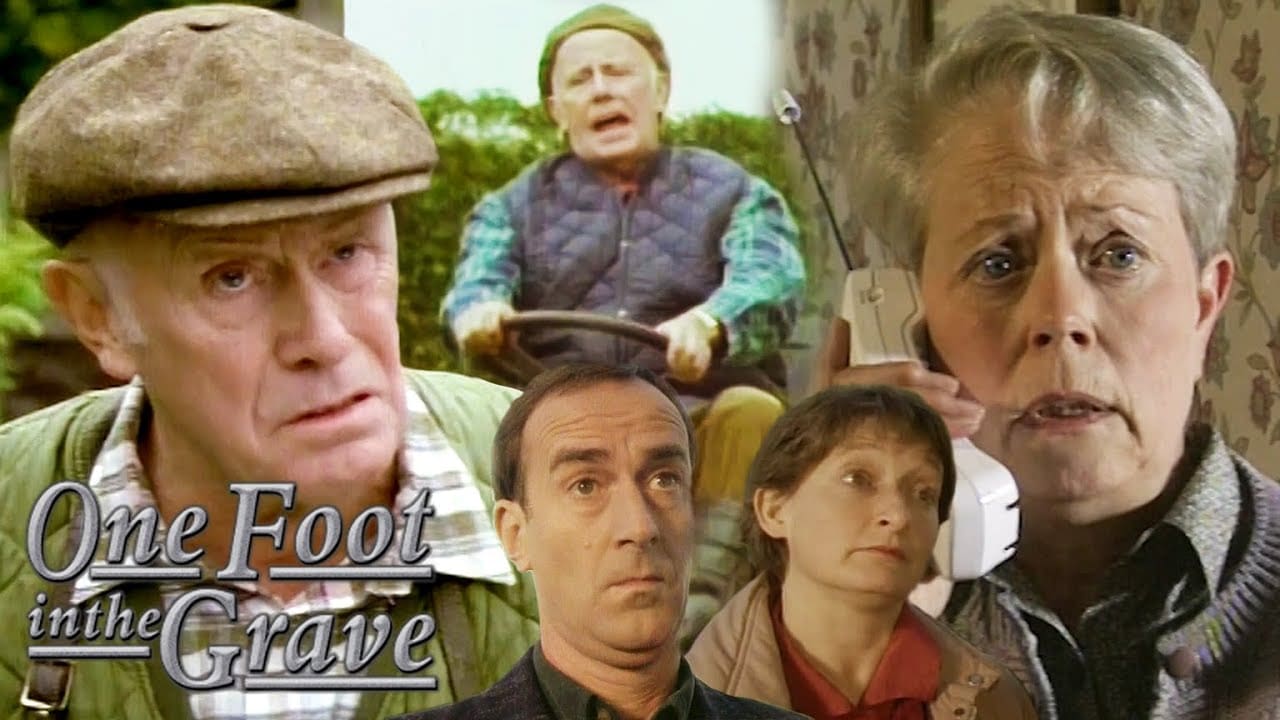
Few British sitcoms have lodged themselves in the national consciousness quite like One Foot in the Grave. Written by David Renwick and broadcast by the BBC between 1990 and 2000, the series followed the daily miseries of Victor Meldrew, a man permanently at war with the modern world. Yet beyond its jet-black humour, philosophical bleakness and unforgettable catchphrases, One Foot in the Grave also has a strong geographical identity—one rooted firmly in Dorset. The county did not merely provide a backdrop; it shaped the look, rhythm and realism of the show.
A suburban tragedy in slow motion
At its heart, One Foot in the Grave was a sitcom about disappointment. Victor and Margaret Meldrew inhabit a world of small humiliations, bureaucratic cruelty and random injustice. The comedy worked precisely because it was grounded in recognisable, unglamorous places: suburban streets, anonymous civic buildings, windswept seafronts and quiet gardens where things inexplicably went wrong.
Dorset, and particularly the Bournemouth–Christchurch area, proved ideal for this purpose. Its mix of suburban sprawl, coastal weather and understated ordinariness perfectly matched Renwick’s vision of a Britain that was indifferent at best and hostile at worst.
Why Bournemouth?
During the first series, Bournemouth was chosen for exterior filming for practical and economic reasons. The town offered a relatively mild climate, making outdoor filming more reliable, while its transport links allowed easy access from London. Crucially, it was also significantly cheaper than filming in the capital, a factor that mattered for a series that relied heavily on location work rather than studio-bound farce.
The Meldrews’ original house was located near Pokesdown, Bournemouth, and was used for exterior shots in the first series. However, this arrangement did not last. After the series aired, the property changed ownership, and the new owners demanded nearly triple the original filming fees. Rather than accept the increase, the production team made a decision that would become one of the show’s most memorably cruel plot points.
Burning the house down
The first episode of series two was rewritten so that the Meldrews’ home is destroyed in a fire. This was not merely a narrative reset but a practical solution, filmed on waste ground in Northcote Road, Springbourne. The destruction of the house neatly aligned with the show’s philosophy: nothing is secure, and any comfort can be snatched away without warning.
The fire also allowed the production team to redesign the interior set. Producer Susan Belbin had been unhappy with the original layout, finding it too restrictive for filming. The new house provided greater flexibility for camera work and blocking, contributing to the increasingly ambitious visual storytelling of later series.
Walkford and the definitive Meldrew home
From series two onwards, the exterior of the Meldrews’ house was filmed at Tresillian Way in Walkford, near Christchurch in Dorset. This location became the definitive visual identity of One Foot in the Grave, appearing throughout the remainder of the show’s run.
These later series made extensive use of real streets, gardens and neighbouring properties, particularly for scenes involving the Meldrews’ long-suffering neighbours. The sense of lived-in suburban claustrophobia—people always watching, interfering or misunderstanding—was heightened by filming in genuine residential areas rather than constructed backlots.
Dorset on screen
Beyond the Meldrews’ home, One Foot in the Grave drew heavily on locations across Bournemouth and Christchurch. Viewers with local knowledge can spot Richmond Hill, Undercliff Drive and Boscombe Pier, all used to evoke a Britain that feels simultaneously mundane and faintly menacing. Bournemouth Town Hall and Lansdowne College appear, as do Christchurch Hospital and the former Royal Victoria Hospital in Boscombe, lending institutional weight to many of Victor’s encounters with authority and indifference.
Later episodes became even more ambitious in their use of real locations. “Hearts of Darkness”, one of the show’s most acclaimed episodes, was filmed entirely on location, underlining the series’ drift away from traditional sitcom conventions and towards something closer to social realism with jokes.
A final journey
Although the series is strongly associated with Dorset, its final, devastating moment takes place elsewhere. Victor Meldrew’s death by hit-and-run in the last episode was filmed at Shawford railway station in Hampshire. The scene was so affecting that fans left floral tributes at the site, a rare response to a fictional character’s death and a testament to the emotional power the show had built up over a decade.
More than a backdrop
Dorset was never just scenery for One Foot in the Grave. Its streets, hospitals, civic buildings and quiet residential roads reinforced the show’s central themes: isolation, frustration and the absurd cruelty of everyday life. The decision to film extensively on location gave the series a texture that studio sitcoms lacked, making Victor Meldrew’s suffering feel uncomfortably close to home.
In the end, One Foot in the Grave endures not only because of its writing and performances, but also because it placed its characters in real, recognisable places. Dorset’s unshowy realism helped turn Victor Meldrew from a comic caricature into a tragic figure—one foot in the grave, and the other firmly planted on a Bournemouth pavement, waiting for something else to go wrong.