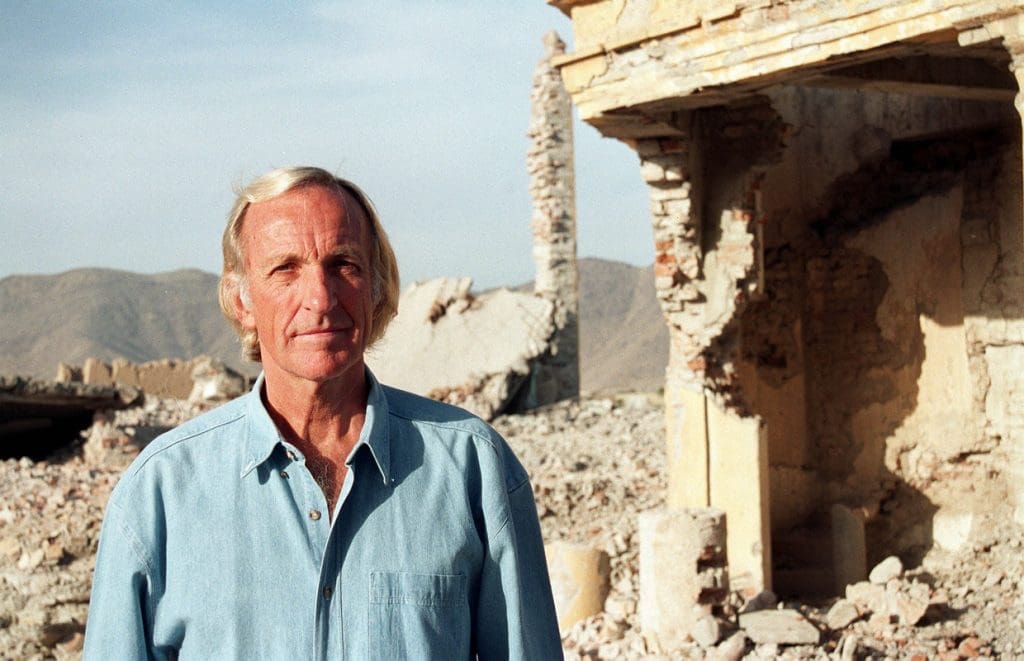
Two years after his death, John Pilger’s absence is not merely felt, it is measured in the truths no longer being pursued with his singular tenacity. In a media age increasingly defined by conformity and caution, Pilger’s life’s work stands as an immense legacy. His journalism did not simply chronicle the world as it was presented to us; it stripped away the lies that sustained power, empire and war. In doing so, he changed global understanding and inspired generations of investigative reporters to see journalism as a moral act.
Pilger first came to prominence with his fearless reporting on the Vietnam War, where he exposed the catastrophic human cost of Western intervention long before it was fashionable to question it. His subsequent work on Cambodia challenged the crude, ahistorical narratives pushed by Western governments and media, insisting on a fuller truth that acknowledged both the crimes of the Khmer Rouge and the devastation inflicted by US bombing. This refusal to reduce suffering to propaganda would become a hallmark of his career.
Perhaps no contribution was more consequential than his reporting on East Timor. At a time when most of the British press either ignored or minimised Indonesia’s occupation and genocide, Pilger documented the mass killings and revealed the complicity of Western governments, including Britain,in supplying arms and political cover. His journalism played a crucial role in shifting international awareness and pressure, contributing to East Timor’s eventual independence. It was journalism that saved lives.
Pilger’s documentaries, including The Quiet Mutiny, Death of a Nation, The War You Don’t See and Utopia, expanded the reach of investigative journalism beyond print, reaching millions and challenging audiences to interrogate how war, colonialism and racism are packaged for public consumption. The War You Don’t See remains one of the most incisive examinations of media complicity in modern conflict, dismantling the myth that Western journalism operates independently of state power.
Equally important was his lifelong defence of Indigenous Australians. Through decades of reporting, Pilger exposed the brutality, neglect and structural racism inflicted on Aboriginal communities, confronting Australia’s foundational myths with uncomfortable truths. Utopia in particular forced a national reckoning with policies that prioritised image over justice and bureaucracy over humanity.
It was this unflinching honesty that made Pilger deeply unpopular with establishment journalists. He exposed the profession’s proximity to power, challenging the comforting fiction that access journalism and moral neutrality are virtues. Rather than confront the substance of his reporting, critics attacked his character, his refusal to offer false balance, and his insistence that journalism should take the side of the oppressed. In truth, Pilger did not expose governments alone; he exposed the media culture that enabled them.
Beyond his reporting, Pilger was a tireless defender of press freedom. He was an early and unwavering supporter of Julian Assange, recognising that the persecution of WikiLeaks was not about personality or legality but about deterring journalism that dares to reveal state crimes. He understood that the fate of investigative journalism would be decided not by platitudes about free speech, but by who journalists choose to stand with when power strikes back.
For younger journalists, Pilger remains a lodestar not because he offered easy answers, but because he demonstrated that courage, independence and moral clarity are still possible. He rejected the idea that objectivity requires emotional detachment from suffering, arguing instead that neutrality in the face of injustice is itself a political choice, one that almost always favours the powerful.
Two years on, his warnings feel eerily prescient. War propaganda once again saturates the airwaves, dissenting voices are marginalised, and media institutions grow ever closer to the interests they claim to scrutinise. Yet Pilger’s work endures; read, watched and shared by those seeking truths the establishment would prefer forgotten.
John Pilger was more than a journalist. He was a witness, a chronicler of inconvenient history, and a moral beacon whose light continues to cut through the fog of manufactured consent. In an era still shaped by the forces he spent a lifetime exposing, his voice remains not only missed but urgently needed.