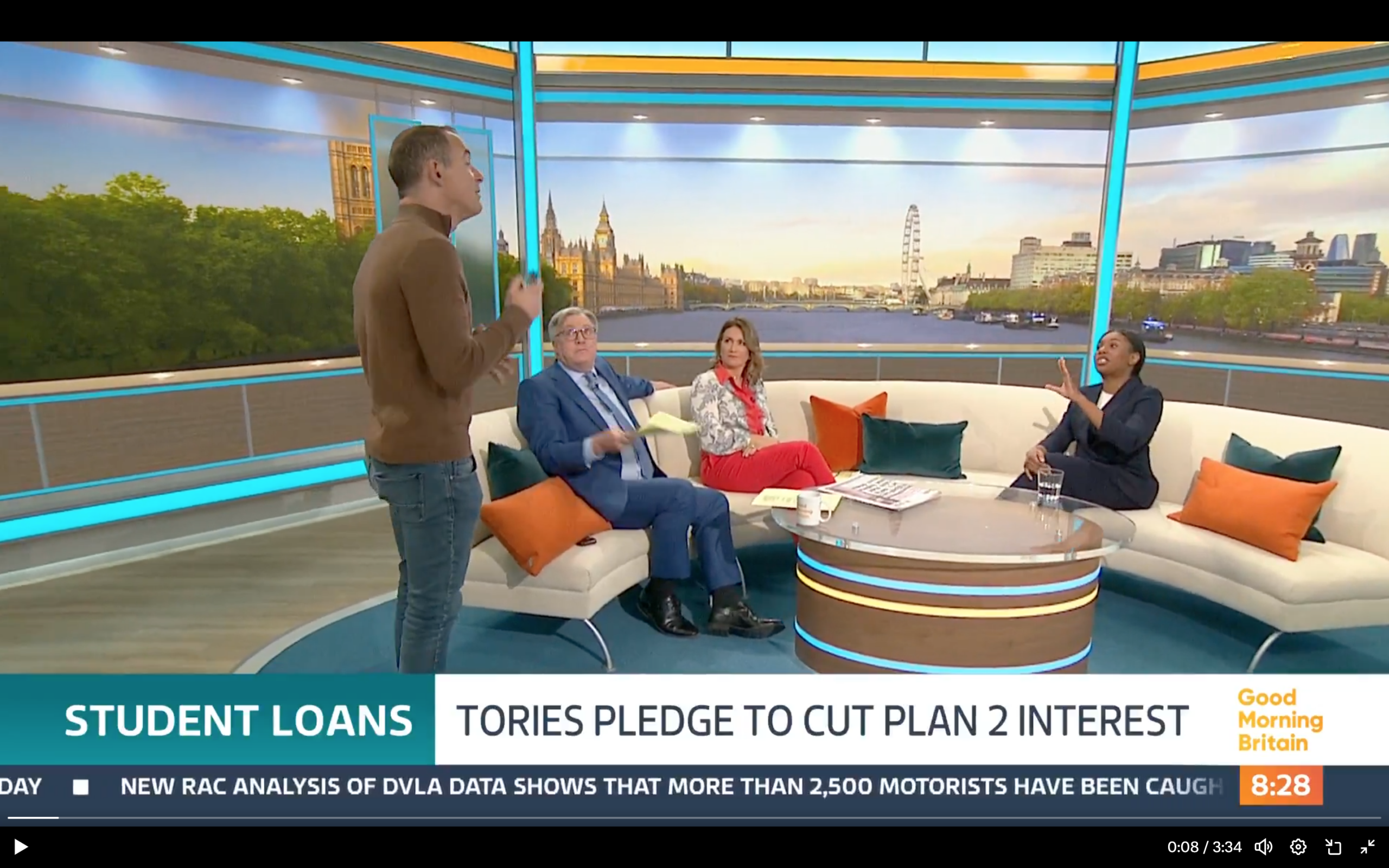
Kemi Badenoch’s student loan proposal is being sold as a bold intervention to ease the burden on graduates. In reality, it is a narrowly targeted tweak that would disproportionately benefit higher earners while doing little or nothing for the majority of students. By focusing on lowering interest rates without addressing the repayment threshold, the plan misunderstands how the student loan system actually works in practice. As Ed Balls bluntly put it in his exchange with Badenoch, the idea that this would help most students is “definitely” wrong.
Under the current system, graduates only begin repaying their loans once they earn above a set threshold. Those on lower and many middle incomes often never fully repay their debt before it is written off after 30 years. Lowering the interest rate, therefore, only materially benefits those who are on track to clear their debt in full – typically higher-earning graduates. For everyone else, the monthly repayment amount remains determined by income above the threshold, not by the interest rate. In other words, the headline change would leave repayments untouched for millions while offering a windfall to those already earning more.
Martin Lewis’s intervention cut to the heart of the issue. If the government truly wanted to support middle earners, the most direct and equitable lever would be to raise the repayment threshold. Freezing it drags more modest earners into higher effective repayments over time, especially as wages rise with inflation. If there is £1 billion available to ease pressure on graduates, lifting the threshold would spread that benefit far more widely. It would reduce monthly repayments for a broad swathe of former students, rather than concentrating gains among those with the highest lifetime earnings.
Martin Lewis is calling on the Chancellor to change a key decision on student loans she made in the last budget, calling it a breach of the contract graduates originally signed.
— Good Morning Britain (@GMB) February 23, 2026
Martin Lewis questions Kemi Badenoch about the Conservatives' proposals. pic.twitter.com/aj5r6mklF6
Perhaps most troubling is how Badenoch proposes to fund the policy: by cutting “tens of thousands” of university courses deemed not to offer “value for money,” with creative arts reportedly in the firing line. This framing risks reducing higher education to a narrow economic calculation, dismissing disciplines that enrich culture, drive innovation and sustain Britain’s globally respected creative industries. The plan sets up a false choice between financial responsibility and intellectual breadth. In doing so, it combines a regressive funding shift with a cultural squeeze on universities, a policy that is neither fair to students nor healthy for the country’s long-term economic and creative life.
As usual, the Tories are only listening to ideas in which the rich benefit to the detriment of the rest.