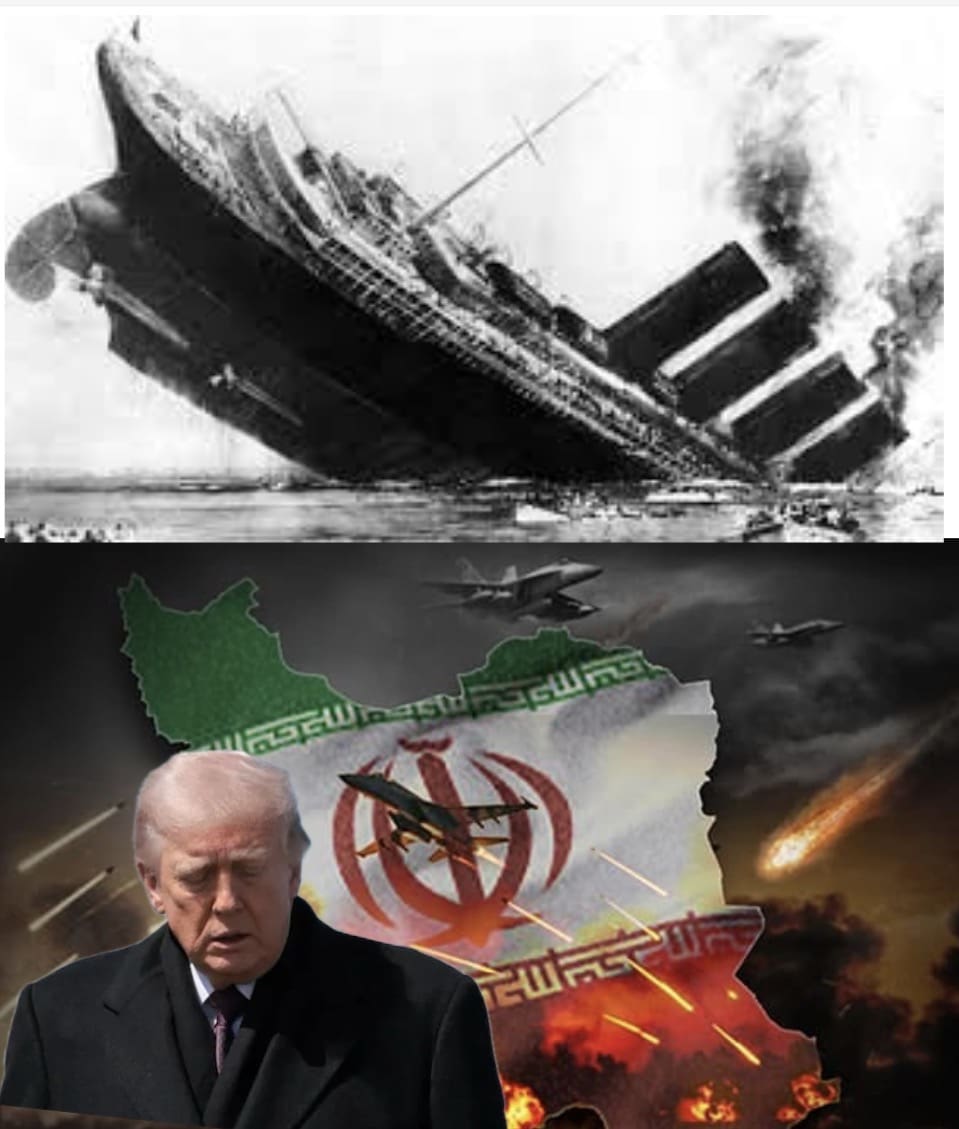
A senior French general has delivered a withering assessment of calls for European nations to support Donald Trump in a potential conflict with Iran, likening participation to “buying cheap tickets for the Titanic” after it has already struck the iceberg. The remark, as vivid as it is damning, captures a growing sense of alarm among Western allies about both the strategy and leadership underpinning the proposed escalation.
The comments come from Michel Yakovleff, a highly respected three-star general and former commander within the French Foreign Legion who has also held senior roles at NATO. His words carry significant weight in defence circles, particularly in Europe, where trust and coordination remain the bedrock of military cooperation.
Yakovleff outlined five clear reasons why European nations should refuse to join any American-led military action against Iran under the current circumstances. Taken together, they form a stark indictment not just of a proposed campaign, but of the leadership behind it.
First, he argued that Trump fundamentally misunderstands how NATO operates. Military alliances are not informal arrangements that can be summoned at will. If NATO were to become involved in a conflict, it would do so under a unified command structure, not as a supporting act to a unilateral American operation. As Yakovleff suggested, the notion that allies would simply fall in line beneath a pre-existing U.S. campaign betrays a lack of basic strategic understanding.
Second, the absence of clearly defined objectives raises serious concerns. Beyond vague suggestions about securing the Strait of Hormuz, there appears to be no articulated endgame. Is the goal regime change, containment, or negotiation? Without clarity, any military engagement risks becoming open-ended and dangerously unfocused—an outcome that European governments are understandably keen to avoid.
The third issue strikes at the heart of modern coalition warfare: communication. Yakovleff criticised the apparent reliance on shifting public statements and social media posts to convey policy. Coordinating a multinational military operation requires precise, consistent, and formal directives. Allies cannot be expected to commit troops based on messages that may change within hours. As he put it bluntly, it would first be necessary for Trump himself to understand what he wants—a remark that underscores deep scepticism about the coherence of the strategy.
Fourth is the question of trust. Recent history looms large in the calculations of allied nations. Decisions affecting Kurdish forces in Syria and the abrupt withdrawal from Afghanistan have left lasting impressions. For many in Europe, these episodes illustrate a willingness to abandon partners when political circumstances shift. Yakovleff’s warning—that allies could be “let down whenever it suited him”—reflects a broader concern that commitments made today might not be honoured tomorrow.
Finally, the general delivered what might be considered the most devastating critique of all, invoking a principle taught at the U.S. Army War College: do not reinforce failure. Instead, reassess and pursue alternative strategies. By applying American military doctrine to criticise an American-led initiative, Yakovleff effectively turned the logic of U.S. strategic thinking against itself, portraying participation as not merely risky but fundamentally unsound.
The international response appears to echo these concerns. Key allies, including Japan, Australia and the United Kingdom, have shown little appetite for involvement, while the European Union has likewise signalled reluctance. This widespread hesitancy underscores the extent to which the United States risks isolation on the issue.
Meanwhile, tensions in the Strait of Hormuz continue to escalate. Iranian missile and drone activity has rendered the passage increasingly hazardous, to the point where insurers are reportedly unwilling to cover oil tankers navigating the route. Given that roughly a fifth of the world’s petroleum supply typically passes through this narrow corridor, the economic implications are profound. Rising oil prices are already being felt globally, adding a tangible cost to geopolitical instability.
Critics argue that the situation is the result of a pattern of escalation without a clear strategic framework. By intensifying tensions while alienating allies, the United States may have undermined the very coalition it would need to sustain any long-term military effort.
Yakovleff’s remarks, though blunt, reflect a broader unease within the international community. They suggest that the issue is not merely whether to act, but whether the proposed course of action is viable at all. For European leaders weighing their options, the warning is clear: entering such a conflict without clarity, cohesion, and trust may prove as ill-fated as boarding a doomed ship already taking on water.
And as we know, Trump and Israel have a lot to hide and distract us from.