

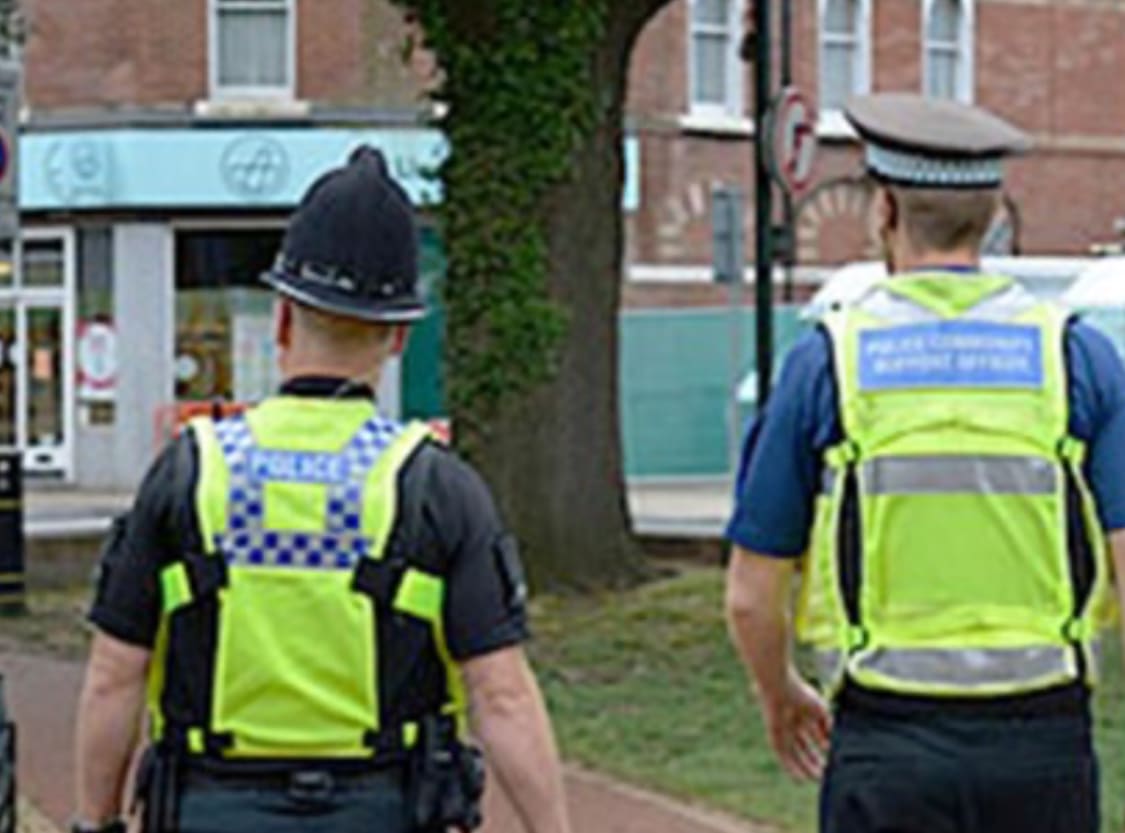
The Home Office has announced that every police officer in England and Wales will be required to hold and maintain a formal licence to practise in order to remain in post. Presented as part of the most significant shake-up of policing in decades, the proposal sits at the heart of a wider reform programme led by Home Secretary Shabana Mahmood, who has promised to restore public confidence in a service widely perceived to have lost its way.
Under the scheme, officers will be required to demonstrate that they possess — and continue to possess — the skills, knowledge and professional standards necessary to police modern Britain. Those unable or unwilling to do so may be removed from frontline duties or dismissed entirely. The model mirrors professional licensing systems already in place for doctors, lawyers and other regulated professions.
The Home Office says officers will need to show competence in areas including tackling violence against women and girls, understanding vulnerability, and applying the law proportionately and lawfully. Training will be introduced in phases, with the stated aim of creating a clear, standardised framework across all 43 police forces in England and Wales.
Crime and Policing Minister Sarah Jones described the reform as essential to ensuring officers remain “match fit” as crime evolves.
“Every police officer needs to remain match fit to protect their communities,” she said. “As crime evolves, we expect police to evolve more quickly. The licence to practise will equip every officer with the skills and capabilities to do the job – whether new to the force or a policing veteran.”
On paper, the logic is straightforward. Policing is among the most intrusive powers exercised by the state. Officers can stop, search, detain, arrest, use force and initiate criminal proceedings. The idea that such authority should be subject to ongoing assessment rather than granted once and assumed forever is not radical. It is the norm in almost every other high-responsibility profession.
And yet, resistance has been immediate.
Resistance From Within the Ranks
Senior figures in policing have warned that the scheme could be “expensive”, “time consuming”, and duplicative of existing vetting and training systems. Matt Cane, general secretary of the Metropolitan Police Federation, argued that the licence risks becoming “an expensive, time-consuming, tick-box exercise” imposed on a workforce already stretched thin.
He also pointed out that training is “already inadequate” and that officers already carry warrant cards and undergo vetting processes to practise.
These concerns are not frivolous. But they sit uneasily alongside a sustained collapse in public trust — driven by scandals involving misogyny, racism, corruption, abuse of power, institutional defensiveness, and repeated failures in how complaints are handled.
If existing systems were working, there would not be such widespread demand for reform.
Accountability, Not Bureaucracy
A licence to practise only becomes a tick-box exercise if it is designed to protect institutions rather than the public. If implemented properly, it could instead serve as a living contract between police and the society they police: authority conditional on competence, power conditional on integrity, and trust conditional on transparency.
This is where the public conversation matters — and where grassroots engagement has been notably absent from official announcements.
In response, Dorset Eye asked its readers and the wider public a simple but profound question: what should the police actually be, and what should a licence to practise require?
The responses were revealing, not because they were radical, but because they were grounded in basic expectations of fairness, professionalism and common sense — expectations many feel have been systematically ignored.
Complaints, Conflicts of Interest and Basic Integrity
One of the clearest themes raised by the public concerns how complaints against officers are handled. The principles demanded were not ideological — they were procedural, ethical and elementary.
When someone makes a complaint about a specific officer:
- Do not pass the details of that complaint to the officer concerned.
- Do not make that officer responsible for investigating the complaint.
- Do not allow that officer to phone the complainant from a police phone, during working hours, without either recording that call or formally recording that it occurred.
- When the complainant subsequently complains about that behaviour, do not dismiss it due to a “lack of evidence” when that lack of evidence is itself damning evidence.
These are not luxuries. They are the minimum standards that apply in any other regulated profession. The idea that policing has, in practice, allowed officers to manage complaints against themselves — or to engage in undocumented contact with complainants — is one of the reasons public confidence has eroded so badly.
Equally clear was public frustration around conflicts of interest. Dorset Eye readers were explicit: an officer under investigation for suspected inappropriate links to individuals suspected of criminality should never be allowed to decide whether investigations into those individuals should proceed.
This is not a grey area. The concept of conflict of interest is foundational to ethics. Allowing officers to mark their own homework is not professionalism — it is institutional self-harm.
Evidence Means Evidence — Not Its Absence
Another recurring demand was a proper understanding of evidence.
Public contributors emphasised that officers must understand that absence of effort to collect evidence is not evidence of absence. Failure to investigate is not neutrality. It is a decision — and often a decision that protects power rather than truth.
This concern extends directly to interactions with the Independent Office for Police Conduct (IOPC). Dorset Eye readers were blunt: do not deliberately mislead or conceal evidence from the IOPC. The belief that forces can indefinitely obstruct oversight without consequence is one that must end if licensing is to mean anything at all.
A licence to practise that does not explicitly tie continued employment to honesty, transparency and cooperation with oversight bodies would be little more than window dressing.
Who We Let Wear the Uniform
Perhaps the most striking public concern raised was psychological suitability.
There is widespread demand for stringent psychological testing to prevent bullies, fascists, racists, sex offenders and the corrupt from entering — or remaining in — the police. This is not about ideological purity. It is about recognising that policing grants enormous discretionary power, often exercised under pressure.
Empathy, emotional intelligence and ethical judgement are not optional extras. They are core competencies.
The public also stressed the importance of training officers to understand mental health properly. Not everyone in crisis is violent. Not everyone who requires sectioning is dangerous. Policing mental health situations requires care, restraint and humanity — and ongoing assessment to ensure those skills are retained.
Licensing must therefore include psychological review, not as punishment, but as protection — for the public and for officers themselves.
Fitness, Law and Knowing the Job
Beyond ethics and psychology, Dorset Eye readers repeatedly returned to basics:
- A basic level of physical fitness.
- Awareness and tolerance of the multi-layered nature of British society.
- A strong, current knowledge of the law.
These are measurable. They are testable. And they matter.
There was strong support for the idea that police officers should receive far more substantial legal education — potentially to master’s degree level — given the complexity of modern law and the consequences of misapplying it.
Being fair is not an instinct. It is a skill that must be learned, tested and refreshed.
At the very least, officers should be familiar with foundational legislation such as the Public Order Act 1986, and understand that despite newer and more “exciting” powers, that Act remains in force and its principles still apply.
The Oath Must Be More Than Theatre
Every police officer swears an oath to serve with fairness, integrity, diligence and impartiality, to uphold fundamental human rights and accord equal respect to all people.
Dorset Eye contributors argued that a licence to practise should be the mechanism by which that oath is tested in reality — not once at attestation, but continuously.
This includes seemingly mundane competencies: understanding plain English, answering phone calls, taking messages, passing them on, and leaving enough information for the public to be contacted again. These are not trivialities. They are the everyday interactions that determine whether policing feels like a public service or an occupying force.
Extremism, Intelligence and the Digital World
Public expectations also extended to intelligence and awareness.
Officers policing an area where far-right or extremist groups repeatedly demonstrate should, at minimum, know who those groups are — certainly by the third demonstration in a month.
Likewise, when a force receives an additional £520,000 specifically to monitor social media, “monitoring social media” must mean more than telling partners in meetings that it is happening while failing to monitor even the force’s own Facebook page.
Capability claims must be backed by evidence of delivery. Licensing should reflect modern policing realities, not outdated assumptions.
Power Over Chiefs and Structural Reform
Alongside licensing, ministers are granting themselves new statutory powers to intervene in failing forces. The Home Secretary will now be able to force the retirement, resignation or suspension of chief constables — powers previously held only by police and crime commissioners.
Ministers will also be able to send specialist teams into forces with poor crime-solving rates or response times, and introduce new national targets to be published publicly.
Sir Andy Cooke of HMICFRS welcomed the reforms, arguing that under-performance must be addressed more quickly and transparently.
These changes follow Mahmood’s loss of confidence in West Midlands Police’s chief constable and her pledge to significantly reduce the number of police forces from 43, with a sharper focus on serious and organised crime.
Police federations have warned that fewer forces do not automatically mean better policing — and they are right. Structural reform without cultural reform is hollow.
Reform That Listens or Reform That Fails
What Dorset Eye’s public consultation demonstrates is that the public does not want spectacle or slogans. It wants policing that is competent, fair, accountable and human.
A licence to practise could be transformative — but only if it is shaped by public expectations rather than institutional defensiveness.
Reform is not anti-police. It is pro-policing done properly.
The real question is not whether officers find licensing inconvenient. It is whether the public can continue to tolerate a system where power is exercised without sufficient accountability.
On that question, the public has already answered.







