

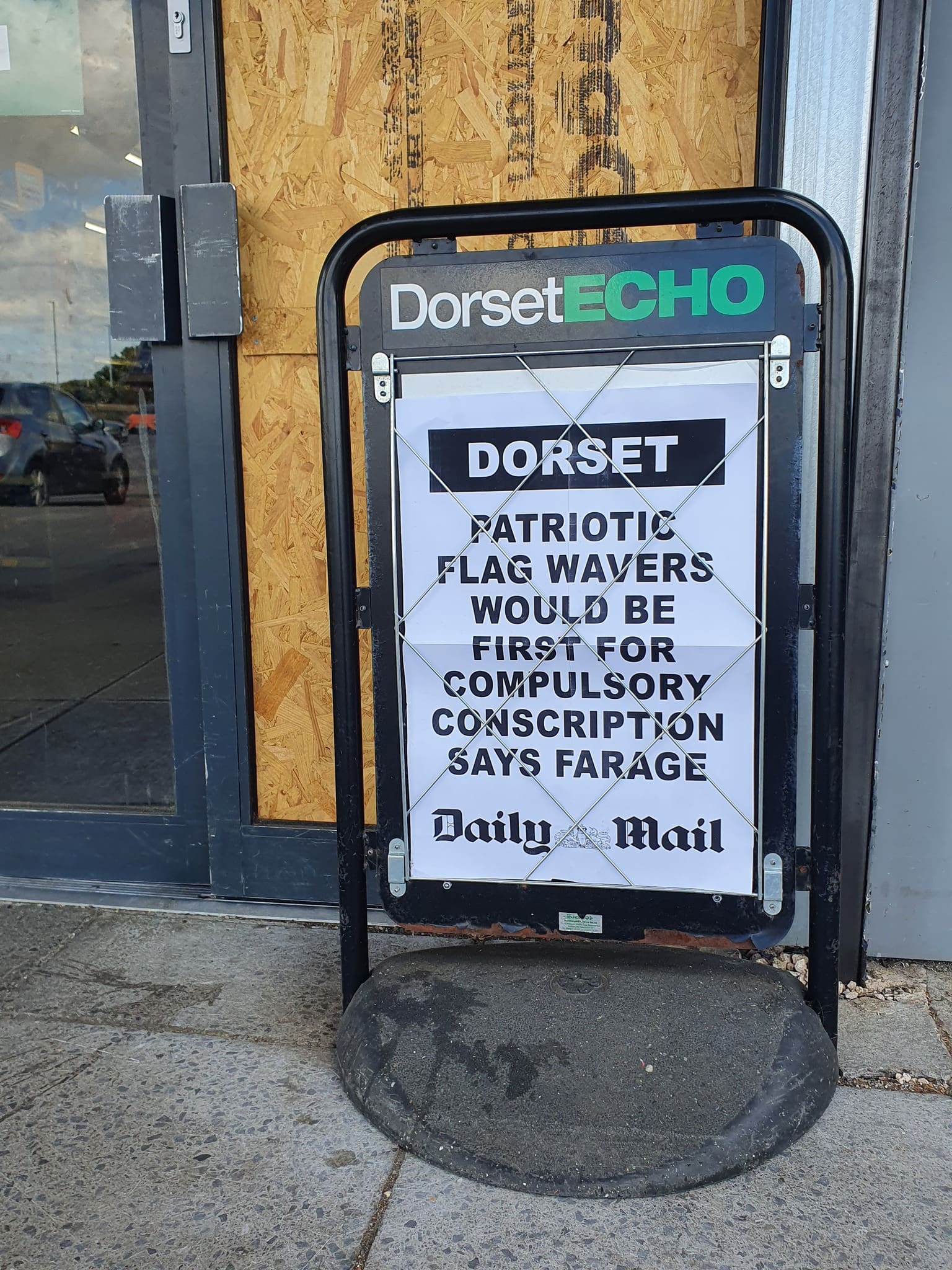
In 1914, the crowds who waved flags and declared their undying love of King and Country were the first packed off to the trenches. They cheered, they sang, and they believed the war would be over by Christmas. Instead, they were slaughtered in their hundreds of thousands, while the politicians and cheerleaders who urged them forward stayed safely behind.
Fast forward a century, and the same kind of noisy patriotism is alive and well. The anti-immigrant agitators, the St. George’s Cross-draped “patriots” who vandalise roundabouts, and the men in Union Jack shirts raging about “British values”—all are loud, all are theatrical, and all are certain of their own righteousness. But if Britain ever brought back compulsory conscription (as Farage and other far-right politicians have suggested should happen), it would be these very people who would be marched off first.
Patriotism is easy when it costs nothing. Anyone can wave a flag, scream “send them home,” or plaster social media with memes about loyalty and nationhood. But when the call comes to shoulder a rifle, dig a trench, and risk everything, suddenly the performance stops. Conscription does not respect slogans. It does not reward bravado. It simply takes the bodies it needs — starting with the fittest, the loudest, the most insistent that they love their country.
And here lies the hypocrisy. The very people who sneer at immigrants are happy enough to rely on them as doctors, nurses, carers and soldiers. Many of those they despise already serve this country in ways the flag-wavers never have. Meanwhile, the self-appointed guardians of Britishness have contributed little beyond vandalised roundabouts and empty gestures — until, of course, their turn comes to be shipped to the front.
Just as in 1914, the lesson is brutal: gullibility and blind patriotism carry a heavy price. The loudest voices, the ones most eager to declare their love of country, are often the first to be silenced when that country demands real sacrifice. And if conscription ever returned, the shouting would stop quickly enough — drowned out by the sound of boots marching to a war they never truly believed they’d have to fight.
‘Shout the loudest and die the youngest’ could quickly become the mantra.







