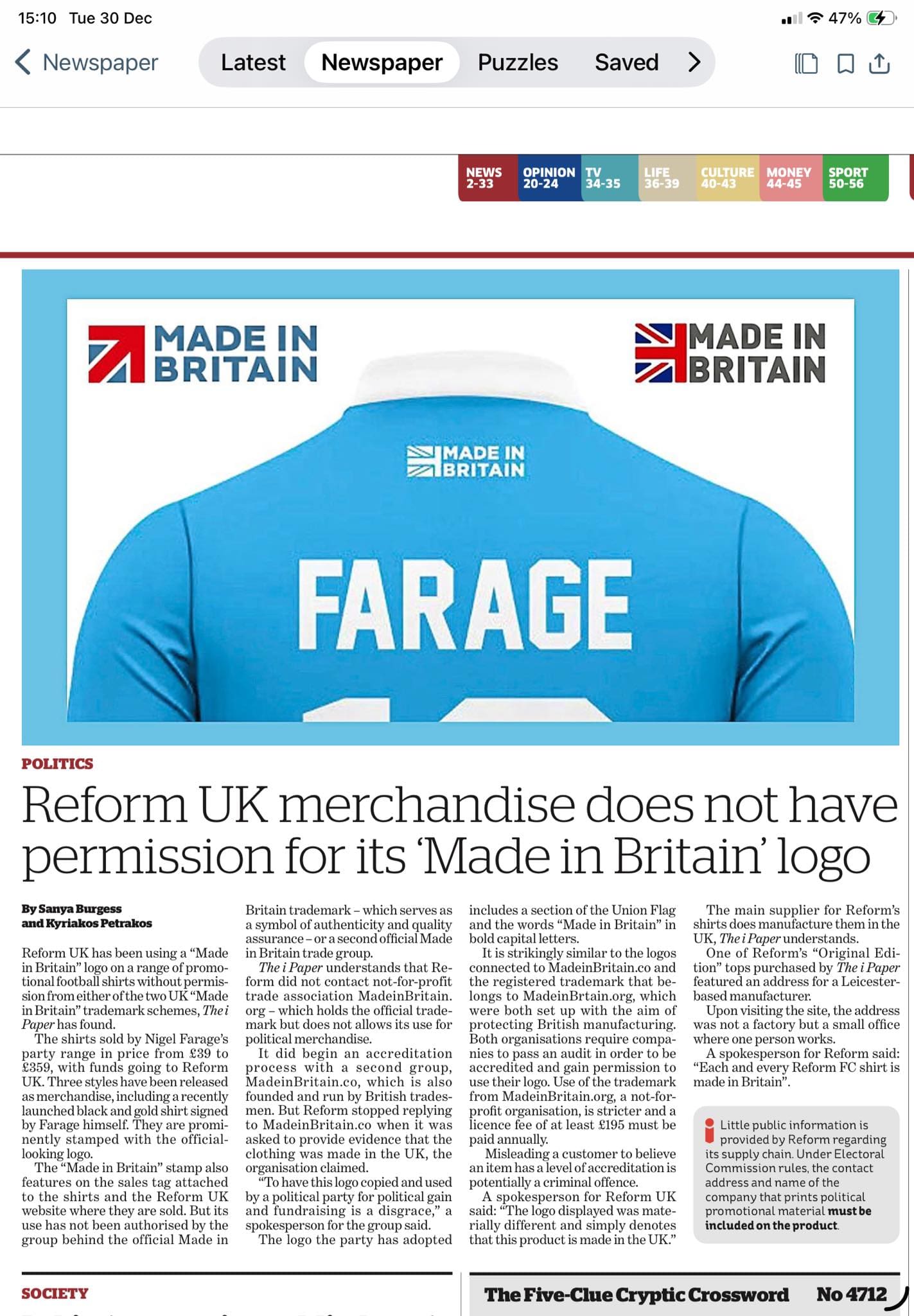
Reform UK is facing mounting scrutiny after reports suggested the party may have misled the public over the origin of its promotional merchandise, despite prominently presenting it as “made in Britain”. According to the i Newspaper, serious questions have been raised about both the sourcing of the products and whether the party has complied with electoral and consumer protection law.
At the centre of the controversy is Reform UK’s use of British manufacturing imagery and language in its online merchandise store. While the products display strong patriotic branding and imply domestic production, the party does not appear to have authorisation to use the official “Made in Britain” mark — a registered trademark administered by Made in Britain Campaign Ltd, which verifies that goods are genuinely manufactured in the UK.
The i reports that Reform UK did initially approach the owners of the official logo. However, when asked to provide evidence that the items were manufactured in Britain — a standard requirement — the party reportedly failed to continue with the application process. Without that verification, any suggestion that the merchandise is British-made remains unsubstantiated.
Further doubt was cast when the address given for the purported manufacturer was investigated. Rather than being a production site, it was reportedly found to be an office address, not a factory — raising further questions about where, and by whom, the goods are actually produced.
Why “Made in Britain” Claims Matter in Law
Claims about where products are made are not merely matters of marketing style; they are governed by law. Under the Consumer Protection from Unfair Trading Regulations 2008, businesses — including political organisations selling goods — must not engage in misleading actions or omissions that could cause the average consumer to make a transactional decision they otherwise would not have made.
This includes false or unsubstantiated claims about a product’s origin. If a product is implied to be made in the UK when it is not, or if there is no evidence to support the claim, this could amount to a breach of the regulations. The law does not require proof of malicious intent; it is sufficient that the information presented is likely to mislead.
Additionally, the phrase “Made in Britain” itself carries legal weight when used in a commercial context. The official “Made in Britain” logo is a registered trademark. Using imagery or wording that imitates or suggests endorsement by the trademark holder, without permission, risks infringing trademark law under the Trade Marks Act 1994.
While simply displaying a Union Jack is not illegal, presenting goods in a way that implies official certification — especially after failing to secure that certification — could potentially expose an organisation to legal challenge.
Electoral Law and Imprint Rules
The controversy does not end with consumer law. The Electoral Commission is now reportedly examining whether Reform UK’s merchandise complies with political imprint rules.
Under electoral law, political material — whether printed leaflets, posters or promotional items — must clearly state who is promoting it and who is responsible for printing or producing it. These requirements stem from the Political Parties, Elections and Referendums Act 2000, with rules strengthened by the Elections Act 2022.
The purpose of imprint rules is transparency. Voters are entitled to know who is behind political messaging and where it originates. This applies equally to merchandise sold by political parties, particularly where it may function as campaigning material.
If items fail to include the full details of the promoter and printer, this could constitute an offence, regardless of whether the omission was deliberate. The Electoral Commission has the power to investigate and, where appropriate, issue sanctions or refer matters for further enforcement.
A Question of Credibility
The irony of the situation has not been lost on critics. Reform UK has built much of its political identity around nationalism, sovereignty and “buying British”. For a party that regularly criticises globalisation and foreign manufacturing, allegations of misleading branding cut particularly deep.
At the very least, the episode raises questions about standards, transparency and attention to detail. At worst, it risks reinforcing accusations that some political movements rely more on symbolism and slogans than substance.
It is important to stress that, at the time of writing, these matters are under scrutiny rather than conclusively resolved. Reform UK has not been found guilty of any offence, and investigations are ongoing. However, the reported facts — including the lack of certification, the abandoned application process, and the questionable manufacturer address — have already prompted significant public concern.
Transparency Is Not Optional
In a political climate marked by declining trust, accuracy and honesty matter more than ever. The law surrounding product origin claims and political imprints exists precisely to prevent confusion and deception, intentional or otherwise.
Whether Reform UK’s merchandise ultimately proves to be compliant or not, the episode serves as a reminder that patriotic branding carries legal responsibilities. Political parties, no less than commercial companies, are required to back up their claims with evidence — and to be clear with the public about who is behind what they are selling.
As the Electoral Commission continues its examination, voters will be watching closely — not just for the outcome, but for what it reveals about standards in modern British politics.