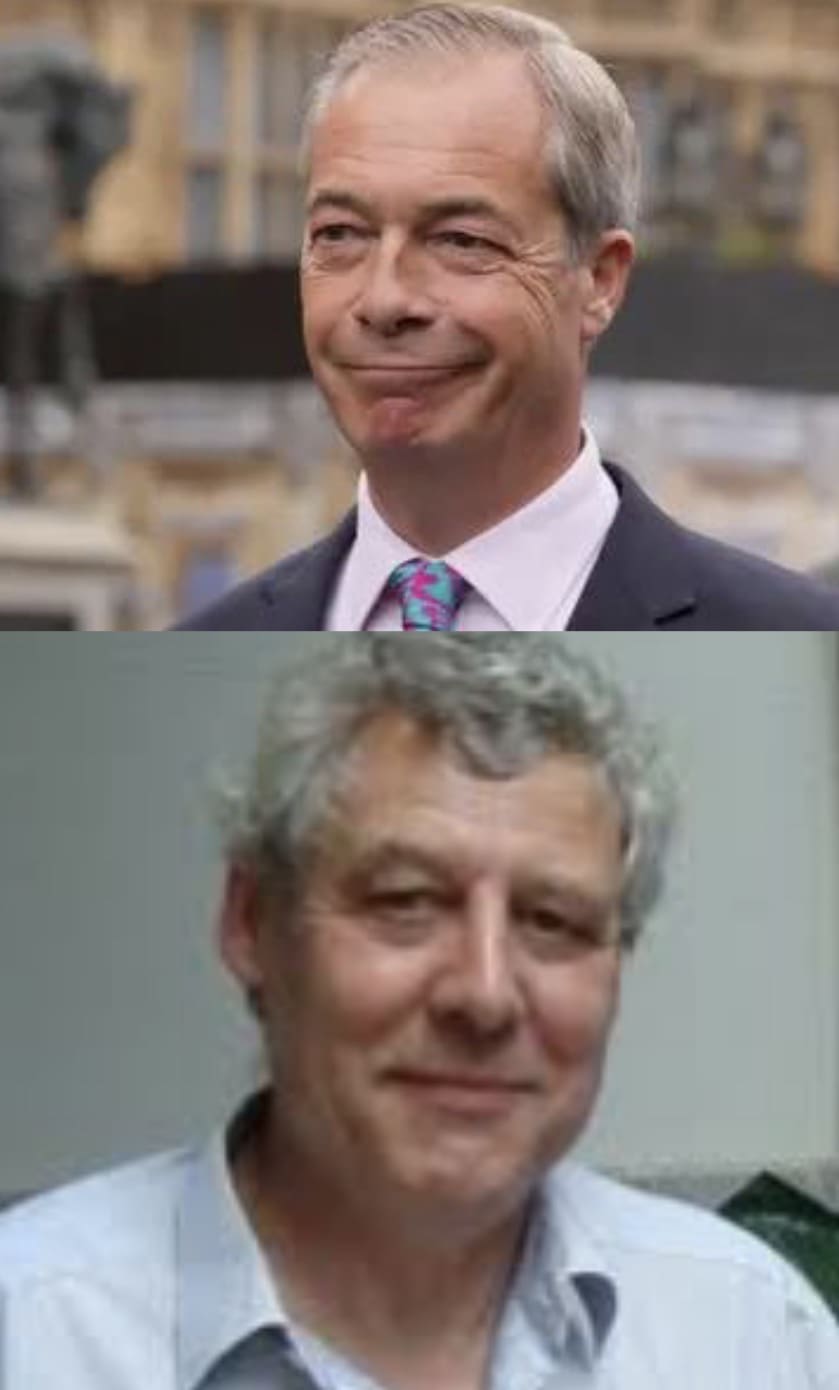
Most people will not recognise the name Dr. Richard A. E. North. They probably should.
Dr. North is not a casual observer, an embittered outsider, or a partisan critic throwing stones from a distance. He is a respected political researcher, analyst, author and long-standing blogger who has spent decades operating inside the Eurosceptic movement itself. His criticisms of Nigel Farage do not come from ideological opposition but from firsthand experience.
North stood for the Referendum Party in the 1997 general election in South Derbyshire, having joined the party the year before. In the 2004 European elections, he was selected as UKIP’s number one candidate on the party list for the Yorkshire region until he was abruptly supplanted by Godfrey Bloom, who went on to win a seat. North later resigned from UKIP altogether, describing his time in the party as a journey from “optimism, descending into frustration, to disillusionment and to betrayal.”
In other words, this is not a man hostile to Euroscepticism, populism or insurgent politics. He was inside them.
More importantly, North knew Farage personally. From 1999 to 2003, after Farage was first elected as a Member of the European Parliament, North worked directly alongside him. They shared an office in Strasbourg. North stayed in Farage’s home, travelled with him, dined and entertained together across Europe, and worked with him extensively in the UK. This was not a fleeting acquaintance or a professional overlap; it was sustained, close exposure.
And his verdict is devastating.
“Outwardly charming, he is in fact a vindictive, aggressive bully, with a huge chip on his shoulder. He is intolerant of criticism, has no loyalty to anyone and will shaft anyone who disagrees with him, gets in his way or poses a threat — usually by underhand means, via third parties.”
This is not conjecture. It is testimony from someone who was there.
North goes further, making clear that his experience was not unique. Those who have been closest to Farage, he says, tend to reach the same conclusion: he is not to be trusted. Loyalty flows only one way. Dissent is punished. Rivals are quietly removed, indirectly and without remorse.
That assessment fatally undermines the carefully constructed Farage persona, the “man of the people” routine built on beer, cigarettes, pub banter and cloth-cap cosplay. It is a performance, not a principle. Strip away the optics and what remains, according to those who know him best, is something far less palatable.
Not a straight-talking outsider, but a treacherous and disingenuous operator. Not a champion of the overlooked, but a man driven by grievance, ego and money. Vindictive. Spiteful. Malignant. A political opportunist whose primary loyalty is to himself.
This matters because Farage’s influence has always rested on a bubble, a myth sustained by distance and repetition. The fewer people who know him personally, the easier it is to project authenticity onto him. But bubbles burst when proximity replaces projection.
There are growing signs that this is already happening. Reform UK Ltd increasingly resembles a political business that has reached its ceiling rather than a movement with depth or momentum. Thin policy, recycled outrage, internal tensions and the same familiar figure at the centre of everything point to stagnation, not growth.
North believes many more will eventually reach the same conclusion he did and hopes they do so before further damage is done.
If history is any guide, Farage’s greatest vulnerability is not his critics, but those who worked with him long enough to see past the act. When insiders speak, myths struggle to survive.
The Farage bubble may not have fully burst yet, but it is visibly thinning. And once it goes, irrelevance may be the one thing Nigel Farage cannot campaign his way back from.