My daughter is 17. She does what we tell young people to do: she studies hard, shows up on time, works part-time, and tries to build a future that feels increasingly out of reach. Yet after a full day’s work, the money she earns barely covers the cost of a single driving lesson. That simple, everyday reality exposes something deeply broken in Britain, a country where work no longer guarantees progress and where young people are quietly being priced out of adulthood.
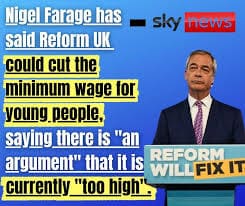
The numbers are stark. At 17, she is legally paid less than an adult for often doing the same work. The minimum wage structure in the UK institutionalises inequality by age, as though younger workers’ time is inherently less valuable. It isn’t. Employers rely on young staff to keep businesses running, including cafés, shops, warehouses, but the system allows them to be paid a fraction of what older colleagues earn. This isn’t just unfair; it is exploitation dressed up as policy.
Driving lessons, once a rite of passage, now feel like a luxury reserved for the fortunate. In many parts of the country, a single lesson can cost £35 to £45 or more per hour. Do the maths: a day’s labour, hours spent serving customers, stacking shelves, or cleaning, disappears in one hour behind the wheel. The implication is brutal. Independence is no longer earned through effort; it is bought, often subsidised by parents who themselves are struggling under rising costs.
And this is where inequality bites hardest. For families with disposable income, the path is still navigable. Lessons are paid for, tests are booked, and a car, however modest, is eventually acquired. But for others, including many working-class households, the ladder has missing rungs. A young person without access to driving is cut off from opportunities: jobs further afield, apprenticeships, social mobility. Public transport, particularly outside major cities, is unreliable, expensive, or simply non-existent. The result is a quiet entrenchment of class divisions, where mobility, literal and economic, is determined by what your family can afford.
This is not accidental. It is the consequence of political choices. Successive governments have defended the tiered minimum wage system as a way to “encourage employment.” But what it really does is subsidise low-paying employers at the expense of the young. It tells a 17-year-old that their contribution is worth less, even as the cost of living treats them exactly the same as everyone else. Rent, food, transport—none of these come with a youth discount.
There is also a moral cost. What message are we sending to a generation that does everything asked of them and still cannot get ahead? Work used to be a route to independence. Now it feels like a treadmill, energy expended for little meaningful gain. Over time, that breeds frustration, resentment, and disengagement. We risk raising a generation that sees the system not as something to believe in but as something to endure or escape and then repeat.
The defenders of the status quo will argue that this is simply how the market works. But markets are shaped by rules, and rules can be changed. A fair minimum wage that does not discriminate by age would be a start. So too would serious investment in affordable public transport and a crackdown on the spiralling costs associated with learning to drive. These are not radical ideas; they are basic steps towards restoring a sense that effort should lead somewhere.
My daughter will keep working. She will save what she can, lesson by lesson, inching towards a licence that should not feel like a distant prize. But she and millions like her deserve better than this slow grind. They deserve a country that values their time, respects their effort, and offers a genuine path to independence.
Right now, Britain is failing them and a vote for Reform UK will simply make their lives worse.