

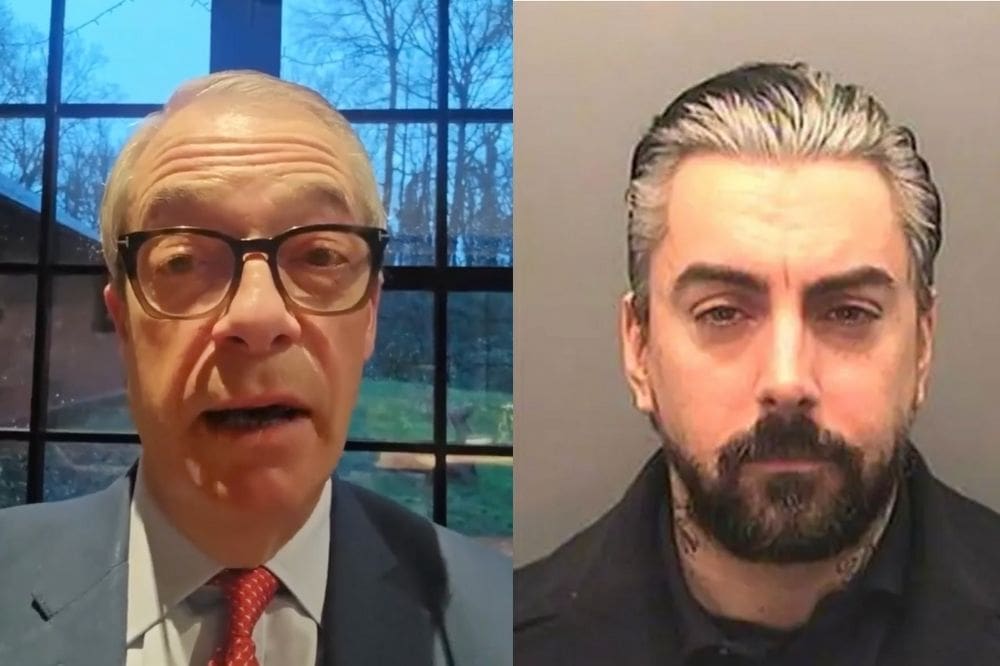
Remember this?
Well, he is at it again but this time it could and should be terminal.
Nigel Farage likes to present himself as a straight-talking tribune of the people, a man of granite convictions who cannot be bent by elites, institutions or fashionable opinion. Yet once again, it has taken little more than a credit card and a few typed words to puncture that carefully cultivated myth. This time, the exposure is not merely embarrassing. It is morally grotesque.
Farage has fallen victim to another prank on the paid video platform Cameo, recording a personalised tribute to a man named Ian Watkins. What he failed to notice, or chose not to notice, was that the most infamous Ian Watkins in Britain was the former Lostprophets singer, a convicted child sexual abuse offender whose crimes included the abuse of a baby and whose case was described by police as among the most shocking they had ever encountered. Watkins was serving a 29-year sentence when he was killed in prison last year.
In the 27-second video, Farage describes “Ian” as “a good man, a really good guy” who “loved his children”, before adding that he was “very much in contact with me”. It is hard to know which part of this is more disturbing: the praise itself, the pretence of a personal relationship, or the sheer laziness that allowed such a video to be recorded at all.
Cameo is not a charity platform. Farage offers his services from £78.45, advertising “a unique opportunity” to receive light-hearted messages infused with his “signature straight-talking, anti-establishment style”. In practice, what it appears to offer is a glimpse of a man willing to say almost anything, about almost anyone, for a relatively trivial sum of money.
When challenged, Farage’s response was telling. Rather than acknowledge the seriousness of the mistake, he dismissed it with a sneer: “Thank him for the money. There are lots of Ian Watkins. Tell him to send more. I did alter his request.” This is not the response of someone who understands why praising a notorious child abuser, even inadvertently, is abhorrent. It is the response of someone irritated that the grift has briefly turned back on him.
The individual behind the request, John Smith, has been clear that his intention was not to trivialise Watkins’ crimes. His concern was Farage’s utter lack of due diligence and his evident readiness to perform on demand. Smith described the deception as “paper-thin” and said he was alarmed by Farage’s “willingness to do anything for money without even a rudimentary check”.
That criticism cuts to the heart of the issue. If Farage cannot be bothered to spend 30 seconds checking the name of a man he is publicly praising on video, why should anyone trust him with matters of national importance? If he will invent a personal connection to a complete stranger for under £100, what value do his words have when the stakes are higher and the paymasters richer?
Smith posed the question bluntly: if Farage would do this for pocket change, what would he do for those with deeper pockets? It is a question that resonates far beyond Cameo. Farage has built a career on outrage, opportunism and perpetual reinvention, shifting positions when it suits him and shrugging off contradictions with a joke or a sneer. Ideology, such as it is, always seems secondary to attention and reward.
This is not an isolated incident. Farage has been pranked before, most notably in 2021 when he ended a Cameo birthday message with “Up the Ra!”, unwittingly echoing a slogan associated with the IRA. During his time hosting an LBC radio show, prank callers repeatedly exposed his thin skin and shaky grasp of detail, including one memorable exchange in which a caller claimed he abandoned Remain after being “kicked in the head by a horse”.
Individually, these moments might be dismissed as slapstick. Taken together, they paint a more troubling picture: a public figure who is incurious, careless and profoundly unserious, yet who demands to be taken seriously as a potential leader. The latest episode is particularly stark because it brushes up against the reality of extreme child abuse, a subject that demands gravity, caution and respect for victims.
Farage’s supporters will doubtless try to wave this away as another “gotcha” or establishment stitch-up. But no one forced him to record the video. No one forced him to claim he knew “Ian” personally. And no one forced him, when confronted, to respond with flippancy rather than remorse.
What this episode ultimately exposes is not bad luck, but character. It reveals a man for whom everything is transactional, performative and for sale. Strip away the flags, the pub rhetoric and the self-mythologising, and you are left with something depressingly small: a political celebrity who will read whatever is put in front of him, for whoever is paying, and who cannot be trusted to stop and think even when basic decency demands it.
For someone who claims to speak for “ordinary people”, Nigel Farage has once again shown a startling detachment from ordinary moral judgement. And all it took was £78 and a name he couldn’t be bothered to Google.







