

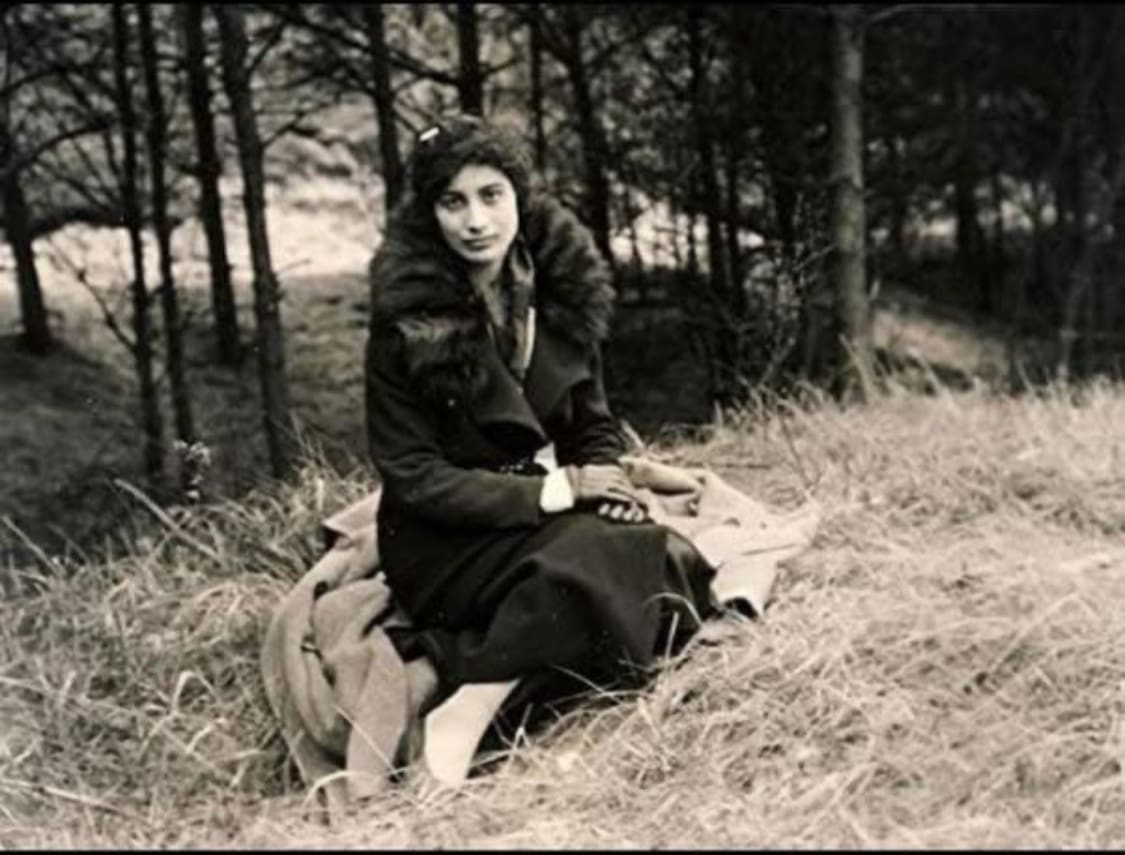
Noor Inayat Khan occupies a unique and powerful place in British wartime history. As a Muslim woman serving as a secret agent for Britain during the Second World War, she challenged stereotypes of her time and demonstrated that the fight against fascism was a truly global and multicultural effort. Her contribution to the Allied victory was not only operationally vital but also symbolically profound.
Born in 1914 to an Indian Muslim father and an American mother, Noor was raised in the Sufi Muslim tradition. Sufism emphasises spirituality, compassion and moral responsibility, values that shaped her deeply held beliefs. Far from conflicting with her wartime service, her faith strengthened her resolve to oppose tyranny and injustice. Noor believed that resisting Nazism was a moral duty, consistent with her religious principles.
At a time when Britain ruled over a vast empire with millions of Muslim subjects, Noor’s service carried wider significance. The Second World War was not fought by Britain alone; it depended heavily on the loyalty and sacrifice of people from across the empire, including more than two million Muslim soldiers from the Indian subcontinent. Noor’s role within the SOE embodied this shared struggle. She was not fighting for Britain alone but with Britain against a common enemy.
As the only Muslim woman deployed by the SOE into occupied France, Noor’s courage directly aided the Allied war effort. Her work as a wireless operator in Paris helped maintain vital links between the French Resistance and London at a moment when Nazi counter-intelligence threatened to silence resistance networks entirely. These communications supported sabotage operations, intelligence gathering, and preparations that ultimately contributed to the success of the D-Day landings.
Her Muslim identity also undermines the simplistic narratives often applied to the war. Noor was driven neither by nationalism nor by hatred of the enemy. Instead, her actions reflected a belief — rooted in her faith — that freedom, dignity and justice were universal values worth defending. Even under torture and imprisonment, she refused to betray her colleagues, a testament to her spiritual resilience.
Noor Inayat Khan’s execution by the Nazis in 1944 made her a martyr not only to the Allied cause but also to the principle that people of all faiths stood united against fascism. She remains a reminder that Muslims were not outsiders to Britain’s wartime story but central participants in its survival.
After the war, Noor’s extraordinary bravery was formally recognised. She was posthumously awarded the George Cross in 1949, Britain’s highest civilian award for gallantry, and the French Croix de Guerre. In 2012, a bronze statue of Noor was unveiled in Gordon Square, London, the first memorial in Britain dedicated to a Muslim woman.
In remembering Noor Inayat Khan, we recognise that the victory in the Second World War was achieved through collective sacrifice across cultures and religions. Her life stands as enduring proof that British values of freedom and resistance to oppression were upheld by people of many faiths, including a quiet, determined Muslim woman who gave her life for liberty.







