We all have a responsibility. Those who remain silent are part of the problem.
The Complicity of the Polite Mob: Your Silence, Online and Off, is Your Endorsement
It was, quite literally, “You deserve to be raped, you N-word bitch,” Ella Mitchell tells me, standing in her kitchen, “and I can’t wrap my head around it.”
Warning: This article includes content that some readers may find distressing.
Ella, 25, an administrative assistant in Leeds, isn’t describing a dark corner of the internet. She is recounting the venom hurled at her in the street, in broad daylight, by individuals who claim their motive is public safety. The abuse she has endured while counter-protesting outside an asylum hotel in Leeds is a catalogue of hatred: “Threats of sexual violence, rape threats, racial slurs,” she says, shaking her head in a mixture of disbelief and defiance.
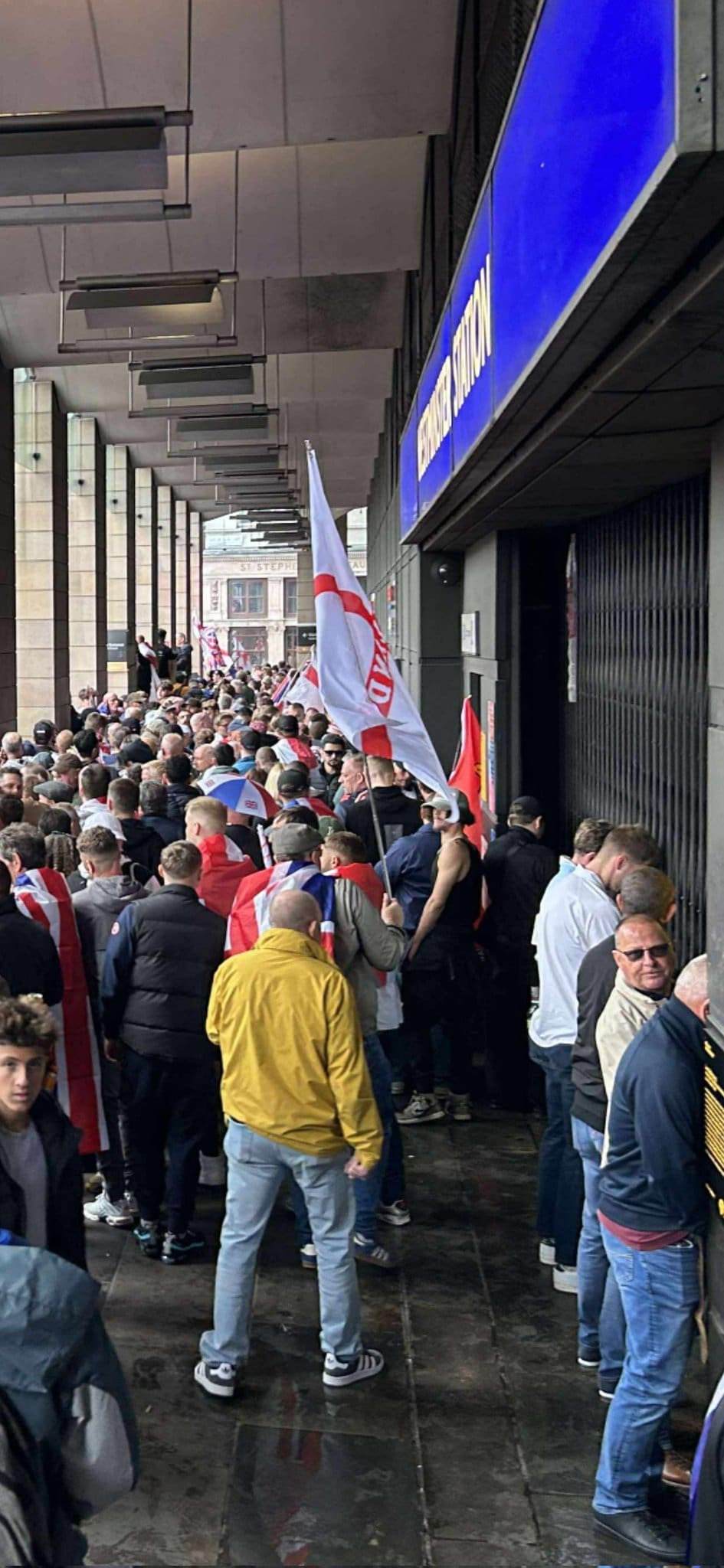
This is the ugly, unvarnished truth of what is happening week after week in towns and cities across the country. And it demands an uncomfortable question, not for the screaming bigots who trade in such filth, but for the ‘respectable’ protester standing placidly beside them, and for the countless others who see the videos online and look away: what, exactly, will it take for you to speak up?
For several weeks, protests organised under the benign-sounding slogan “Protect Our Kids” have targeted the Britannia Hotel in Leeds. Ella and others have organised counter-protests, placing themselves in the firing line of a vitriol that belies the protesters’ claimed concerns.
“I think I will always find it a little bit galling to hear people say that they’re doing this to keep people on their streets safe,” Ella notes, with considerable understatement. She skewers the hypocrisy at the heart of the movement: “We live in a time of immense misogyny and violence against women… the only incidences of sexual violence that they care about are ones that they can use to further their own agenda.”
It’s a convenient, and poisonous, selectivity.
But let’s be charitable for a moment. Let’s accept the premise that not every soul on that side of the police cordon is a racist. Let’s believe that some are simply frustrated locals, feeling ignored by a distant government. Ella herself concedes this point: “I do understand that not every single person there is a seasoned far-right organiser.”
However, she lands the critical blow: “If you are stood next to someone who is Sieg Heil-ing, for example, or next to someone who is yelling racist abuse, week in, week out, then I think it does reflect on you.“
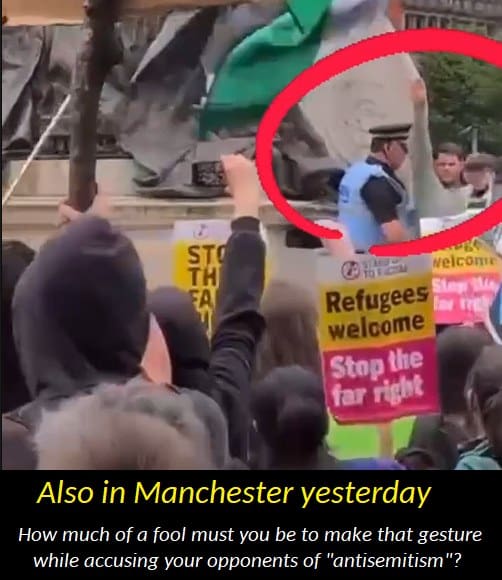
And there it is. The damning, inescapable truth. Your presence in that mob is not a neutral act. By choosing to share the pavement with men giving Nazi salutes and women screaming racial slurs, you are normalising them. You are providing them with a shield of legitimacy. You are, in effect, their useful idiots.
But the complicity does not end at the police line. It extends into our homes, onto our screens. It lives in the silence of those who see the footage of these protests on social media—the chants, the banners, the unmistakable salutes—and say nothing. They are the bystanders who scroll past, the acquaintances who might privately murmur “that’s a bit much” but never publicly challenge the poison being seeded in their own digital communities. This silent majority, by refusing to condemn, becomes an accessory. They create a permissive environment where hatred is allowed to fester unchallenged, where the Overton window is shoved violently to the right by a vocal few, met only with the deafening quiet of the moderate many.
Sally Kincaid, a retired teacher who has fostered refugees, cuts to the heart of the misplaced anger. “I can understand people being angry, but they are angry at the wrong people.” She rightly identifies that the failures of housing, schools, and services are political failures, not the fault of desperate people seeking sanctuary. “It’s a myth,” she says of the alleged crime waves, “stirred up to make the situation more polarised.”
The human cost of this polarisation is profound. Sally’s foster son, Hossein, a young man she helped through college and citizenship, is now too scared to speak publicly. “There’s a lot of racism around and kids are scared,” Sally admits, a painful sadness in her eyes. This is the real legacy: not safer streets, but a community poisoned by fear, where young British citizens are frightened by the hatred unleashed in their own neighbourhoods and amplified endlessly online.
Even the Bishop of Kirkstall, Arun Arora, arriving with homemade cakes and an offer of peace, was met with a torrent of abuse. His conclusion should haunt every person who attends these gatherings and every person who remains silent online: “If you stand alongside those who are being dehumanised… then you can expect to share in some of the same treatment that they get.” When a man of the cloth offering cake is deemed a legitimate target, your protest has lost all moral compass.
And to those who might wring their hands about the counter-protesters’ chants of “Nazi scum,” Steve, Sally’s partner, offers a blunt historical lesson. “There are people over there who are clearly members of fascist organisations,” he states. “People have stopped the rise of fascism by calling it out for what it is. Ignoring it or being polite about it doesn’t win.”
He is right. Politeness in the face of naked hatred is not civility; it is capitulation. And silence on social media is not neutrality; it is a form of passive endorsement that allows the cancer to spread.
So, to the ‘moderate’ protester and the silent scroller, we must ask: when is enough, enough? When the rape threats? When the Nazi salutes? When the bishop is abused? When a foster son is too frightened to leave his house? Or will you only finally feel a twinge of unease when you see your own neighbour, your own child, scarred by the very hatred you have, through your presence and your passivity, helped to embolden?
You may not be chanting the slogans, but by standing shoulder-to-shoulder with those who do, and by staying silent when you see it online, you have made their cause your own. Your silence is not neutrality; it is complicity. And history will not judge you kindly for it.