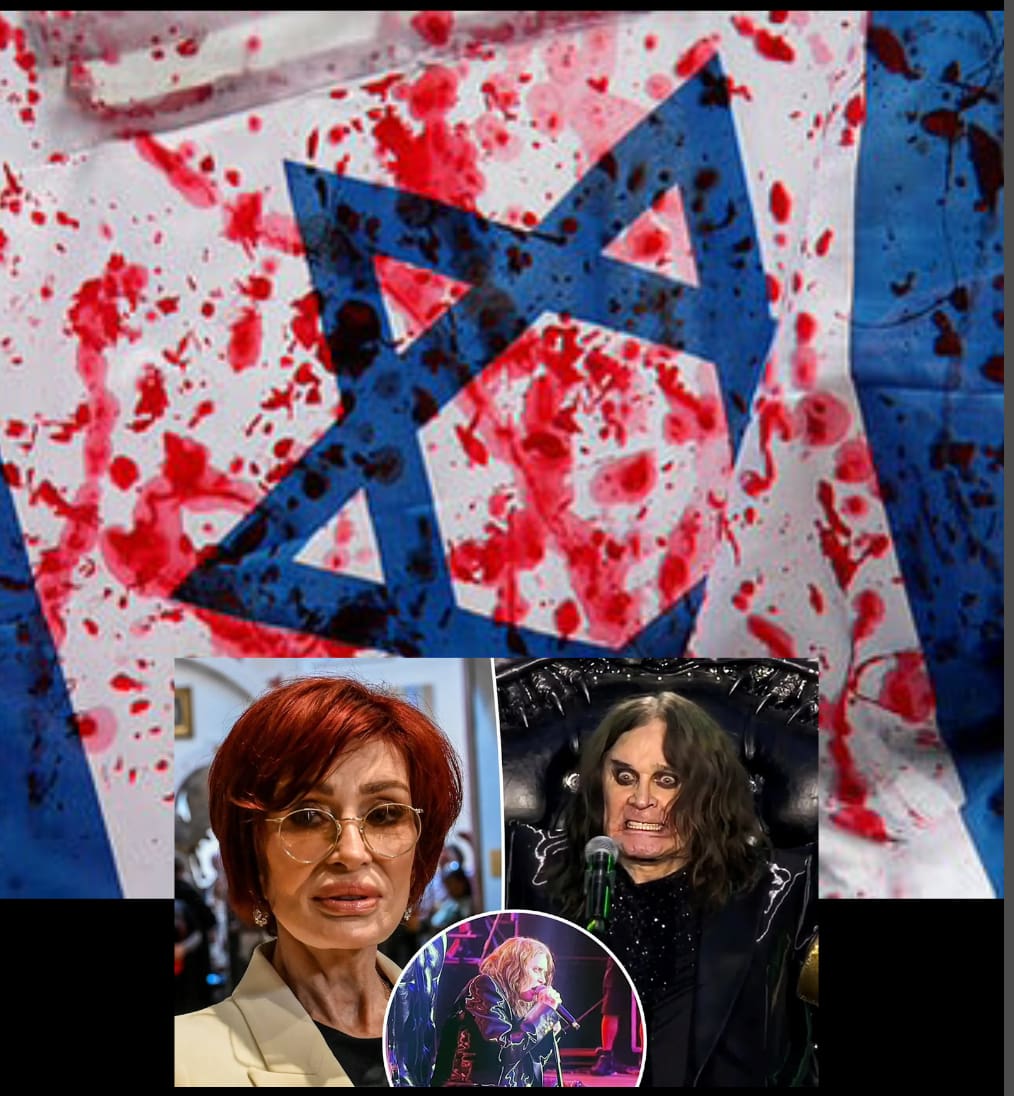
As tributes poured in, questions lingered over the moral universe he and wife Sharon helped shape.
Ozzy didn't just write "War Pigs", he ended up marrying one too https://t.co/2IUWZe4Rar
— Richard Medhurst (@richimedhurst) August 2, 2025
Ozzy Osbourne, the iconic frontman of Black Sabbath and one of heavy metal’s most recognisable figures, has died aged 76. The musician passed away peacefully at his Buckinghamshire home on the evening of 22 July 2025, according to a statement released by his family. He is survived by his wife, Sharon, their three children, and several grandchildren.
With his death, the curtain falls on a five-decade career marked by artistic innovation, theatrical excess, and personal reinvention. Born John Michael Osbourne in Birmingham in 1948, Ozzy emerged from the industrial heartlands of the West Midlands to become the gravel-throated voice of a genre that would shape generations. Alongside Tony Iommi, Geezer Butler and Bill Ward, he co-founded Black Sabbath in 1969, infusing blues-inflected rock with an eerie, almost apocalyptic weight. Songs like Paranoid, War Pigs, and Children of the Grave didn’t just define heavy metal—they embodied the economic anxiety and moral desolation of postwar Britain.
Following his departure from Sabbath in 1979, amid battles with addiction, Ozzy carved out a formidable solo career. Blizzard of Ozz (1980) introduced audiences to guitar prodigy Randy Rhoads and reaffirmed Ozzy’s ability to surprise and dominate the charts. Though notorious for on-stage antics—the infamous moment he bit the head off a bat in Des Moines in 1982 remains etched in pop culture—he remained, above all, a master of transformation. From washed-up rocker to reality TV patriarch on The Osbournes, from addict to elder statesman of metal, Ozzy was never short of reinvention.
Tributes from across the rock world, including his friends in Black Sabbath:
“It’s just such heartbreaking news that I can’t really find the words,” Tony Iommi said, his voice heavy with grief. “There won’t ever be another like him. Geezer, Bill and myself have lost our brother, not just the voice of Black Sabbath, but its soul. We all knew him as the Prince of Darkness, but offstage he was warm, wickedly funny and loyal to the core. Ozzy lit up every room, every gig, every life he touched. From Aston to the world, he carried us all with him on that mad ride, and I’m just grateful we got to say goodbye properly; together, one last time.”
“Where will I find you now?” Bill Ward wrote in his touching tribute. “In the memories, our unspoken embraces, our missed phone calls—no, you’re forever in my heart.” Geezer Butler echoed the sentiment, recalling their roots with fondness: “Four kids from Aston; who’d have thought, eh? So glad we got to do it one last time, back in Aston. Love you.”
Elton John called him a “huge trailblazer”, Brian May remembered their final conversation, and Metallica, Led Zeppelin and the Foo Fighters all honoured the man who helped shape their world. As Sir Rod Stewart put it, “Sleep well, my friend. I’ll see you up there – later rather than sooner.”
But as the tributes roll in, celebrating a life lived loud, there are also more difficult questions about the political legacy that he and his wife Sharon leave behind. In recent years, the Osbournes became high-profile defenders of Israel and vocal proponents of Zionism, positioning themselves as cultural warriors against what they described as “woke hatred” and rising antisemitism in the West.
The following is just one example from J. Salmeron on ‘Metal Blast’, written just a few months ago:
‘“Join me in advocating for the revocation of Kneecap’s work visa.”
With those words, Sharon Osbourne torched what little remained of her husband’s legacy, all in the service of defending a genocide.
To be clear, Ozzy, who is now wheelchair-bound (likely from the weight of his entire family riding on his coattails), isn’t a victim. He’s been a willing accomplice in shielding Israel from criticism, happily lending his name to pro-Israel front groups.
Ozzy and Sharon’s ties to these groups go back years. Chief among them is the paradoxically named “Creative Community for Peace” (“CCFP”), a far-right Zionist outfit that uses celebrities to deflect criticism of Israeli crimes. As Jewish Voices for Peace reported:
“CCFP carefully hides from artists that it is actually a front group for StandWithUs (SWU), a long-established anti-Palestinian, pro-Israeli settler lobby group with close ties to Israel’s hardline government. Registration and tax documents show that StandWithUs and Creative Community for Peace are simply alternate names for a single IRS-registered non-profit, ‘Israel Emergency Alliance.’”
“Examples of SWU and CCFP’s partnership with the Israeli government include convening an organizing meeting with Israeli government officials and music industry executives, and producing a pro-settler video series with Israel’s Ministry of Foreign Affairs. SWU even announced they were awarded a grant from Israel’s Prime Minister’s Office.”
It’s propaganda, plain and simple, and Ozzy and Sharon are willing participants. In fact, it was in that spirit that back in March they signed a letter denouncing the BBC for its allegedly “anti-Israel bias” after airing a documentary about the situation in Gaza (and which the BBC pulled almost immediately after airing). These accusations were especially grotesque, given that every serious analysis of BBC coverage shows a consistent pro-Israel bias, something that even the BBC’s own staff have complained about.
Despite Ozzy and Sharon’s repugnant views about the situation in Palestine, however, they have the same right as anyone else to be fundamentally wrong. And given Ozzy’s undeniable, years-long intellectual deterioration, it never seemed worth dignifying their comatose geopolitical takes with attention.’
For many, this marked a troubling escalation: a willingness to conflate opposition to state violence with bigotry and to marginalise dissenting voices, including Jewish ones. Groups like Jewish Voice for Peace, Na’amod, and even some rabbis within the ultra-Orthodox Neturei Karta movement have long rejected the idea that support for Israel is synonymous with Jewish identity. Yet the Osbournes, despite their public commitment to combating antisemitism, have shown little willingness to engage with these perspectives. Their conception of Jewish solidarity appears narrowly defined, excluding Jews who criticise Israel’s policies as morally untenable or incompatible with their faith’s ethical traditions.
This absolutism has not gone unnoticed. A BBC journalist, speaking anonymously to The Guardian, expressed concern over what they described as a “climate of intimidation”: “Even careful, evidence-based reporting can now be framed as antisemitic if it doesn’t align with the ‘approved narrative’. The Osbournes have a vast platform, and they’re using it to enforce a kind of ideological purity.”
In contrast to celebrities such as Dua Lipa, Bella Hadid, and Mark Ruffalo, who have taken more critical stances toward Israel’s occupation policies, the Osbournes have shown little interest in the wider context of the Israeli-Palestinian conflict. There is no record of either acknowledging the human cost of recent Israeli offensives in Gaza or the ongoing systemic inequalities facing Palestinians in the West Bank. For many observers, this selective morality—wherein certain forms of state violence are uncritically defended, while others are condemned—is emblematic of a broader failure to wrestle with complexity in the age of performative activism.
Yet Ozzy himself often remained silent on these issues in public, leaving Sharon to lead the charge. Whether this was due to personal conviction, deference, or a reluctance to re-enter political frays later in life remains unclear. Still, his name lent considerable weight to statements and campaigns that, critics argue, did more to entrench division than to foster understanding.
In death, as in life, Ozzy Osbourne resists easy classification. He was a trailblazer, a showman, a survivor of extraordinary personal demons. He brought catharsis to millions through music that dared to look into the abyss. But in his later years, he also became part of a celebrity machine that sometimes traded in moral certainty at the expense of nuance, flattening complex realities into slogans and hashtags.
His legacy, then, is both towering and troubled: the sonic architect of metal, the shambolic patriarch of reality television, and, finally, a cultural figure whose activism left as many questions as answers. As fans around the world mourn his loss, others may reflect on the broader narratives he helped shape and those he helped silence.
Ozzy Osbourne may have worn the title “Prince of Darkness” as a theatrical badge, but in today’s polarised world, his influence casts a more ambiguous shadow.