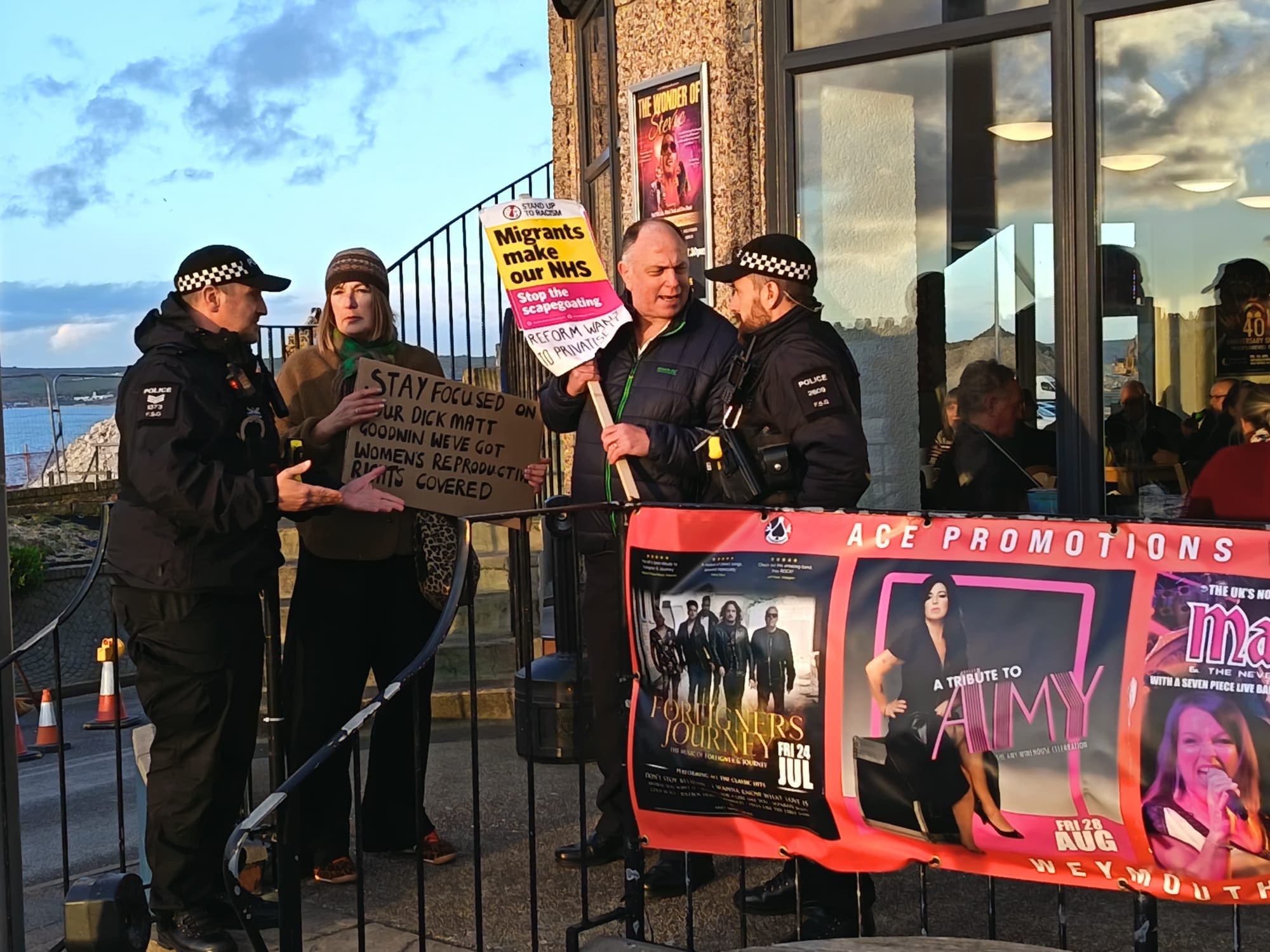
A crowd of around 50 protesters gathered outside a political meeting in Weymouth on Wednesday evening, creating a demonstration that felt far larger than its numbers suggested. Early footage shared online by the local corporate media captured only a fraction of the atmosphere, with those present describing a lively and unified protest filled with chanting, singing and a clear sense of purpose.
The meeting itself was a members-only event for Reform UK, held at the Weymouth Pavilion. The decision to host the event at the Pavilion has drawn sharp criticism.
Widely seen as a community space intended to be inclusive and welcoming, the venue is now facing renewed questions about its willingness to provide for groups many residents view as divisive. For critics, allowing a far-right political meeting to take place there undermines the very idea of the Pavilion as a “space for all”.
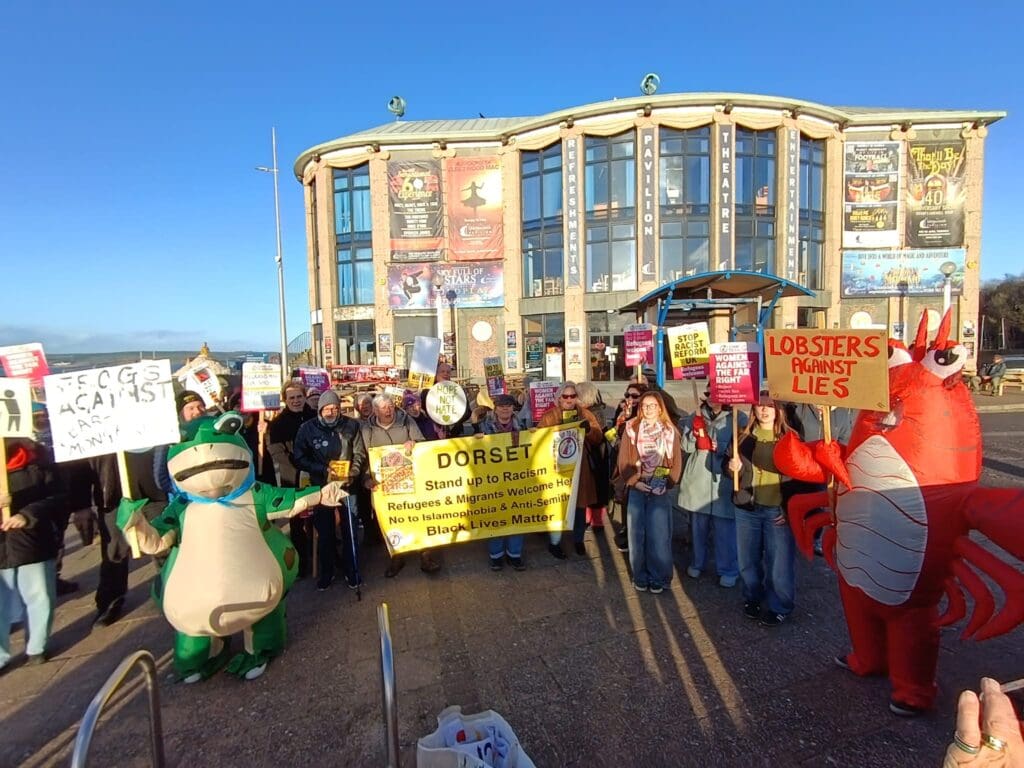
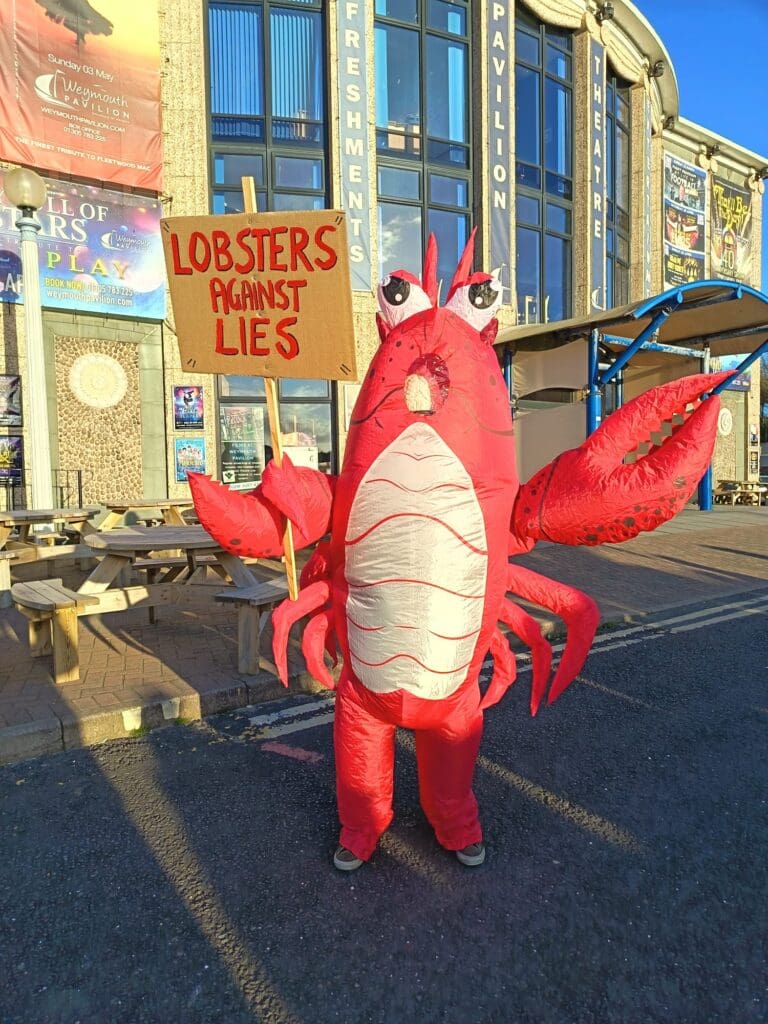
Despite the political tensions, protesters described a positive and even creative atmosphere among those gathered. Alongside the chants and placards, there were moments of humour and theatricality, including individuals dressed as a frog and a lobster, a nod to similar protest styles seen in places like Portland, Oregon. The costumes, while light-hearted, reflected a deeper sense of solidarity and community among demonstrators.
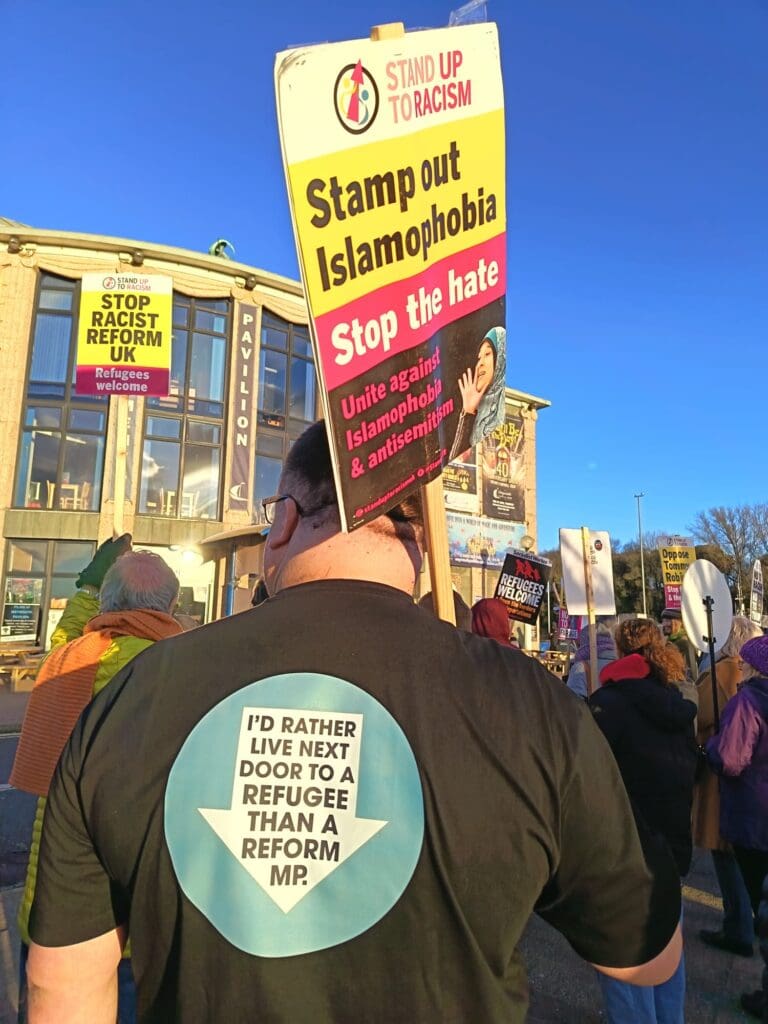
Importantly, those present were keen to challenge claims circulating online about the behaviour of the protest. Contrary to comments on local social media pages, protesters insist they did not shout abuse at people arriving for the meeting. Instead, they made a conscious effort to remain disciplined, directing their protest at the politics and institutions involved rather than individuals. Attendees were largely left alone, aside from being shown placards expressing opposition to Reform UK, its figures, and what protesters described as a broader culture of hate.
Those arriving for the meeting presented a markedly different image. Many were older and smartly dressed, some appearing as though they were attending a theatre performance rather than a political gathering. A number of middle-aged men also made up a significant portion of the audience. The contrast between the formal appearance of attendees and the energetic, vocal protest outside underscored the divisions at play.
Tensions escalated during one incident when a car drove aggressively toward the protest area. Witnesses reported that a protester was nearly struck before the driver wearing a T-shirt with the word C**T on it allegedly shouted abuse. This moment stood in stark contrast to the otherwise controlled behaviour of the demonstrators. While protesters had deliberately avoided confrontation, the driver’s actions were widely seen as reckless and provocative.
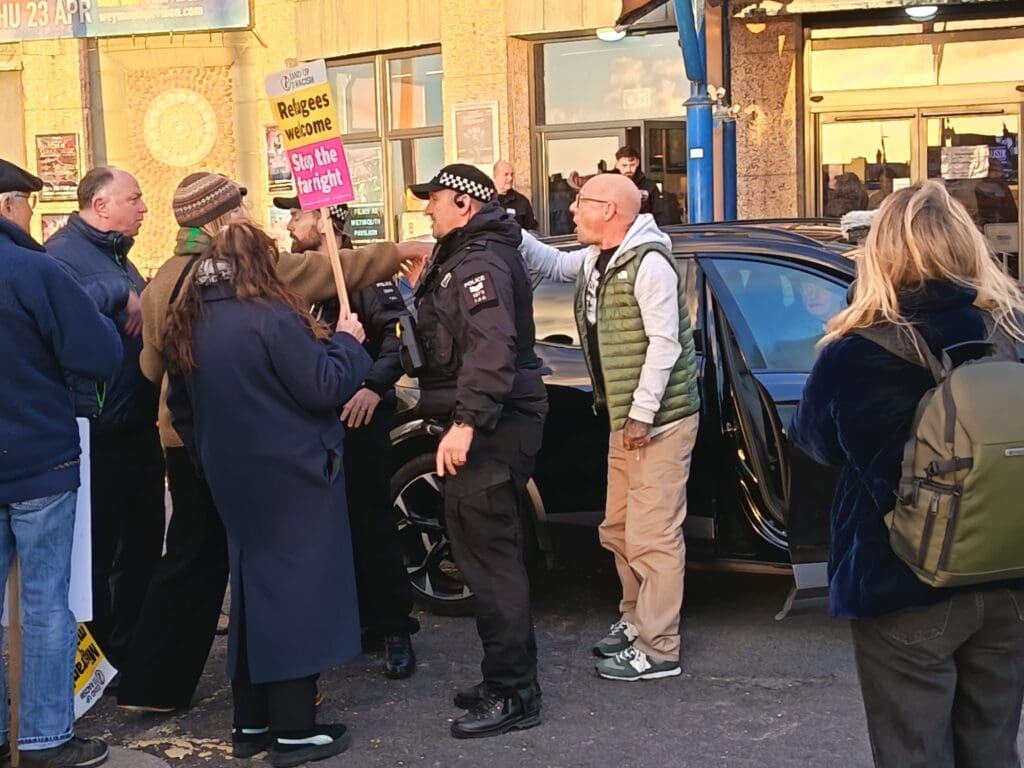
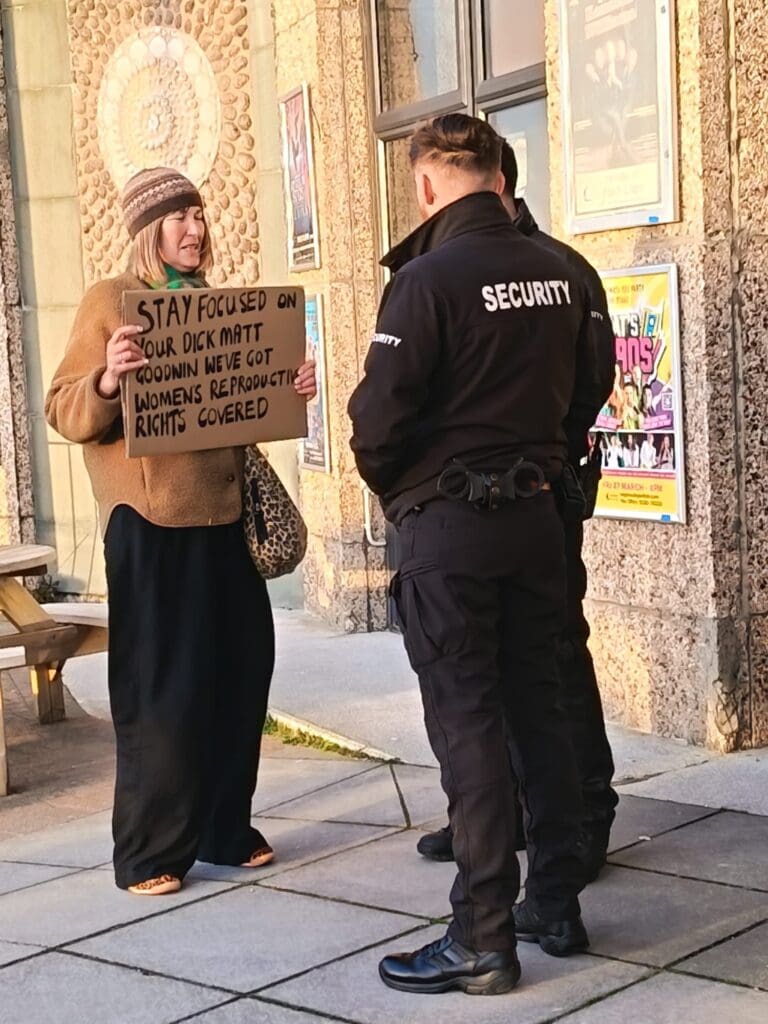
The situation intensified when another protester reacted, striking the vehicle with a placard as it moved away. Police quickly intervened, focusing their attention on the protester rather than the driver. This response prompted anger among those gathered, who questioned why the individual behind the wheel was not challenged or spoken to.
For many present, the incident reinforced concerns about the behaviour often associated with far-right activism. Critics argue that such movements frequently draw on anger and misinformation, creating an environment where respect for others and for the rule of law can be undermined. The alleged actions of the driver were seen by some as reflecting exactly that pattern.
Supporters of Reform UK would reject these accusations, maintaining that their movement represents legitimate political views. However, for those outside the Pavilion, the evening’s events appeared to validate their concerns rather than dispel them.
As the protest came to an end, participants left with a mixture of pride and frustration: pride in the atmosphere they had created and the discipline they had maintained, but frustration at what they saw as ongoing failures of police accountability. Questions remain not only about the conduct witnessed on the night but also about the role of community venues like Weymouth Pavilion in hosting events that many believe deepen division rather than bring people together.