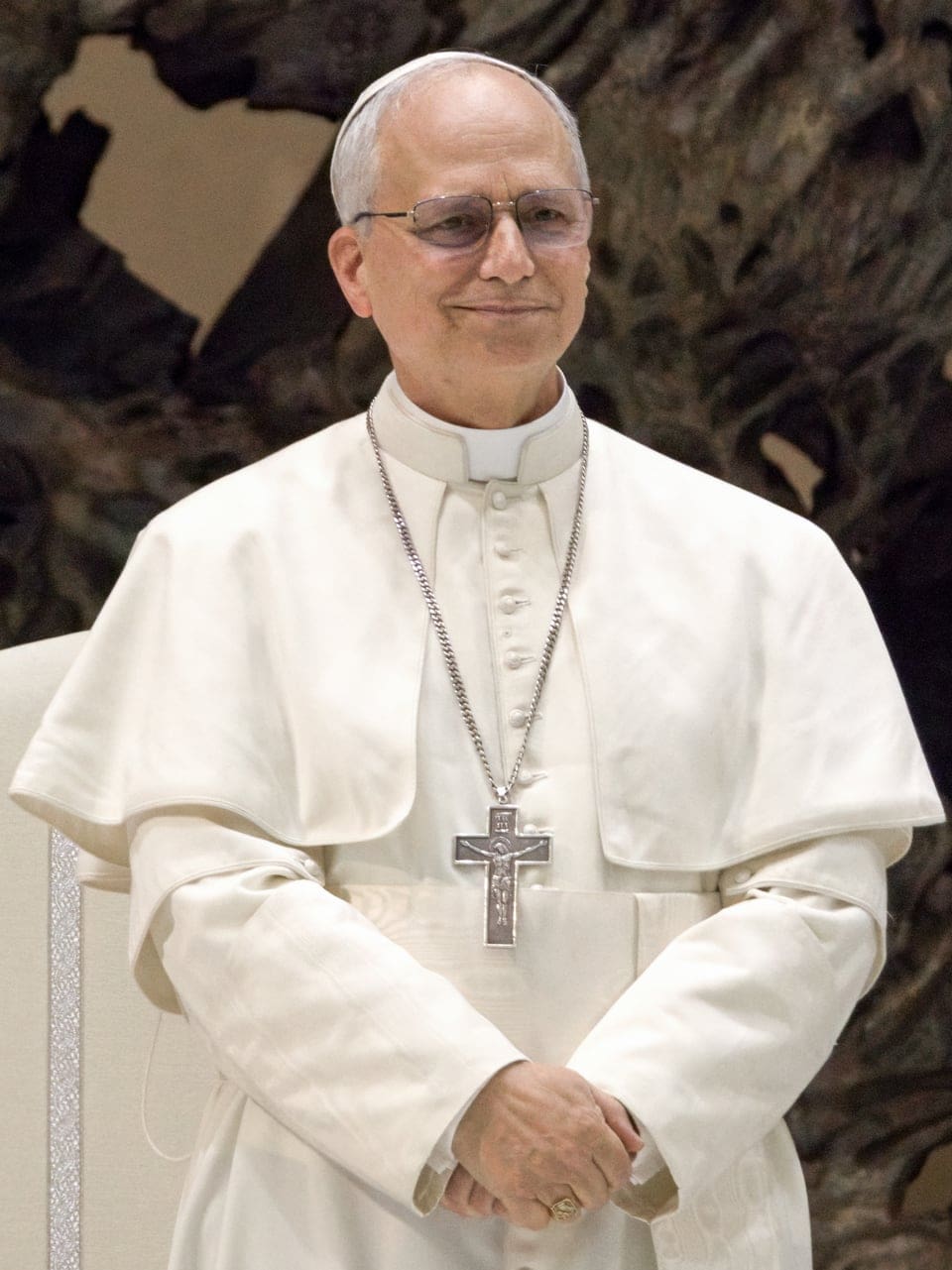
In a world where the balance between faith and governance is continuously tested, Pope Leo XIV has reignited the debate on secularism with a carefully chosen phrase: “healthy secularism.”
Speaking at the Vatican during an audience with the Working Group on Intercultural and Inter-religious Dialogue, an initiative of the European Parliament, the Pope stressed that European institutions must cultivate a secularism that respects religion while safeguarding the proper distinction between church and state. Pope Leo XIV Calls for ‘Healthy Secularism’ in Address to European Parliament Delegation at the Vatican.
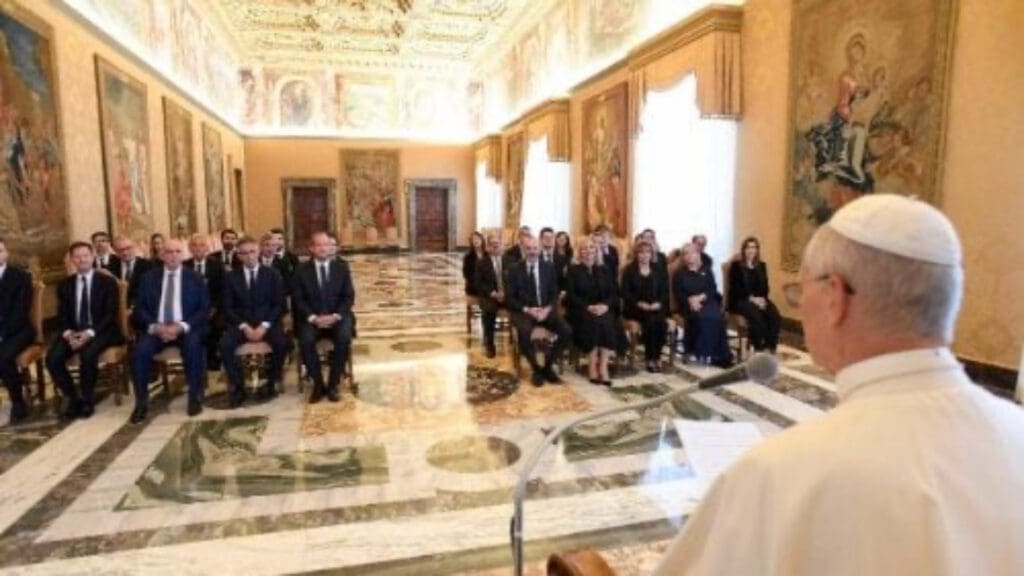
The Pontiff began by thanking the delegation for their efforts in promoting intercultural and inter-religious dialogue within European institutions. He then made a pointed suggestion: “European institutions need people who know how to live a healthy secularism, that is, a style of thinking and acting that affirms the value of religion while preserving the distinction, not separation or confusion, from the political sphere.”
Defining “Healthy Secularism”
The Pope’s intervention adds a new term, and arguably a new dimension to one of Europe’s most enduring debates: the role of religion in public life. The phrase “healthy secularism” implies neither a collapse of church into state nor the aggressive banishment of religion from the public sphere. Instead, it advocates for balance: religion’s value should be affirmed, but without encroaching upon political decision-making.
This stands in contrast to more rigid interpretations of secularism, which treat religion and politics as not only separate but often adversarial. The Pope’s framing acknowledges that religion plays an enduring role in shaping individual and collective values, while also recognizing that political institutions must remain neutral arbiters in pluralistic societies.
The Broader Debate on Secularism
The concept of secularism has long been contested in European political and philosophical discourse. Traditional secularism, rooted in Enlightenment thought, emphasizes the separation of religion from political institutions in order to preserve freedom of thought and protect civil peace. Yet in practice, secularism has taken on diverse forms ranging from laïcité in France, which strongly enforces the public exclusion of religious expression, to more moderate forms in Northern Europe, where religion may still influence social norms and values.
Scholars have categorized these variations into strands such as political secularism, moderate secularism, and multiculturalism. Political secularism, in particular, maintains that governments have the authority to regulate actions but not beliefs, allowing citizens to believe what they will, but within the limits of laws designed to preserve civil order.
The Pope’s call for “healthy secularism” can be read as a critique of the excesses of political secularism, especially where it disregards moral or religious dimensions of public debate.
Political Secularism and Policy Preferences
The practical impact of secularism is most visible in the policy preferences of Western European societies. For instance, political secularism has shaped debates on issues such as abortion, same-sex marriage, and bioethics. Research shows that secular attitudes strongly influence citizens’ views on these issues, with scholars noting that political secularism significantly shapes public support for abortion rights across Western Europe.
From the moralist perspective of the Catholic Church, however, such policy outcomes pose a problem. The legalization and normalization of abortion directly conflicts with the sanctity of life doctrine upheld by Catholic teaching. For Pope Leo XIV, a secularism that ignores moral truths in favour of mere legal order is not “healthy” but deficient.
Healthy Secularism vs. Political Secularism
Here lies the central tension: political secularism supports freedom of conscience and enforces equality before the law, but it may also promote policies such as the liberalization of abortion that the Church regards as contrary to natural law. By contrast, healthy secularism, as articulated by Pope Leo XIV, would preserve religious voices in public debate without allowing any single tradition to dominate the political system.
In effect, “healthy secularism” insists that religion should not be silenced but respected as a source of wisdom and ethical guidance. At the same time, it requires religious institutions to respect the autonomy of political governance, ensuring that pluralism and civil peace are maintained.
Implications for European Institutions
The Pope’s remarks come at a critical moment for Europe, as institutions grapple with rising populism, cultural polarization, and renewed debates over migration and multiculturalism. By urging “healthy secularism,” Pope Leo XIV is inviting policymakers to rethink how secularism is practiced: not as a rigid doctrine of exclusion, but as a dynamic framework for coexistence.
The appeal to balance is deeply significant. It suggests that Europe’s future stability depends not on pushing religion to the margins, but on fostering respectful engagement between faith and politics. In doing so, the Pope aligns with a long Catholic intellectual tradition, from Augustine to Aquinas, which has always wrestled with the interplay between the divine and the temporal.
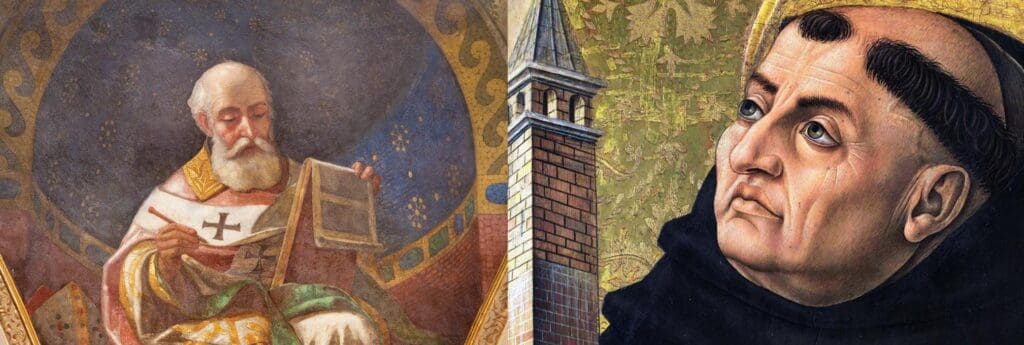
Image: St. Augustine and St. Thomas Aquinas – timeless voices on faith and politics
In conclusion, the phrase “healthy secularism” is more than a rhetorical flourish; it is a challenge to both religious and political leaders.
For politicians, it means recognizing religion’s enduring role in shaping values and identities. For religious institutions, it means affirming the boundaries of political autonomy.