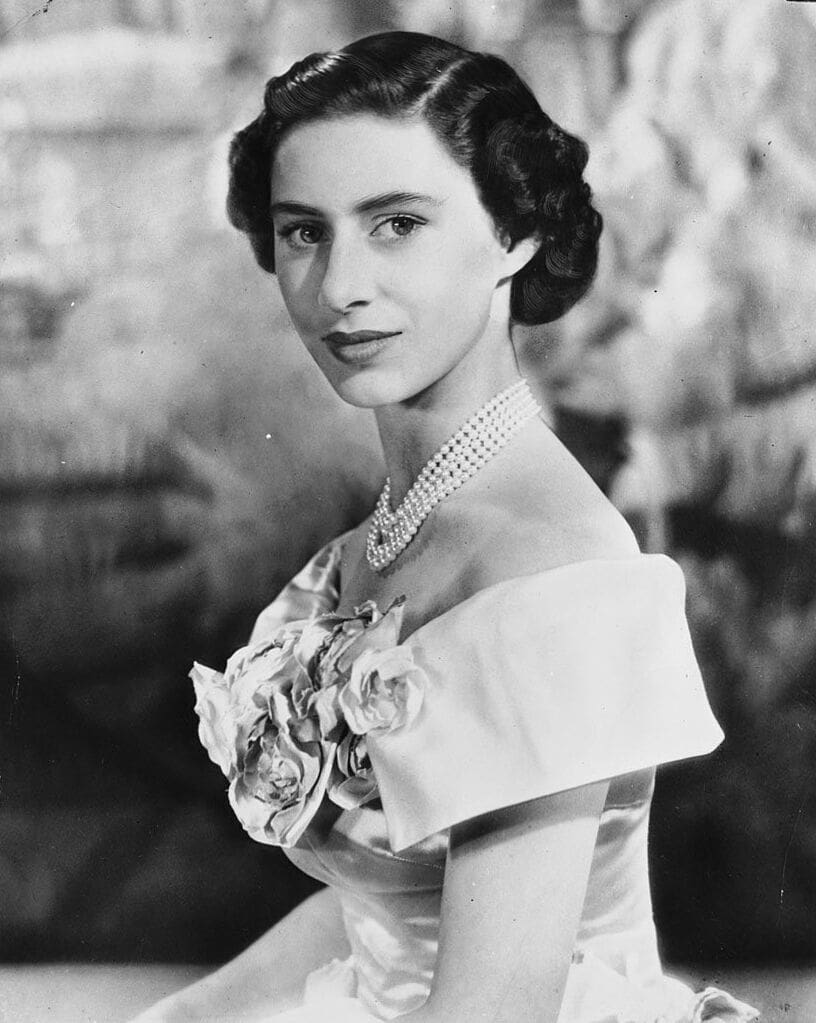
Princess Margaret, Countess of Snowdon, occupies a peculiar niche in modern British history: a royal who behaved as though the rules were optional and often beneath her. Where her sister Elizabeth embodied duty, restraint and the slow suffocation of emotion beneath protocol, Margaret represented something far more combustible: entitlement with flair. She was sharp, funny, glamorous, and by many accounts breathtakingly unpleasant. And for much of her life, she got away with it because she was a princess at precisely the moment when deference to royalty still functioned like an invisible shield.
From her earliest public appearances, Margaret made it clear that she was not interested in being liked so much as obeyed. She was famous for dressing down servants, humiliating staff in public, and issuing orders with theatrical cruelty. Courtiers spoke of her ability to reduce rooms to silence with a single raised eyebrow. Guests recalled dinners punctuated by withering remarks, deliberately delivered to wound. One aide memorably described her temperament as “mercurial”: charming one minute, vicious the next. This was not merely temperament; it was power being exercised casually, the assumption that others existed as props in her drama.
Yet Margaret’s rudeness was not random. It was shaped by her position as the “spare”—close enough to the throne to enjoy its privileges but excluded from its purpose. Unlike the queen, she was not required to master self-control or suppress personal grievance for the sake of the institution. Instead, she was indulged, indulged again, and then mythologised as a tragic rebel when the consequences of her behaviour inevitably followed. The failed romance with Peter Townsend, the breakdown of her marriage, and her descent into drink and bitterness were all framed as heartbreaks inflicted upon her, rather than outcomes shaped by her own conduct.
What made Margaret’s license to be rude possible was not simply royal status, but timing. She belonged to the last generation of British royals who could be openly unpleasant without fear of real accountability. The press protected her. Staff were expected to endure her. The public largely excused her excesses as “temperament” or “character”. Today, such behaviour would be viral within hours, stripped of mystique and rebranded as bullying. But Margaret existed in the dying glow of unquestioned hierarchy, where cruelty could still masquerade as eccentricity.
Princess Margaret is remembered with a curious fondness that says as much about Britain as it does about her. We admire her wit, her style, and her refusal to be dull and quietly gloss over the fact that she was often unkind because she could be. Her story is not merely that of a difficult royal but of a society that once treated power as a personality trait and bad behaviour as a birthright. Her licence to be rude was never official. It was simply granted by class, by deference, and by an age that had not yet learned to say no to a princess.