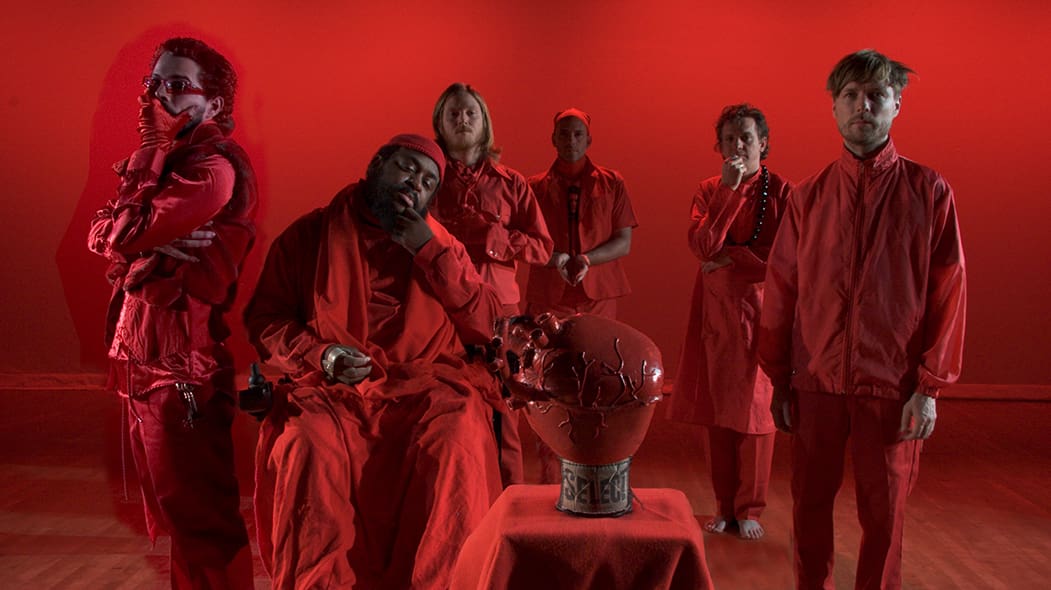
One day, during a long car journey, I was listening to noughties American bands The Polyphonic Spree and Subtle when my mind wandered for an hour or two. I was recovering from a musical discussion on the old chestnut “What is Progressive Rock, anyway?” — debated and left unresolved (as usual).
Accepted wisdom states that Progressive Rock is flowery music about wizards made by ex-hippies in flares, who got Grade 8s in their instrument at Boys’ Grammar School. Their songs are long and meandering — so long, in fact, that an album of only 2–4 tracks (including odd time signatures, extended solos and plenty of Mellotron) should be of no surprise.
Let’s face it, Prog Rock got a very bad name from this perception. And this previously hip musical genre was eventually cast out in favour of back-to-basics Punk and Disco in the mid to late seventies. The perception remains to this day. Even some Progressive Rock fans believe it.
Unknowingly, I got into Progressive Rock at a very early age. As the youngest child, I was influenced by teens with growing record collections, because there wasn’t much else to do in those days. I say “unknowingly” because it was all just music to me back then. I was weaned on a diet of Beatles, Beach Boys, Focus, Pink Floyd, David Bowie, Stackridge, Roxy Music, Supertramp and Mike Oldfield. At the age of 11, my first favourite band was 10cc.
Back then, Progressive Rock was as much a fashion as a musical genre. But fashions change. I didn’t know it was called Progressive Rock until the late seventies, when it was very uncool, but I had to find more of it to listen to. My new favourite band was Yes. My bedroom walls were covered with Roger Dean posters and band photos.
By the early 80s, it was a bit embarrassing. When asked which bands I liked, my responses were met with a mixture of disgust and amusement, because they were currently making shit records. Incredibly, new bands continued to exploit the genre In the eighties and nineties, but I thought what I’d heard had been pretty dire. So, when I ran out of good Progressive Rock, I moved on to what people were then calling New Wave. Anyway, I digress…
Sometime in the nineties, I had an epiphany. Some of the albums I had been enjoying recently were pressing the same buttons as those seventies Prog albums. I created a website called Prog’s Not Dead [now long gone], dedicated to contemporary albums which I felt followed the spirit of Prog and yet avoided the classification. It was around then that I realised that popular bands like Radiohead were very much Prog, and that Punk, Dance, Folk, Indie and Hip-Hop could be Prog too.
Back to the car journey and daydreaming to a soundtrack of choral indie rock and experimental hip-hop. Both albums strike me as being very Prog. Neither has long meandering songs with weird time signatures or great instrumental prowess. There are no fancy solos or references to dragons or faeries or sci-fi album covers. But they are still Prog. So why are they Prog? Surely, there must be a pattern, a code, or a formula.
Then it dawned on me: to understand Prog, you have to separate the “Progressive” from the “Rock” — they are two separate things. Rock music has a defined set of musical parameters: electric guitars, love songs, driving bass and hard-working drums. Verse, chorus, bridge/solo. Progressive musicians found this too predictable and messed around with the format. They stretched it in different directions, adding elements of Jazz, Orchestral and story-telling.
By the mid-seventies, the Progressive guys had run out of possibilities within the Rock format, and got stuck. Some went downhill rapidly, and some managed to extract a bit more mileage for another few years before going the same way. If you reach for the dictionary, the word ‘progressive’ can be interpreted in a few subtly different ways. It can mean steady evolution by increments. It can mean trying to improve/change something.
Those post-seventies Progressive Rock bands weren’t so much progressive as retro copycats. There’s nothing progressive about emulating something you liked when you were a youngster — far from it.
It follows that you can have all types of Progressive music: Progressive Hip-Hop, Progressive Dance, Progressive Metal, Progressive Punk, Progressive Indie, etc. BUT, it’s only truly progressive if the artist is trying to evolve the format.
Progressive Rock had its time by the late 70s. Progressive Rock is dead. Long live Prog!
Keith, Swanage Record Club (swanagerecordclub.uk, @swanagerecordclub)