

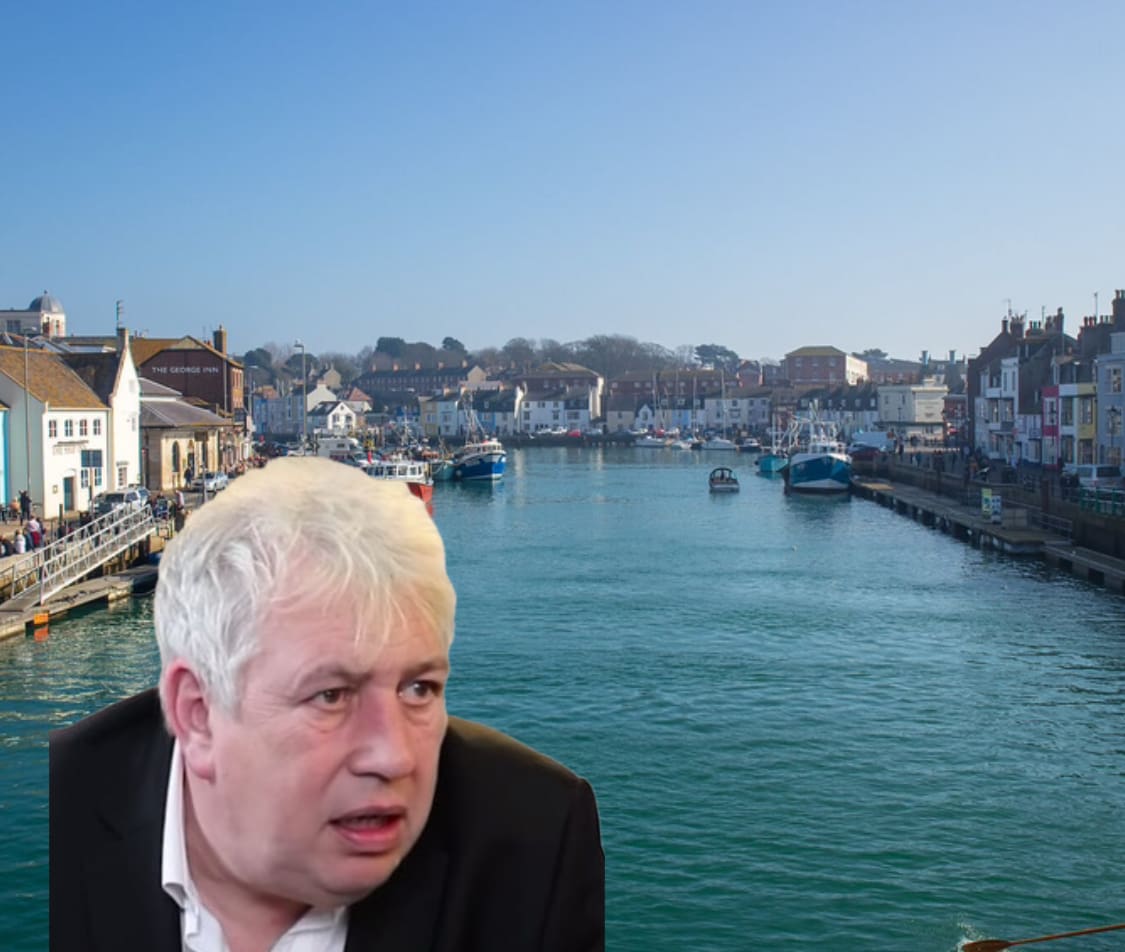
A great place to start is to write back at him.
Some writers inherit a gift for observation; Rod Liddle has instead cultivated a gift for provocation. The more generous observers call it “plain-speaking”, the less charitable call it sneering-as-content. Whichever tribe you fall into, his latest broadside against Weymouth — or any seaside town unlucky enough to drift into his crosshairs — reveals something instructive about the man and his brand of journalism. It is not, contrary to what his most ardent supporters claim, courage. It is not insight. It is certainly not curiosity. It is a long-practised formula of mockery, generalisation, and disdain, targeted at groups he assumes will not or cannot fight back.
Liddle’s stock-in-trade has always relied on the same manoeuvre: pick a target, reduce it to a caricature, and then punch down with conviction. Whether the subject is a religious minority, a racial group, a public figure, a town, or—as is increasingly common—an entire community that fails to match his preferences, the technique is identical. Present the world as a series of irritations, exaggerate them, and pass the resulting grumble off as courageous truth-telling.
His criticisms of Weymouth, in his column in The Times, fit the model perfectly. Rather than grappling with the complexities of coastal towns — the real issues of infrastructure, the seasonal economy, housing pressures, or the decades-long consequences of Westminster neglect — he opts for theatrical disdain. He refers to Weymouth as the ‘rectum of Dorset’. It’s easier. It gets clicks. It appeals to readers who mistake cynicism for clarity and are drawn to bullies like moths to lightbulbs.
But what’s especially revealing is how interchangeable the targets in his columns have become. Today, it’s Weymouth; yesterday, it was London’s Black youth; the week before, British Muslims; the week after, women who fail to conform to his expectations of how a woman ought to look or behave. The pattern is not new, and neither is the criticism he attracts. Regulators have repeatedly found that aspects of his work have breached editorial standards regarding discrimination or accuracy. Public outcry has followed some of his more inflammatory remarks; even fellow journalists have, from time to time, balked at his more gratuitous provocations.
| Date (day / month / year) | Publication & context | Regulator / Court | Outcome (sanction / finding) | Code clause / reason (short) | Source |
|---|---|---|---|---|---|
| 5 Dec 2009 (blog post) — ruling published 29 Mar 2010 | Blog on The Spectator website purported that “the overwhelming majority of … crime in London is carried out by young men from the African-Caribbean community” | Press Complaints Commission (PCC) (adjudication published) | Complaint upheld; PCC required an authoritative correction online and censured the blog; PCC held blogs to same accuracy standards as print | Clause 1 – Accuracy: statement presented as factual but unsubstantiated / misleading. | Spectator summary of PCC adjudication; Guardian coverage. The Spectator+1 |
| November 2011 (article published during trial) — prosecution concluded 7 Jun 2012 | Article in The Spectator (Rod Liddle comment piece) published during the trial of defendants in the Stephen Lawrence case | Crown / Magistrates’ Court (prosecution under Contempt / Criminal Justice Act reporting rules) | Spectator 1828 Ltd pleaded guilty to breaching a court order; fined £3,000, ordered to pay £2,000 compensation to Stephen Lawrence’s family plus costs (total ~£5,625). | Breach of reporting restrictions / risk of prejudicing a criminal trial — interfering with fair administration of justice. | Guardian report; Index on Censorship summary. The Guardian+1 |
| 11 Dec 2014 (and follow-up 15 Jan 2015 column) — ruling published 5 May 2015 (adjudication published 28 May 2015) | Two columns in The Sun (11 Dec 2014 and 15 Jan 2015) in which Liddle mocked Emily Brothers (a blind, transgender parliamentary candidate) — e.g. “Being blind, how did she know she was the wrong sex?” | Independent Press Standards Organisation (IPSO) | Complaint upheld (Trans Media Watch / Emily Brothers acting with consent). Breach found; sanction: publication of IPSO adjudication (censure / requirement to publish ruling). | Clause 12 – Discrimination (and Clause 3 Harassment raised): column judged discriminatory towards a protected characteristic (disability / gender identity). | IPSO ruling page; Guardian/Press Gazette coverage. IPSO+1 |
This isn’t random. It is structural to his brand. Liddle writes not to illuminate but to inflame, and so this requires choosing groups or places that can be reduced to simple clichés. A seaside town becomes a punchline. A community becomes a monolith. A faith becomes a foil. A woman becomes an object of derision. A complicated social reality becomes an anecdote. The world, in Liddle’s columns, is not textured or nuanced. It is a series of irritants, each more personally offensive to him than the last.
What makes this latest attack on Weymouth particularly absurd is that coastal towns like it have weathered more political neglect, economic strain, and cultural misunderstanding than almost any other part of the country. They deserve investment, empathy, and thoughtful journalism—not to be dismissed with metropolitan contempt. But Liddle’s commentary has never been about the place in front of him. It’s about the stance he performs: the role of the weary, eye-rolling everyman who claims to see through the nonsense that bewilders the rest of us.
The irony, of course, is that this posture is anything but rebellious. It is comfortable. It is predictable. It is lucrative. And—most crucially—it is easy. It takes no bravery to punch a soft target. It takes no insight to mock a council estate or a funfair or a high street that has seen better days. It takes no intellectual labour to stand on the shore, gaze out at a community dealing with decades of political and economic abandonment, and conclude that what it really needs is mockery from a columnist whose career depends on winding up the easily wound.
What would courage look like? Courage would involve acknowledging the dignity of places like Weymouth and examining the structural forces that have shaped them. Courage would mean approaching communities with curiosity rather than contempt. Courage would mean challenging the powerful rather than the familiar. Courage would be noticing that Britain’s coastal towns are not repositories of decay but repositories of potential — full of people who live there, love there, work there, and refuse to be defined by the disinterest of Westminster or the disdain of newspaper columnists.
But insight requires effort. Empathy requires imagination. Liddle’s approach requires neither. He has instead become the predictable caricature of the contrarian: loudly “anti-woke,” permanently aggrieved, forever convinced of the moral superiority of saying the thing others supposedly won’t say — even when, quite regularly, others have said it better and with far less hostility. His columns often read like a man auditioning for the role of Britain’s pub-bore laureate, but with a national platform and an editor willing to indulge him.
Yet there is something almost tragic in the self-inflicted smallness of this worldview. To look at a place like Weymouth and see only decay is to confess to a failure of imagination. To look at its people and see only stereotypes is to admit that the world has shrunk to fit one’s prejudices. And to mistake this narrowing of perspective for wisdom is to mistake bitterness for brilliance.
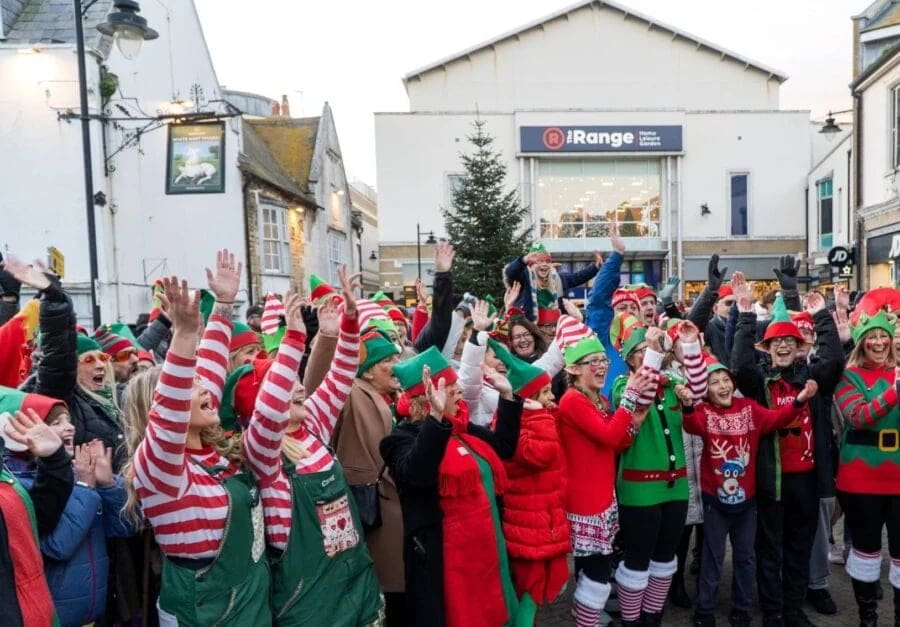
The residents of Weymouth, of course, will carry on. They have lived through greater trials than an uncharitable column and will doubtless survive future ones. What they do not need is Rod Liddle’s approval, nor must they accept his dismissals as authoritative. The town speaks for itself in the laughter of families on the beach, in the bustle of the harbour, in the resilience of its businesses, in the ‘elves’ in the town and in the affection of those who choose to make it home.
If anything, Liddle’s column says more about the writer than the subject. It reveals not the state of Weymouth but the state of journalism content to trade in contempt. It reveals a worldview narrowed by habit, not sharpened by wisdom. And it reveals that the real vacancy at the heart of such polemics is not in the towns he mocks but in the arguments he makes: hollow, predictable, and exhausted.
Weymouth deserves better. So does the country. And so, frankly, does journalism.
And remember, taking on the cruel and unkind is easy. Just do it.







