


For more than half a century, the faces of great Britons have gazed out from the nation’s banknotes. Playwrights, scientists, prime ministers and novelists have all taken their turn as symbols of the country’s cultural and intellectual heritage. Now, however, a significant shift is on the horizon. The Bank of England has announced that the next series of British banknotes will replace historical figures with images of wildlife, giving the public a chance to help choose which aspects of the natural world will appear on the currency.
The decision marks the end of a tradition that began in 1970, when the face of William Shakespeare became the first historical figure to appear on a Bank of England note. Since then, a succession of celebrated Britons has followed, from the wartime leader Winston Churchill to novelist Jane Austen and pioneering mathematician Alan Turing. These figures were intended to represent the breadth of Britain’s achievements across literature, politics, science and the arts.
Yet the Bank has decided that the next generation of notes will take a different direction. Instead of human icons, they will celebrate the landscapes, plants and animals that make up the country’s natural environment. The portrait of King Charles III will remain on the front of the notes, continuing the long-standing tradition of featuring the reigning monarch, but the reverse side will be given over to wildlife imagery.
The move follows a consultation conducted last summer in which the public was asked to suggest themes for the next series of notes. Of the 44,000 responses received, wildlife and nature proved the most popular option, attracting around 60 percent of nominations. Architecture and landmarks came a close second with 56 per cent, while notable historical figures, the long-standing theme, finished third with 38 percent.
A second consultation scheduled for this summer will allow members of the public to propose specific species or natural features that could appear on the new designs. The Bank has already indicated that the images will focus on wildlife native to the United Kingdom. Animals, plants and landscapes from England, Scotland, Wales and Northern Ireland will be considered, ensuring that the designs reflect the diversity of the country’s ecosystems. Domestic pets, however, have been ruled out.
The decision also has a practical dimension. According to the Bank, nature-themed imagery offers advantages for security design. The complex textures, patterns and colours found in plants and animals can be integrated with advanced anti-counterfeiting technologies, making banknotes more difficult to forge while helping the public to recognise genuine notes more easily.
Victoria Cleland, the Bank of England’s chief cashier, explained that improving counterfeit resilience is always the main reason for introducing a new banknote series. However, she said it also presents a valuable opportunity to highlight different aspects of national identity. Nature, she noted, allows the Bank to showcase the United Kingdom’s rich and varied wildlife while also supporting the development of sophisticated security features.
To understand the significance of the change, it helps to look at the history of British banknotes themselves. For much of their existence, they were remarkably plain. Early Bank of England notes, first issued in the late seventeenth century, were essentially handwritten promissory notes promising to pay the bearer a certain sum. They were functional financial instruments rather than works of design.
Over time, however, banknotes evolved into symbols of national culture. By the mid-twentieth century they had become more visually distinctive, incorporating elaborate engravings and detailed imagery. In 1960, the young Elizabeth II became the first British monarch to appear on Bank of England notes, establishing a design feature that continues today.
A decade later, the introduction of Shakespeare in 1970 marked another milestone. The idea was to honour Britain’s intellectual and cultural heritage while also making the notes more recognisable. Over the following decades the Bank chose figures whose work had shaped national life in different ways – scientists, writers, economists and political leaders.
Yet the selection process has sometimes proved controversial. Debates have arisen about which figures deserve recognition and whether the notes adequately represent the diversity of British history. Critics have occasionally argued that the choices favour certain fields, regions or periods over others.
By shifting the focus to wildlife, the Bank appears to be sidestepping those debates. Nature belongs to everyone and is less likely to provoke arguments over historical interpretation. At the same time, the change reflects a broader cultural moment in which environmental awareness has become increasingly prominent.
Images of wildlife may also prove visually striking. British banknotes have already undergone a technological transformation in recent years with the introduction of polymer notes, which replaced traditional paper currency and allowed for more complex design features. Incorporating natural imagery – perhaps a soaring bird of prey, a coastal landscape or a delicate wildflower – could make the next generation of notes both beautiful and distinctive.
For the public, the forthcoming consultation offers a rare chance to shape the appearance of the nation’s money. While the final decisions will ultimately rest with the Bank of England, the process invites people across the country to think about which species or habitats best represent Britain’s natural heritage.
It will still be several years before the new notes enter circulation, as the designs must be developed and integrated with the latest security technology. But the direction of travel is clear. After decades in which the faces of great individuals defined Britain’s currency, the next chapter may belong to the landscapes and wildlife that surround them.
In doing so, the humble banknote could become a small but constant reminder of the natural world that forms an equally important part of the nation’s story.
RSPCA calls for ‘least-loved’ wildlife to feature on new banknotes
Charity hopes pigeons, gulls and foxes will finally have their time to shine
The RSPCA has welcomed the Bank of England’s announcement that future banknotes will feature wildlife – and says it’s the perfect opportunity for some of the country’s more “under-appreciated” animals to get their moment in the spotlight.
The charity says some of the UK’s wildlife are often misunderstood, and even unfairly labelled as “pests”. But they hope the new banknotes could help change perceptions and encourage people to see the value of all wildlife.
Geoff Edmond, wildlife expert at the RSPCA, said: “Showcasing our native wildlife on everyday banknotes is a wonderful way to celebrate the animals that we share our towns, cities and countryside with – including the ones who don’t always make the ‘most-popular’ lists.
“While some animals are obvious favourites, there are many amazing animals that we see everyday that are often overlooked, or misunderstood. What about the pigeons who have been our friends for thousands of years, or rats, with their amazing memories, or even gulls, with their amazing levels of intelligence? They are all fascinating wild animals in their own right – and deserve recognition too.”
According to the charity’s Animal Kindness Index, the public now identify protecting wildlife as the top issue they wish to see the RSPCA address – backing up the UK’s reputation as a home to wildlife and nature lovers.
Geoff added: “Brits love wildlife – and animals like foxes, gulls, rats, and pigeons are clever and adaptable, and each have their own interesting personality.
“Rats have been trained to detect disease and locate landmines, while pigeons played key roles in both World Wars, carrying messages – and we think that’s worth celebrating.”
Fun facts about our native wildlife
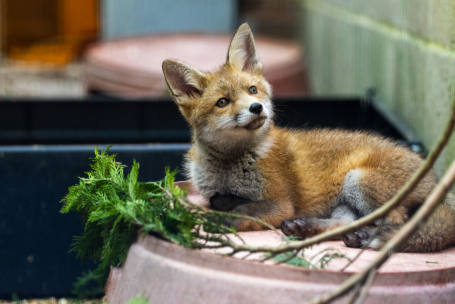
Foxes
- Foxes wag their tails when they’re happy, just like dogs
- They have over 40 different sounds to communicate how they’re feeling
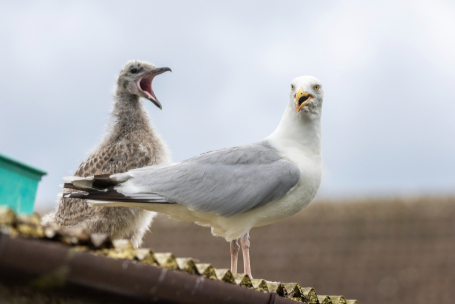
Gulls
- There is no such thing as a seagull – there are many different gull species in the UK, and not all of them live by the sea
- Gull families have their own unique call to identify each other
Pigeons
- Humans first domesticated pigeons over 5,000 years ago and were originally bred for food and trained to carry messages
- They are social birds, and are usually seen in pairs or in larger groups
Rats
- Rats have highly developed senses of smell, hearing and touch
- They also have incredible memories – learning quickly and memorising routes and pathways. They can even remember people!
Geoff added: “At the RSPCA we’re fortunate to have volunteers across the country supporting wildlife and animal welfare.
“Anyone who wants to make a difference can sign up to become an RSPCA Wildlife Friend – even a few minutes or a couple of hours can help create a kinder world for every animal.”
You can sign up as an RSPCA Wildlife Friend on the RSPCA website.
For more information about the wildlife we are lucky to have in the UK, visit the RSPCA website.







