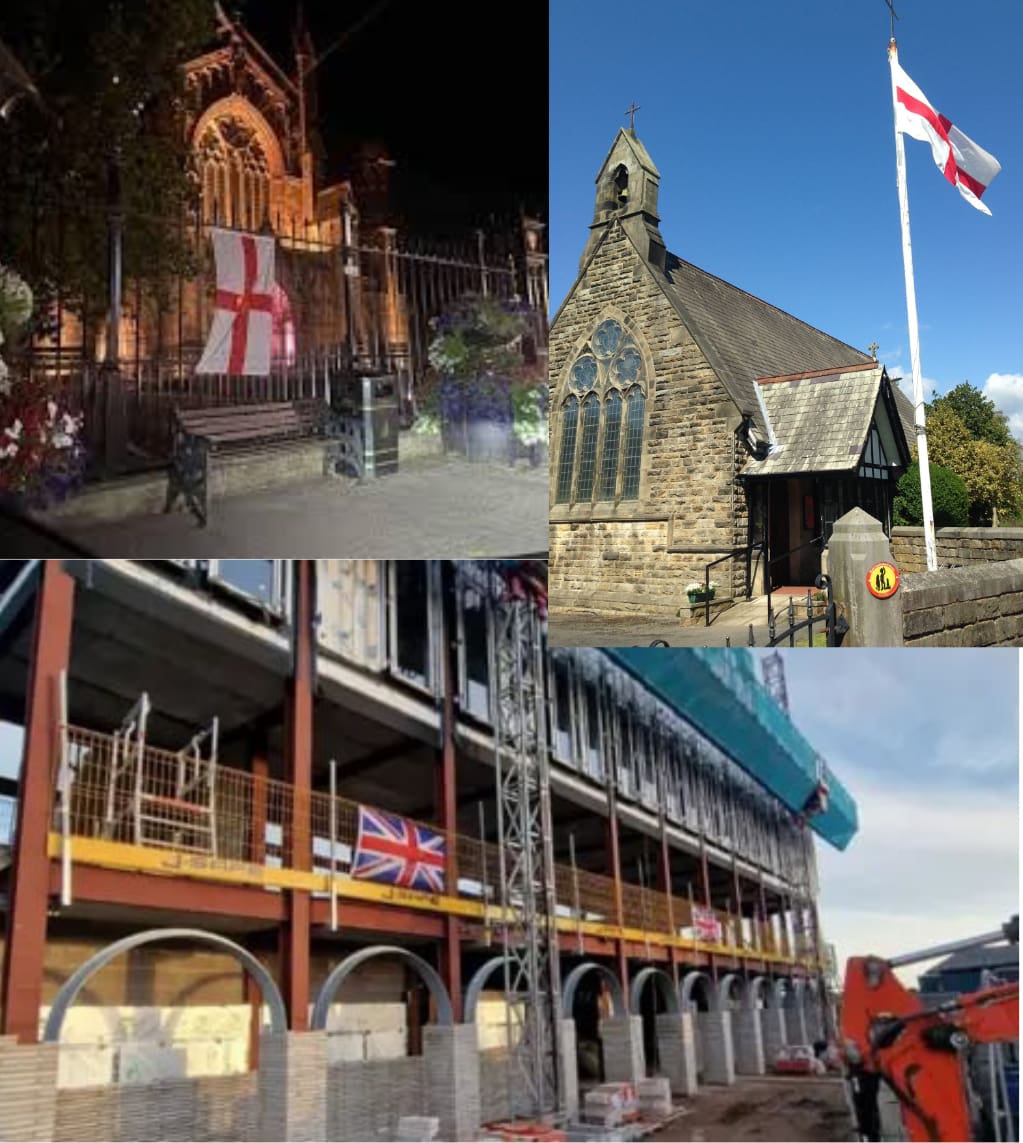
We now know who is behind the ‘Fly the Flag’ campaign, and many should be terrified.
And across the United Kingdom, a quiet but concerning trend is emerging. Spires, minarets, and other landmarks of faith that have for centuries defined our skylines are increasingly being joined by a new feature: the fluttering of St George’s and Union flags.
While for many the flying of a national flag is an expression of pride, a growing number of church, mosque, synagogue, and temple leaders are revealing a more troubling motivation. They are raising these symbols not solely out of patriotism, but out of a perceived need for protection against vandalism and far-right agitation.
A Signal of Belonging Under Pressure
The issue gained national attention when a vicar in a Dorset town spoke anonymously.
“It feels utterly wrong,” the vicar confessed. “My faith teaches love for all neighbours, not a narrow nationalism. But the fear in my congregation was palpable. We felt like we had to prove we were ‘one of them’ to avoid being targeted. It’s a capitulation to bullies, and it leaves a bitter taste.”
This sentiment is echoed in communities nationwide. Mosque committees report similar pressures. Following a spate of offensive graffiti, one mosque in the South East made the difficult decision to fly the Union flag. “Our community is overwhelmingly British-born; we love this country,” explained a trustee. “But we never felt the need to shout it from the rooftops until we were made to feel like outsiders. The flag is a signal to those driving past: ‘We are not a foreign threat. Leave us in peace.’ It’s a defensive measure, and it’s heartbreaking.”
Jewish communities, with a long history of navigating threats, are also facing this modern dilemma. A synagogue in the North of England, which had seen a rise in anti-Semitic incidents online and in the neighbourhood, erected a flagpole following advice from a security consultancy.
“Security is our absolute priority,” said the synagogue’s warden. “The flag isn’t about politics; it’s a visible, simple signal to those who might not know us that we are a British institution, part of the fabric of this country. It’s a sad reality that we have to think in these terms, but the safety of our members comes first.”
The Fuel of Division
Community safety groups and monitoring organisations like Hope Not Hate and the Community Security Trust (CST) have tracked a rise in community tensions, often stoked by far-right groups online. These groups frequently portray multiculturalism as a threat to a mythical ‘British’ way of life, deliberately targeting visible symbols of difference.
An academic who wants to remain anonymous, having seen how the USA under Trump has responded to academics who challenge their narrative, has said, “Places of worship become literal landmarks for this hatred”. For a synagogue, gurdwara, or mosque, flying a national flag is a highly visible way to try and deflect that animosity. It’s a form of ‘camouflaging’ – an attempt to assimilate visually to avoid becoming a target. It’s a strategy born entirely from fear, not unity.”
A Debate Within Walls
The practice has sparked intense debate within the religious communities themselves. Many congregants and clergy are deeply uncomfortable, arguing that it represents a surrender to intimidation and corrupts the spiritual purpose of their building.
“A house of God should be a sanctuary for all people, full stop,” argued one faith leader. “We must not cave in to those who wish to define Britishness in such an aggressive and exclusive way. Our response should be robust policing and community outreach, not symbolic appeasement.”
Conversely, others see it as a pragmatic necessity to ensure the safety of their elders and children and to protect historic buildings. For some Hindu temples and Sikh gurdwaras, the calculation is similar: the flag is a tool for community safety in an increasingly hostile environment.
Beyond the Symbol
The situation highlights a broader anxiety about identity and belonging in modern Britain. The sight of a flag flying under duress above a place of worship raises uncomfortable questions about who gets to define what it means to be British and the pressures faced by minority communities to conform.
Ultimately, while the flags may flutter in the breeze, for many of those worshiping beneath them, they are not a symbol of pride but a stark reminder of a fragility they never expected to feel. The hope for many is that one day, these flags can be taken down not because the threat has worsened, but because it has vanished, allowing these buildings to be defined once again solely by the faith and community they serve.