Reform UK’s claim to fiscal competence is facing its first serious stress test in Worcestershire, where the party’s new council leadership is now asking central government for emergency help to avert effective bankruptcy, less than a year after taking control.
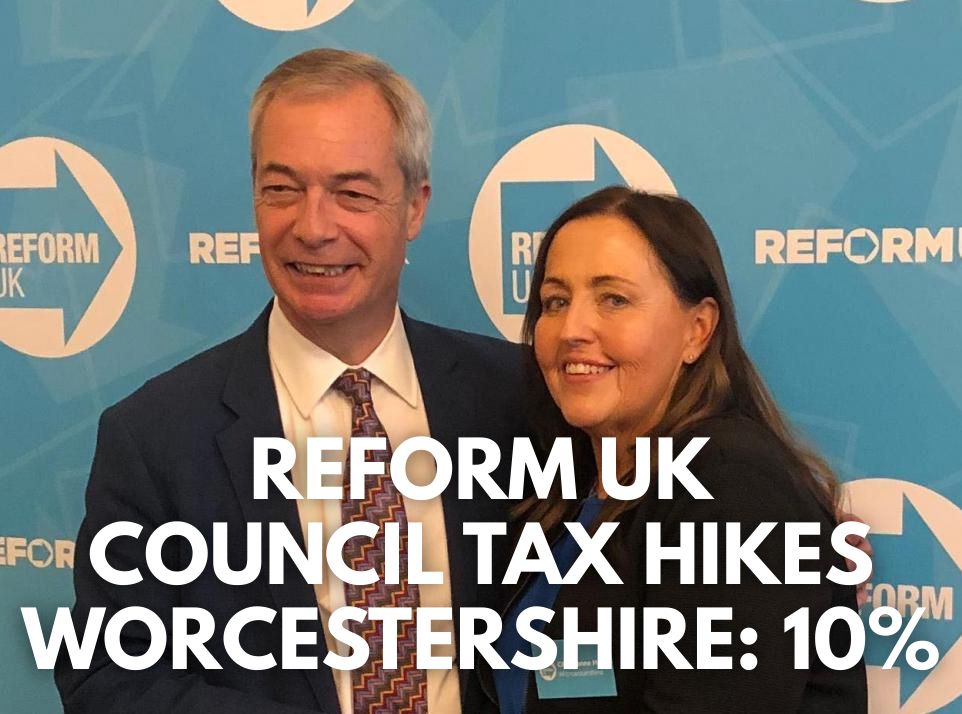
Jo Monk, the Reform UK leader of Worcestershire County Council since May, has formally requested £71.9 million in government support and permission to raise council tax by the maximum allowed 10 percent. Without this intervention, the authority risks being unable to balance its books, a scenario that in local government terms amounts to financial collapse.
The council is currently operating under a minority Reform administration, and the scale of the problem is stark. Worcestershire is carrying a debt burden approaching £600 million, much of it attributed by the new leadership to years of Conservative-controlled spending decisions. Monk’s administration argues it has inherited a structural financial crisis rather than created one, pointing to immediate steps already taken to stem the bleeding.
Since taking office, Reform councillors say they have cut £30 million worth of capital projects and reduced staffing costs by £9 million, moves they present as evidence of fiscal seriousness rather than ideological posturing. Yet even these measures have proved insufficient to stabilise the council’s finances without external support.
Opposition Conservatives, however, have wasted little time in accusing Reform UK of hypocrisy. Having campaigned aggressively on promises of discipline, efficiency and “running councils like businesses”, the party now finds itself asking for precisely the kind of government bailout it once derided as evidence of political failure. Tory councillors argue that Reform’s rhetoric has collided with the reality of governing, exposing a gap between protest politics and administrative competence.
The row is not occurring in isolation. Just miles away, Warwickshire County Council, where Reform UK also holds significant influence, is locked in its own budgetary deadlock. There, the party’s inability to secure consensus on financial planning has raised fresh questions about whether Reform is equipped to manage complex local government systems rather than simply oppose them.
For Reform UK nationally, Worcestershire represents more than a local headache. It is one of the party’s most prominent opportunities to demonstrate that its ‘anti-establishment’ message can translate into effective governance. Instead, the council has become a test case for whether Reform can reconcile its populist critique of “wasteful politics” with the hard arithmetic of public services, long-term debt, and statutory obligations.
A crucial council vote later this month will determine whether Monk’s administration can secure the support it needs, both from government and from rival parties within the chamber, to keep Worcestershire solvent. The outcome will resonate far beyond county boundaries.
If Reform succeeds, it will argue that it is responsibly confronting a mess left behind by the Conservatives. If it fails, critics will say the party has already demonstrated the limits of its governing ambition. Either way, the episode has punctured the illusion that taking power is simply a louder version of opposition and shown that, for Reform UK, the age of accountability has arrived much sooner than expected.